


L’altalena dei sensi; Divinità spiraliche
This exceptional pairing brings together two rare Futurist poetry collections by Alceo Folicaldi, both published in Rome in 1934. L’altalena dei sensi establishes Folicaldi as a distinctive practitioner of free-word poetry within second-generation Futurism. The volume opens with an approving letter by Filippo Tommaso Marinetti, who praises the poet’s sensory and imaginative freedom. The accompanying Divinità spiraliche is the second part of a cycle that Folicaldi himself described as a tetralogy. In both books, conventional lyric form is disrupted through typographic dispersion, associative montage, and an intensely sensory vocabulary. For the bibliophile, the pair offers a rare document of late Futurist book culture, retaining the original wrappers and preserved in a later chemise and slipcase.
Quantity


Folicaldi, Alceo
ILLUSTRATORS
ILLUSTRATORS
ILLUSTRATORS
L’altalena dei sensi; Divinità spiraliche
1934 | Rome | Edizioni Futuriste di Poesia
Together, these two original editions form a rare and coherent document of second-generation Italian Futurism. Their experimental texts, original wrappers, and direct connection with Marinetti give the ensemble exceptional significance.
This exceptional pairing brings together two rare Futurist poetry collections by Alceo Folicaldi, both published in Rome in 1934. L’altalena dei sensi establishes Folicaldi as a distinctive practitioner of free-word poetry within second-generation Futurism. The volume opens with an approving letter by Filippo Tommaso Marinetti, who praises the poet’s sensory and imaginative freedom. The accompanying Divinità spiraliche is the second part of a cycle that Folicaldi himself described as a tetralogy. In both books, conventional lyric form is disrupted through typographic dispersion, associative montage, and an intensely sensory vocabulary. For the bibliophile, the pair offers a rare document of late Futurist book culture, retaining the original wrappers and preserved in a later chemise and slipcase.
€610
Condition Report:
In-Depth Study
References & Bibliography
Format
In-8 (Octavo) approx. 20 × 26 cm
Edition Particulars
Two rare original editions, preserved together in a later chemise and slipcase.
Inscription
No inscription
1
Edition Particulars:
We welcome private inquiries, collaborations with institutions, and acquisition requests. Each message is treated with discretion and respect. We welcome private inquiries, collaborations with institutions, and acquisition requests.
1
Print Run:
Condition Report:
1
Copy Number:
Condition Report:
1
Paper:
Condition Report:
1
Signed:
Condition Report:
Product DETAIL
L’altalena dei sensi is a collection of experimental poems opening with an untitled introductory poemetto. It is followed by the sections L’altalena elettrica, La cantilena satanica, Numeri di sole, and Deformazioni. The volume closes with a sequence of 53 free-word fragments. Rather than presenting a continuous narrative, it unfolds through sensations, moods, numbers, colours, music, desire, and urban impulses. Divinità spiraliche continues this non-linear poetics as the second part of Folicaldi’s Futurist tetralogy, following Nudità futuriste of 1933. Its poems combine mystical, bodily, and cosmic imagery with abrupt verbal conjunctions and spatially arranged text. Together, the books reveal Folicaldi’s attempt to connect private emotion with the experimental vocabulary of second-generation Futurism.
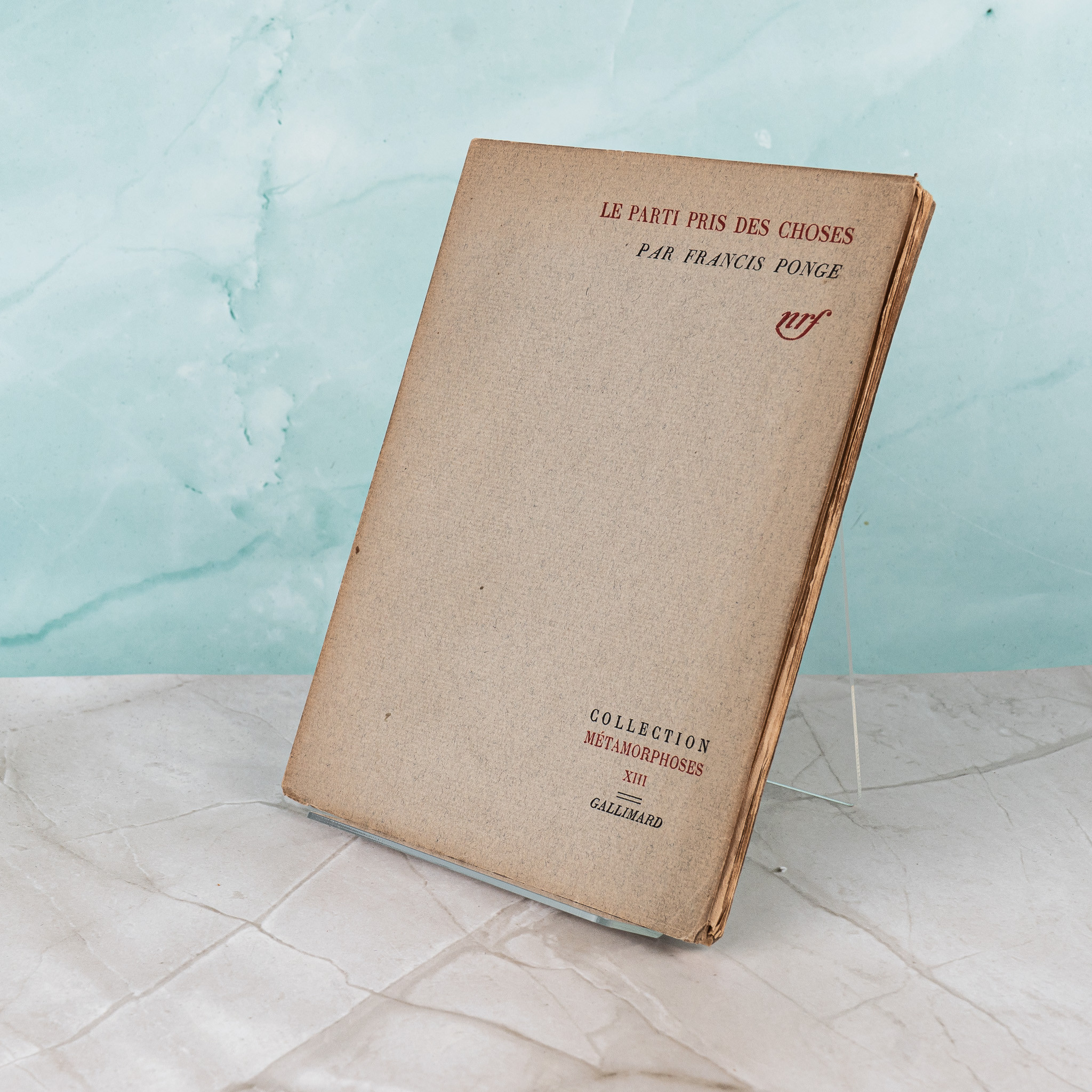
Ponge, Francis
Le Parti pris des choses
These two copies of Le Parti pris des choses form a remarkable paired witness to Francis Ponge’s visit to Zurich in March 1949. The book itself is one of the decisive prose works of French modernity: not lyrical confession, but a precise encounter with the mute dignity of things. Ponge gives ordinary objects — soap, bread, an oyster, a pebble, a cigarette — a language at once exact, ironic and sensuous. The double inscription to Frank Thiessing and to Madame Frank Thiessing gives the pair a strongly personal resonance. Frank C. Thiessing belonged to the Swiss world of graphic design, publishing and visual modernism, notably in relation to Hans Erni. These copies therefore connect Ponge’s literary materialism with the artistic and typographic networks of post-war Zurich.
Book
€1,300
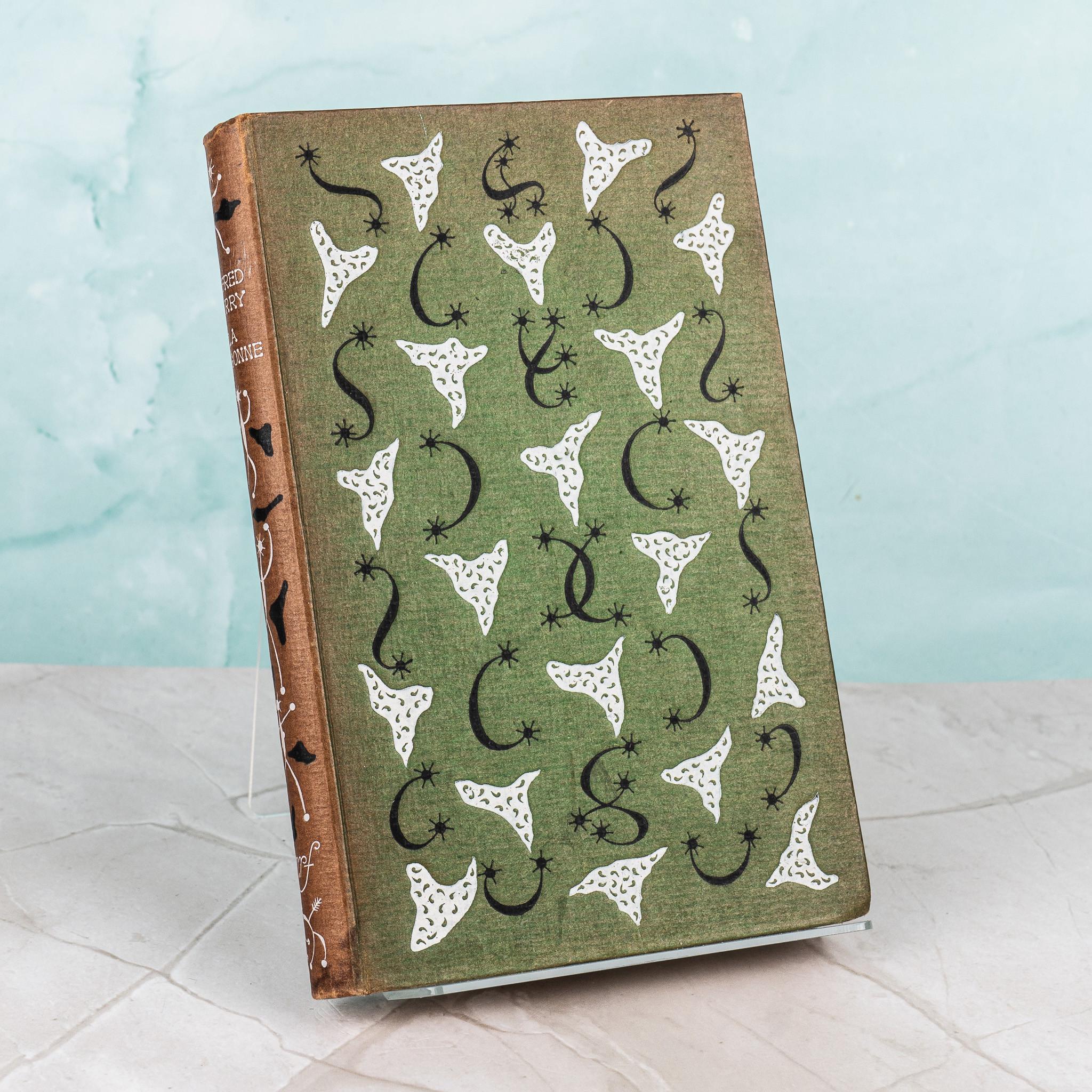
Jarry, Alfred
La Dragonne
La Dragonne is the posthumous first edition of Alfred Jarry’s final novel, published in 1943 by Gallimard/N.R.F. with a preface by Jean Saltas. The book carries the tension of a text that long remained suspended between completion and fragment before taking printed form decades after Jarry’s death. It reveals Jarry’s late imaginative world through autobiographical echoes, Breton legend and Symbolist narrative structures. This copy is further distinguished by its green publisher’s decorated boards, designed after a model by Mario Prassinos, placing it within the bibliophile culture of NRF bindings. The combination of a posthumous Jarry text, an artist-designed binding and a numbered copy on Alfa Mousse gives the volume particular appeal. It is not an illustrated artist’s book in the strict sense, but an object in which literature, publishing history and binding design meet with unusual tact.
Book
€280
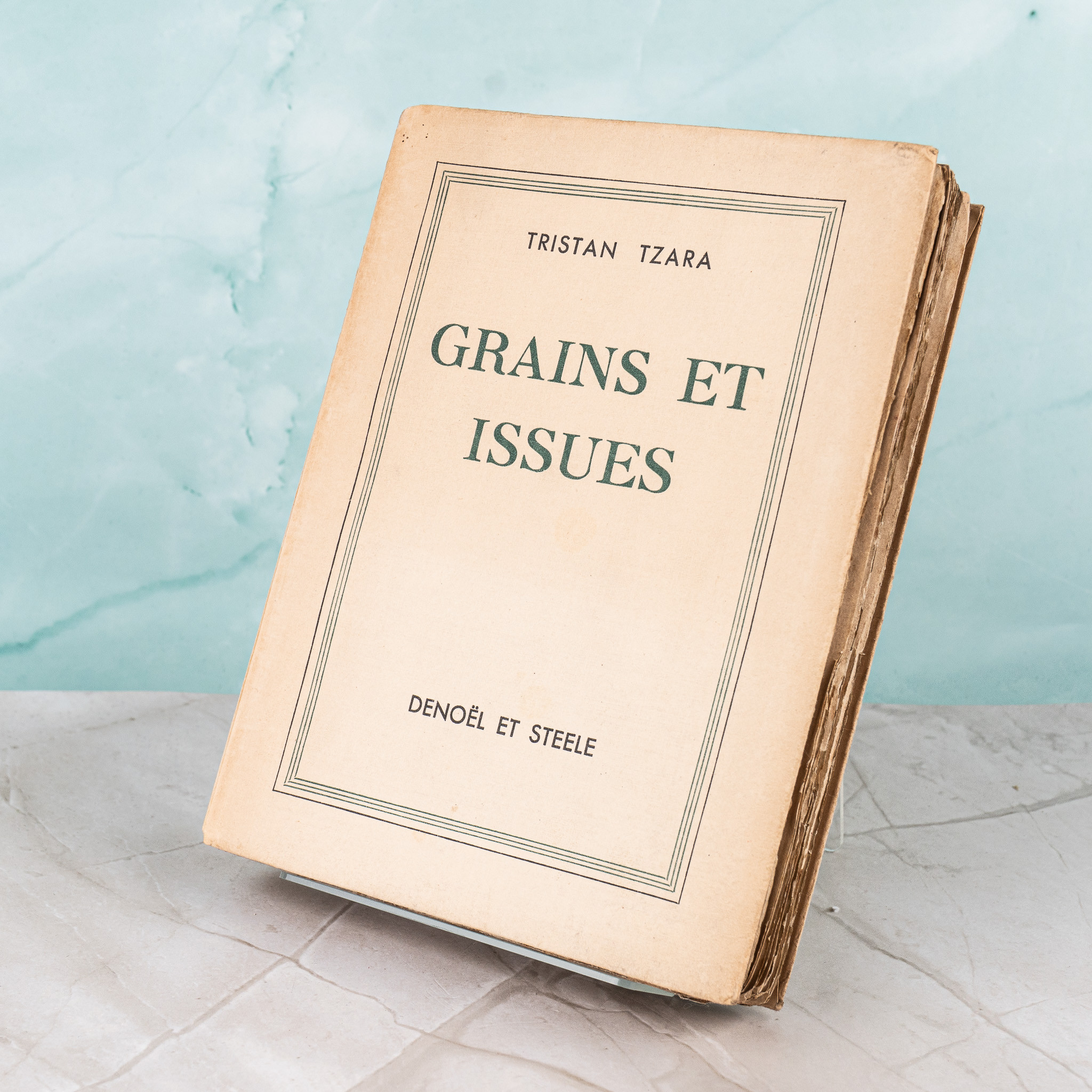
Tzara, Tristan
Grains et issues
Grains et issues is a key publication in Tristan Tzara’s passage from Dadaist disruption to Surrealist and revolutionary reflection. The book appeared in 1935 with Denoël et Steele, at a moment when poetry, politics and theory were becoming increasingly intertwined within the avant-garde. Tzara, once the voice and organizer of Dada in Zurich and Paris, no longer seeks only the explosion of meaning, but also a dialectic between dream, matter, history and liberation. This original edition is bibliophilically notable as a large-paper copy: one of the copies on vergé d’Arches, signed by the author. Its unopened state preserves the tension between the book as an instrument of reading and the book as an untouched object. For The Hidden Page, it is an exceptionally strong match: a major historical avant-garde author, a key text and a scarce signed deluxe variant.
Book
€720
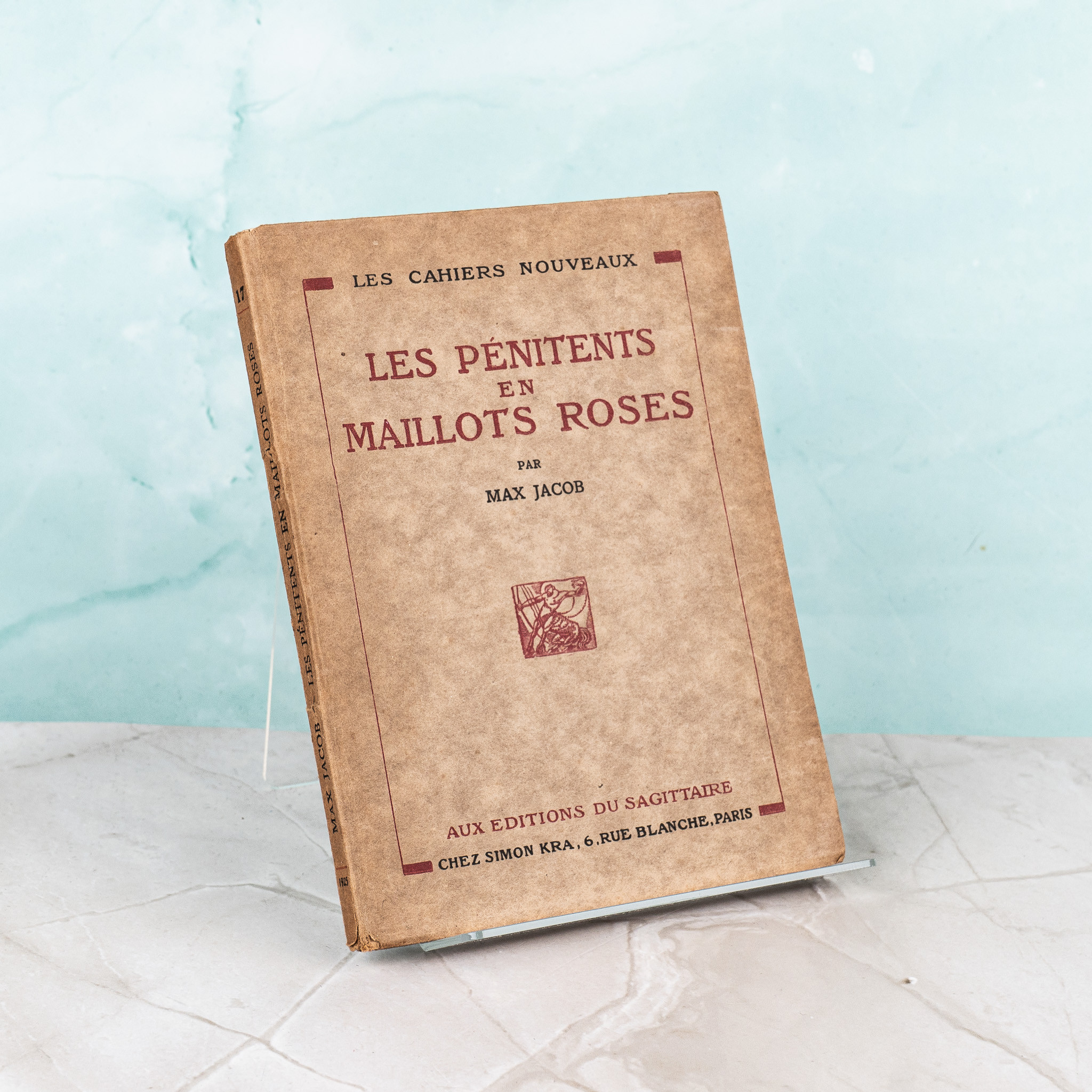
Jacob, Max
Les pénitents en maillots roses
Les pénitents en maillots roses belongs to Max Jacob’s subtle, agile poetry of the years following his conversion and his partial withdrawal from the Parisian scene. The book was published in 1925 by Aux Éditions du Sagittaire, chez Simon Kra, as no. 17 in the series Les Cahiers nouveaux. In this compact volume, burlesque observation, religious unease and verbal lightness meet in a characteristically Jacobian manner. This copy is enriched with a witty, slightly self-mocking inscription in brown ink. The recipient Fouquet is probably Gaëtan Fouquet (1903–1973), a well-known figure within the broader Parisian modernist circle.. For the bibliophile, its appeal lies in the conjunction of first edition, numbered issue and personal envoi.

