


Au rendez-vous allemand
Au rendez-vous allemand is one of the emblematic collections of Éluard’s wartime poetry. The book appeared in 1944 from Les Éditions de Minuit, the publishing house that, under the Occupation, became a moral landmark of the French literary Resistance. The volume gathers poems in which love, mourning, revolt and hope appear not as abstractions but as immediate necessities under German rule. The frontispiece, a portrait of the poet after Picasso, gives the book a powerful artistic signature: two voices of modern France, poet and artist, stand here in the same struggle. This is an ordinary, unnumbered copy, but signed by Éluard on the first page. That signature makes the book more than a Resistance document: it becomes a tangible witness to literary presence in a historically charged year. For the collector, it unites the clandestine aura of Minuit, Picasso’s name and Éluard’s own hand.
Quantity


Éluard, Paul
ILLUSTRATORS
ILLUSTRATORS
ILLUSTRATORS
Au rendez-vous allemand
1944 | Paris
A moving Resistance book in which Éluard’s voice, Picasso’s image and Minuit’s clandestine history converge. This unnumbered copy gains its force from the poet’s own signature.
Au rendez-vous allemand is one of the emblematic collections of Éluard’s wartime poetry. The book appeared in 1944 from Les Éditions de Minuit, the publishing house that, under the Occupation, became a moral landmark of the French literary Resistance. The volume gathers poems in which love, mourning, revolt and hope appear not as abstractions but as immediate necessities under German rule. The frontispiece, a portrait of the poet after Picasso, gives the book a powerful artistic signature: two voices of modern France, poet and artist, stand here in the same struggle. This is an ordinary, unnumbered copy, but signed by Éluard on the first page. That signature makes the book more than a Resistance document: it becomes a tangible witness to literary presence in a historically charged year. For the collector, it unites the clandestine aura of Minuit, Picasso’s name and Éluard’s own hand.
€350
Condition Report:
In-Depth Study
References & Bibliography
Format
In-12 (Duodecimo) approx. 17 × 22 cm
Edition Particulars
Ordinary unnumbered copy, signed by Paul Éluard on the first page.
Print Run
120
Paper
papier courant
Inscription
Signed by the Author
1
Edition Particulars:
We welcome private inquiries, collaborations with institutions, and acquisition requests. Each message is treated with discretion and respect. We welcome private inquiries, collaborations with institutions, and acquisition requests.
1
Print Run:
Condition Report:
1
Copy Number:
Condition Report:
1
Paper:
Condition Report:
1
Signed:
Condition Report:
Product DETAIL
The volume gathers poems that Éluard wrote or published during the Second World War and the German Occupation. At its centre are the humiliation of occupied France, the victims of executions and persecution, the courage of Resistance fighters and the expectation of liberation. The opening poem, Avis, begins from a German execution notice and evokes the final hours of a condemned resister; other poems move between accusation, elegy and a call to fraternity. Éluard uses simple, direct language, so that the poems are not hermetic but publicly shareable. Love and freedom are not separate themes here: the beloved, the people and the country often enter the same moral field. The poems therefore build a passage from night, fear and violence toward stubborn hope. In literary terms the work remains tied to Surrealism, but war compels Éluard’s language toward greater clarity and political urgency.
Montherlant, Henry de · Masereel, Frans
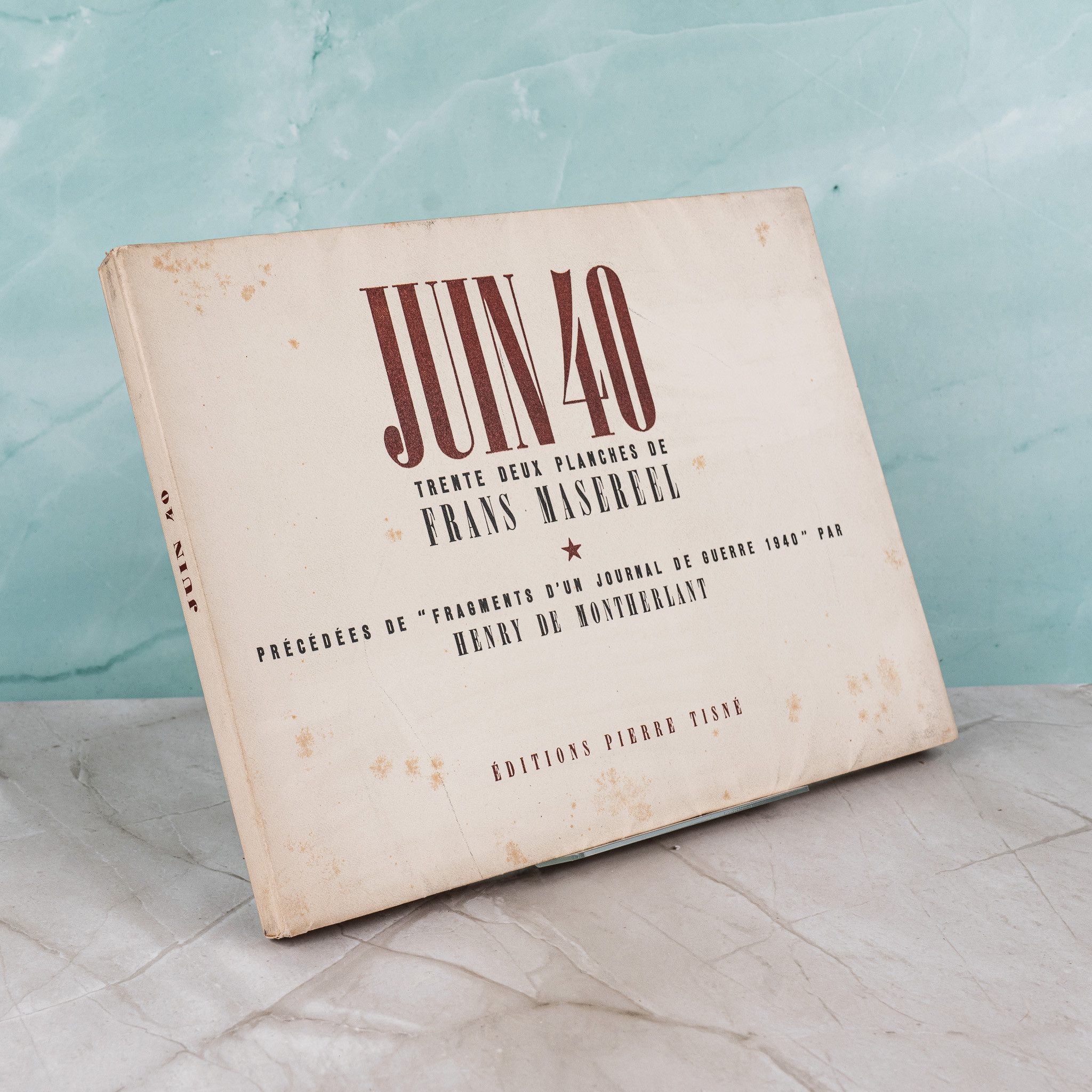
Juin 40
Juin 40 is a powerful illustrated war book in which Frans Masereel gives visual form, through 32 plates, to the French defeat and disarray of June 1940. The plates are preceded by Henry de Montherlant’s Fragments d’un journal de guerre 1940, so that text and image together create a double testimony: literary, historical and moral. Masereel, renowned for his woodcuts and wordless novels, here brings his expressive black-and-white drama to bear on an immediate historical trauma. The oblong format gives the plates a horizontal, almost cinematic space in which flight, soldiers, civilians and destruction can unfold. The book appeared in Paris with Pierre Tisné in 1942, in the midst of the war, giving it a special tension between memory, censorship, mourning and visual urgency. This copy, n°16, belongs to the first 350 copies on vélin Lana Bélier within a total edition of 1,550. It is an early and materially attractive copy of a book in which Masereel’s humanist graphic art retains its historical edge.
Ill Book
€420
Dorgelès, Roland · Dunoyer de Segonzac
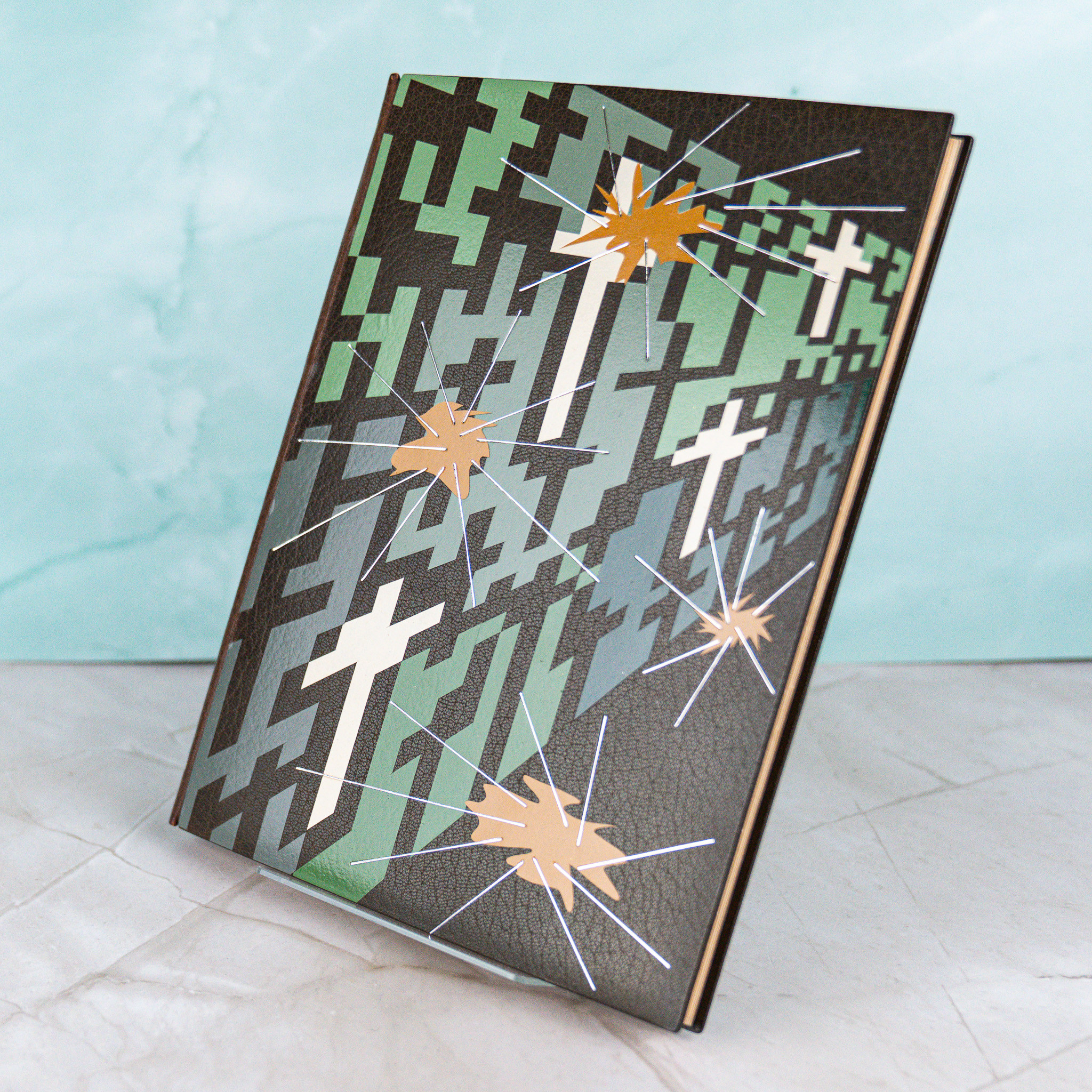
La Boule de gui
This first edition brings together three war episodes omitted from Les Croix de bois: La Boule de gui, Permissionnaires, and Le Prisonnier bénévole, formerly titled L’Ennemi des vieux. Published in 1922, it is also the first illustrated issue of these texts. André Dunoyer de Segonzac accompanies Dorgelès’s front-line prose with 42 reproduced drawings and five original drypoints hors texte, including the frontispiece. His nervous, direct line closely matches the stories’ hard observation and comradeship. This copy, number 401 on tinted Lafuma paper, belongs to the regular yet still limited issue of 519 copies on this stock. Devauchelle’s exceptional artist’s binding translates trenches, crosses, and explosions into a forceful modern design, turning the volume into a distinctive bibliophile object.
Ill Book
€1,150
Char, Rene · Stael, Nicolas de
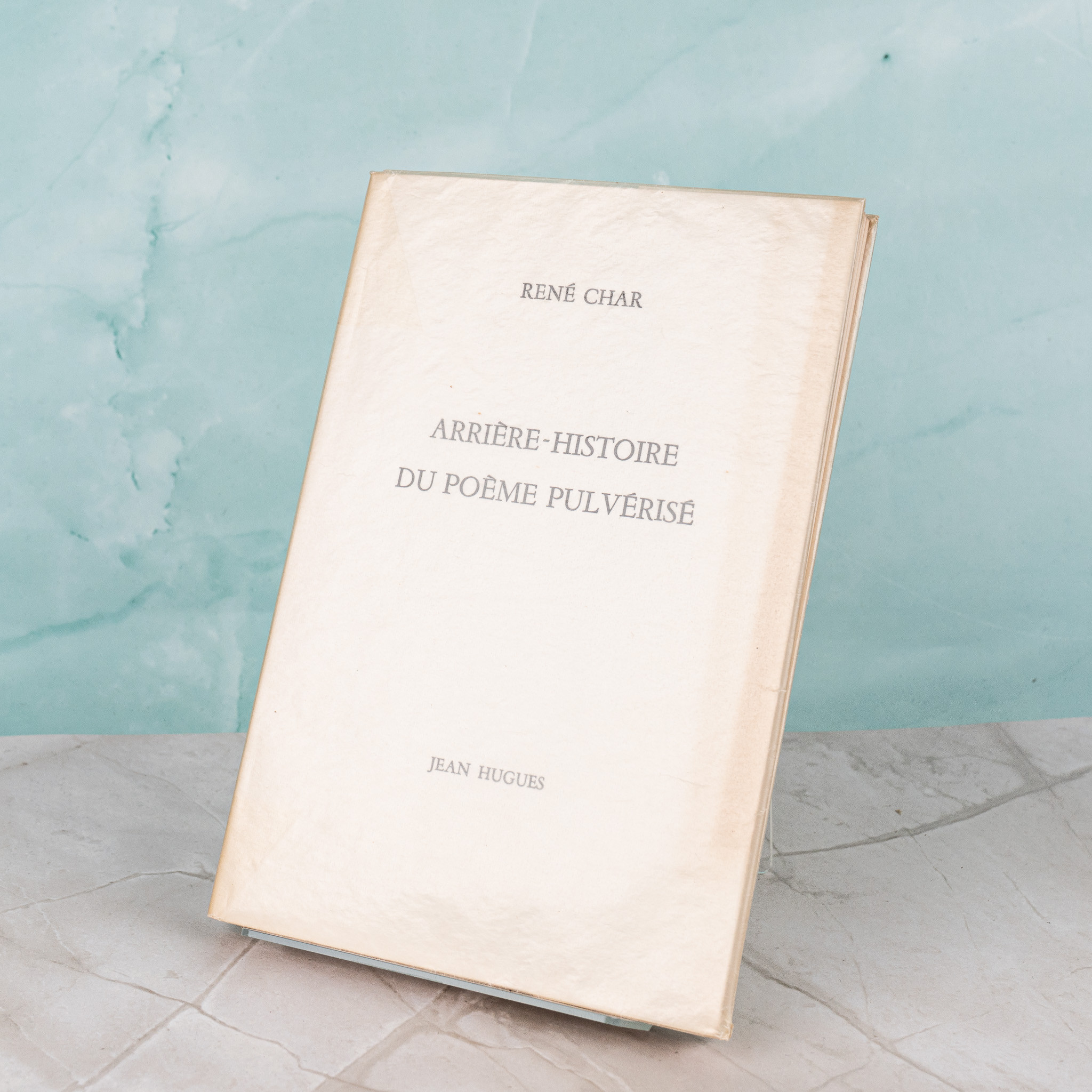
Arrière-histoire du poème pulvérisé
*Arrière-histoire du poème pulvérisé* is a later illustrated edition of a key text in which René Char looks back on the genesis and inner background of *Le Poème pulvérisé*. Published in 1972 by Imprimerie Union, it opens with a colour frontispiece by Nicolas de Staël. The pairing of Char and de Staël is especially charged: two post-war voices, each seeking concentration, clarity, and rupture in his own medium. This copy is one of only six hors commerce copies on Arches and is signed. The autograph presentation inscription to Doctor Marcel Zara, with poetic quotation and October 1972 dating, makes it a deeply personal copy.
Ill Book
€920
Crevel, René · Tchelitchew, Pavel
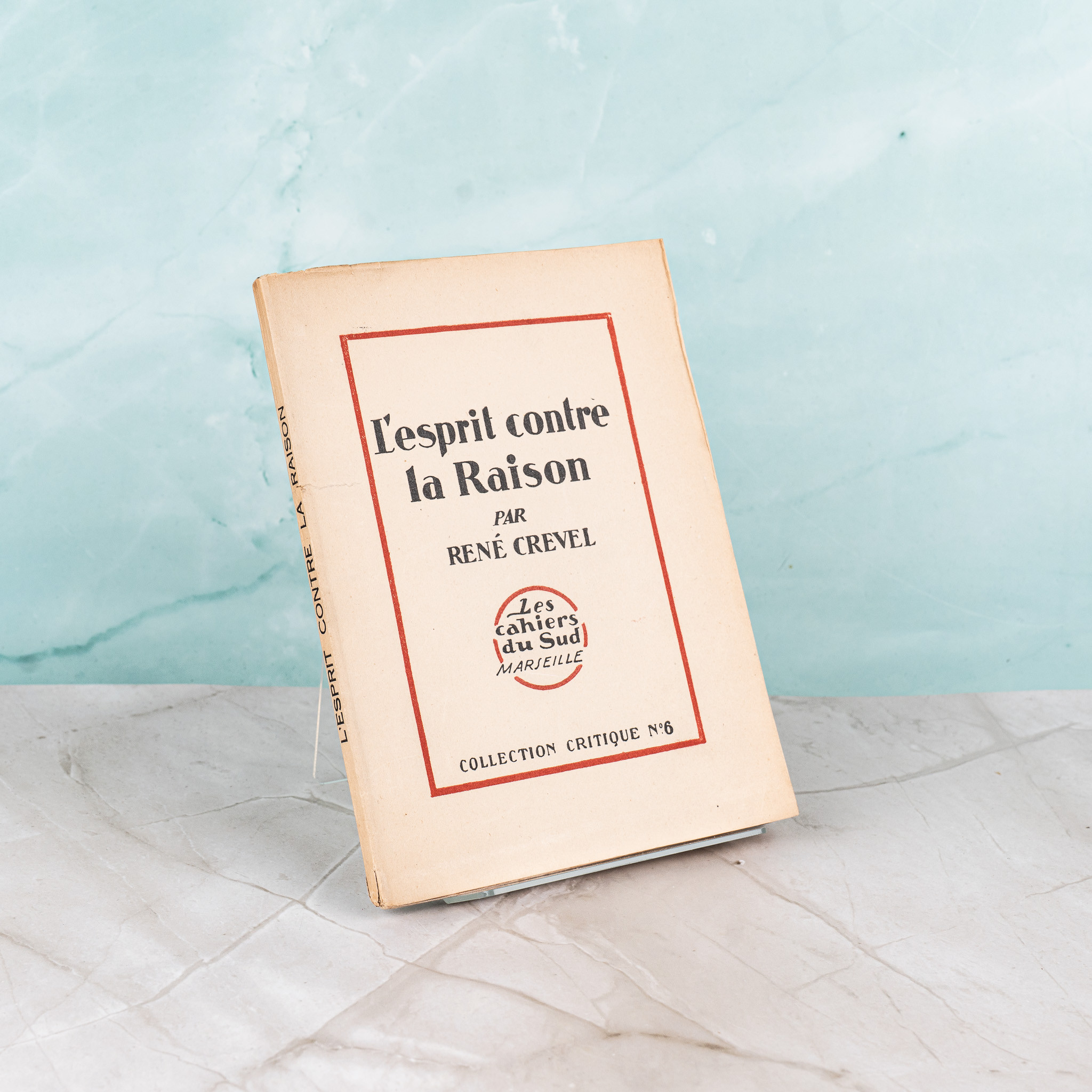
L’esprit contre la raison
L’esprit contre la raison is a brief, vehement text from the heart of French Surrealism. René Crevel writes here not as a systematic philosopher, but as a polemicist intent on disturbing the order of reason, morality and bourgeois clarity. The book was published in 1927 by Les Cahiers du Sud, a review and publishing circle receptive to literary experiment beyond the Parisian centre. Pavel Tchelitchew’s frontispiece portrait gives the volume a strong visual presence and links Crevel’s voice to the cosmopolitan artistic world of the 1920s. In its original wrappers, the copy preserves the sober, nervous materiality of a text that reads more like an assault than a treatise. Its status as a review copy also marks it as a book meant to move through the literary networks of its moment.

