


Bras cassé
Bras cassé is a late, incisive Michaux piece probing fracture and recovery as movements of thought. The plum morocco panel binding (Miguet) frames the pages’ taut cadence. Fata Morgana’s restrained typography lets white space and pause do the work; the voice stays close to the nerve. This édition originale appeared in 1973 in 60 numbered copies on Arches; this is no. 43. The Jansenist discretion of the binding supports the text’s edge without overpowering it. An exemplary bibliophile object where material and rhythm coincide.
Quantity


Michaux, Henri
ILLUSTRATORS
ILLUSTRATORS
ILLUSTRATORS
Bras cassé
1973 | Montpellier | Fata Morgana
A rare Arches copy, low-numbered, in a superb Miguet binding; elegant, exact, collectible.
Bras cassé is a late, incisive Michaux piece probing fracture and recovery as movements of thought. The plum morocco panel binding (Miguet) frames the pages’ taut cadence. Fata Morgana’s restrained typography lets white space and pause do the work; the voice stays close to the nerve. This édition originale appeared in 1973 in 60 numbered copies on Arches; this is no. 43. The Jansenist discretion of the binding supports the text’s edge without overpowering it. An exemplary bibliophile object where material and rhythm coincide.
€650
Condition Report:
In-Depth Study
References & Bibliography
Format
In-8 (Octavo) approx. 20 × 26 cm
Edition Particulars
One of 60 copies on Arches; Miguet binding; with Jean Fournier label.
Print Run
60
Copy Number
43
Paper
Arches
Inscription
No inscription
1
Edition Particulars:
We welcome private inquiries, collaborations with institutions, and acquisition requests. Each message is treated with discretion and respect. We welcome private inquiries, collaborations with institutions, and acquisition requests.
1
Print Run:
Condition Report:
1
Copy Number:
Condition Report:
1
Paper:
Condition Report:
1
Signed:
Condition Report:
Product DETAIL
The volume strings brief, charged pieces where the body becomes a sounding board. Jolts, stumbles and resumptions set the rhythm; meaning emerges in the interstices. Arches paper gives the ink body and subtle bite. Miguet’s fine binding lends quiet monumentality. Everything tends toward precision: no ornament, but tension and breath.
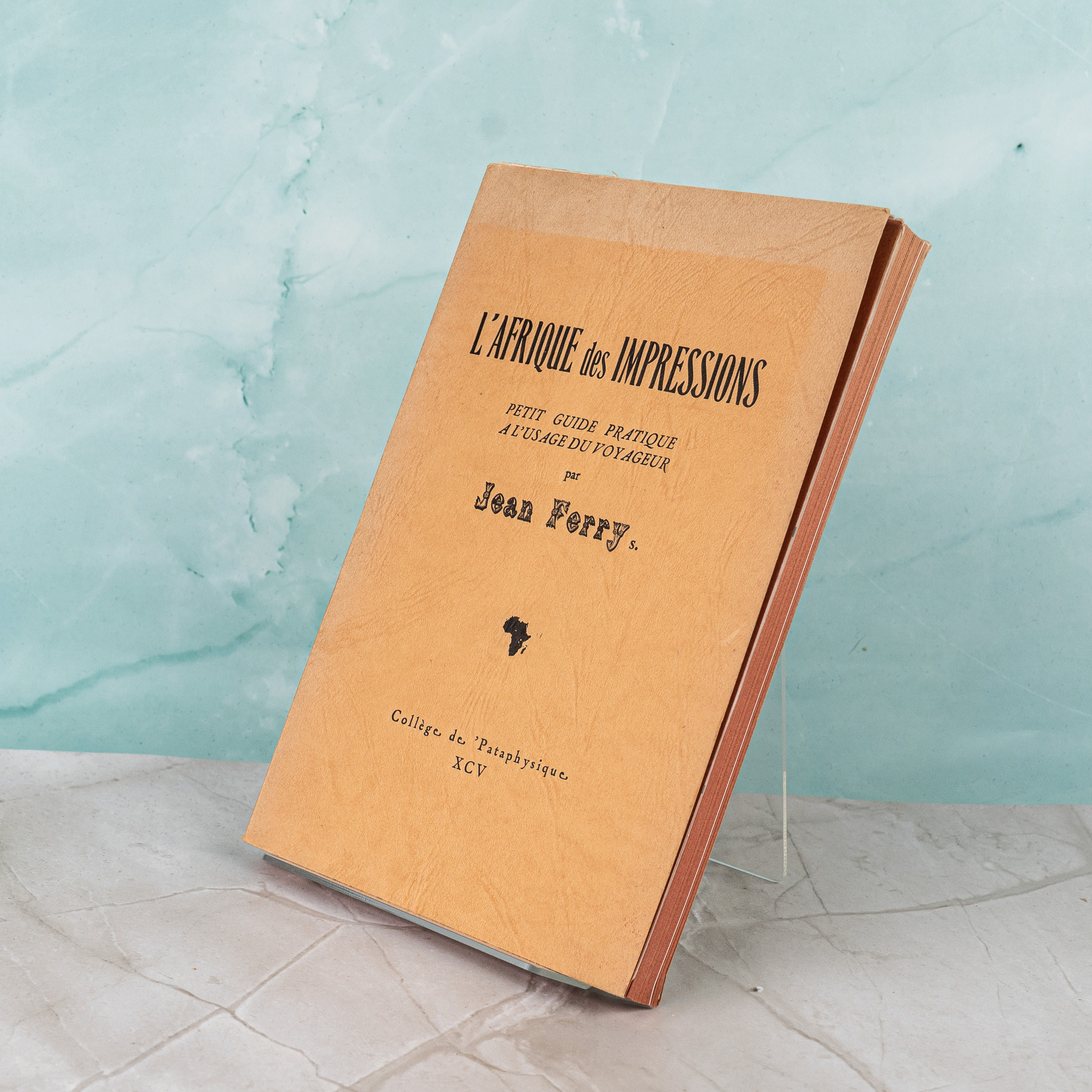
Ferry, Jean
L’Afrique des impressions. Petit guide pratique à l’usage du voyageur
L’Afrique des impressions is Jean Ferry’s pataphysical guide to Raymond Roussel’s imaginary Africa, published by the Collège de ’Pataphysique in 1967. Its title openly plays on Roussel’s Impressions d’Afrique, yet transforms exegesis into travel writing, scholarship into itinerary and reading into expedition. Ferry approaches Roussel not as an outside commentator, but as an initiate of verbal machinery, secret procedures and comic precision. This copy belongs to the rare group of 166 “exemplaires capitaux” on Authentique Papier Tropical du Ponukélé, and it duly contains the original drawing and autograph material required for that deluxe issue. Its dedication to Raphaël Ossona de Mendez places it within the living network of the Collège rather than in a merely external provenance. The accompanying manuscript note on codes, letters and the number 472 further heightens its Roussellian resonance. As a bibliophile object, it is at once guidebook, homage, private signal and pataphysical field instrument.
Book
€750
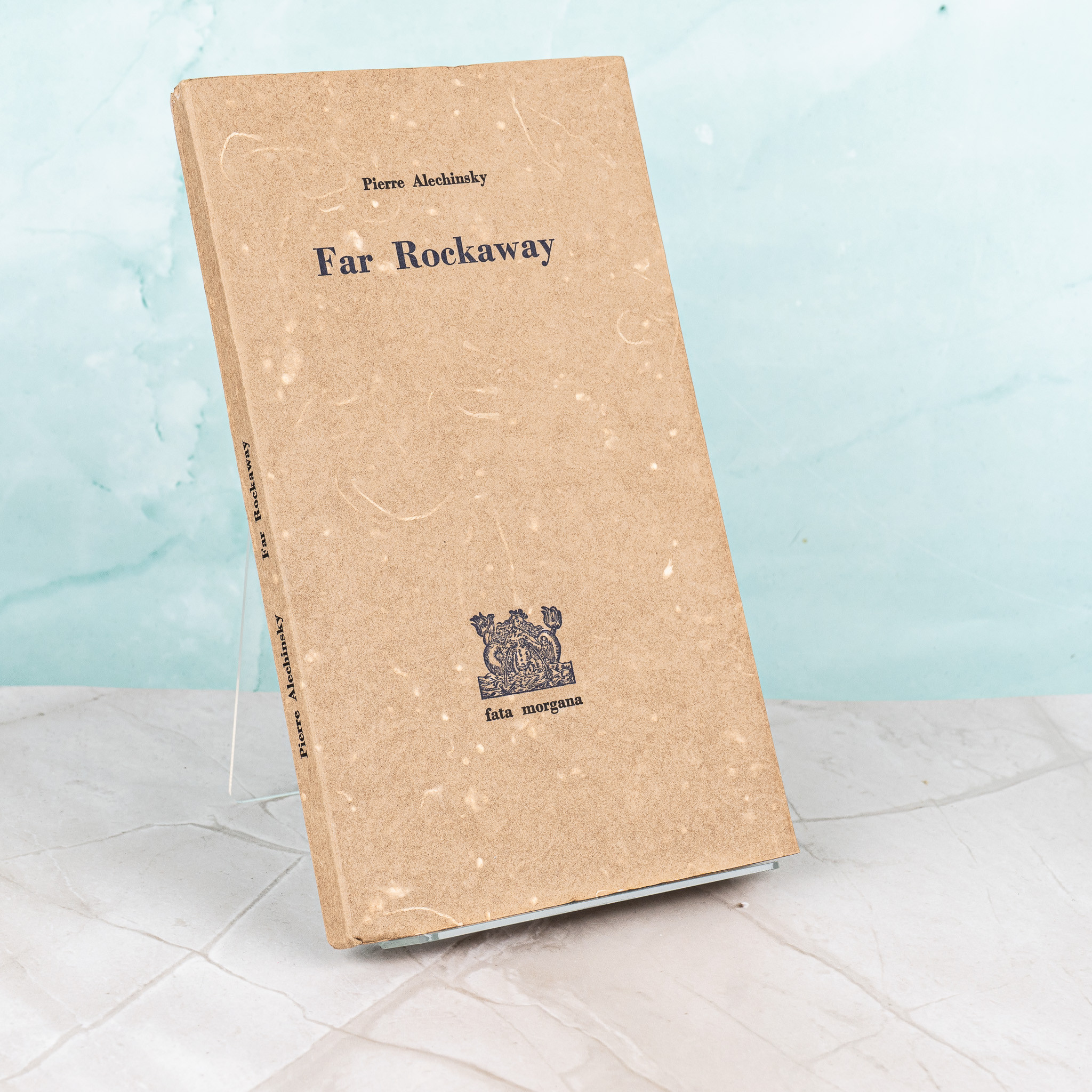
Alechinsky, Pierre
Far Rockaway
Far Rockaway is a rare first edition by Pierre Alechinsky published by Fata Morgana, a press especially attuned to the meeting of literature, image and bibliophile restraint. The title refers to Far Rockaway, a place-name both concrete and almost dreamlike, as though a geographical point had become a mental edge-zone. Alechinsky, shaped by Cobra yet always independent in his writing of line and sign, brings together here his world of travel, memory, margin and graphic rhythm. The 1977 edition belongs to Fata Morgana’s refined small-scale objects, where paper choice and typographic restraint heighten the relation between text and image. This copy is especially desirable because it belongs to the tirage de tête: one of only 30 numbered copies on Ingres d’Arches. Number 26 therefore stands clearly above the ordinary issue. For a collector of Alechinsky, it is a small but important bibliophile object from his mature period.
Book
€300
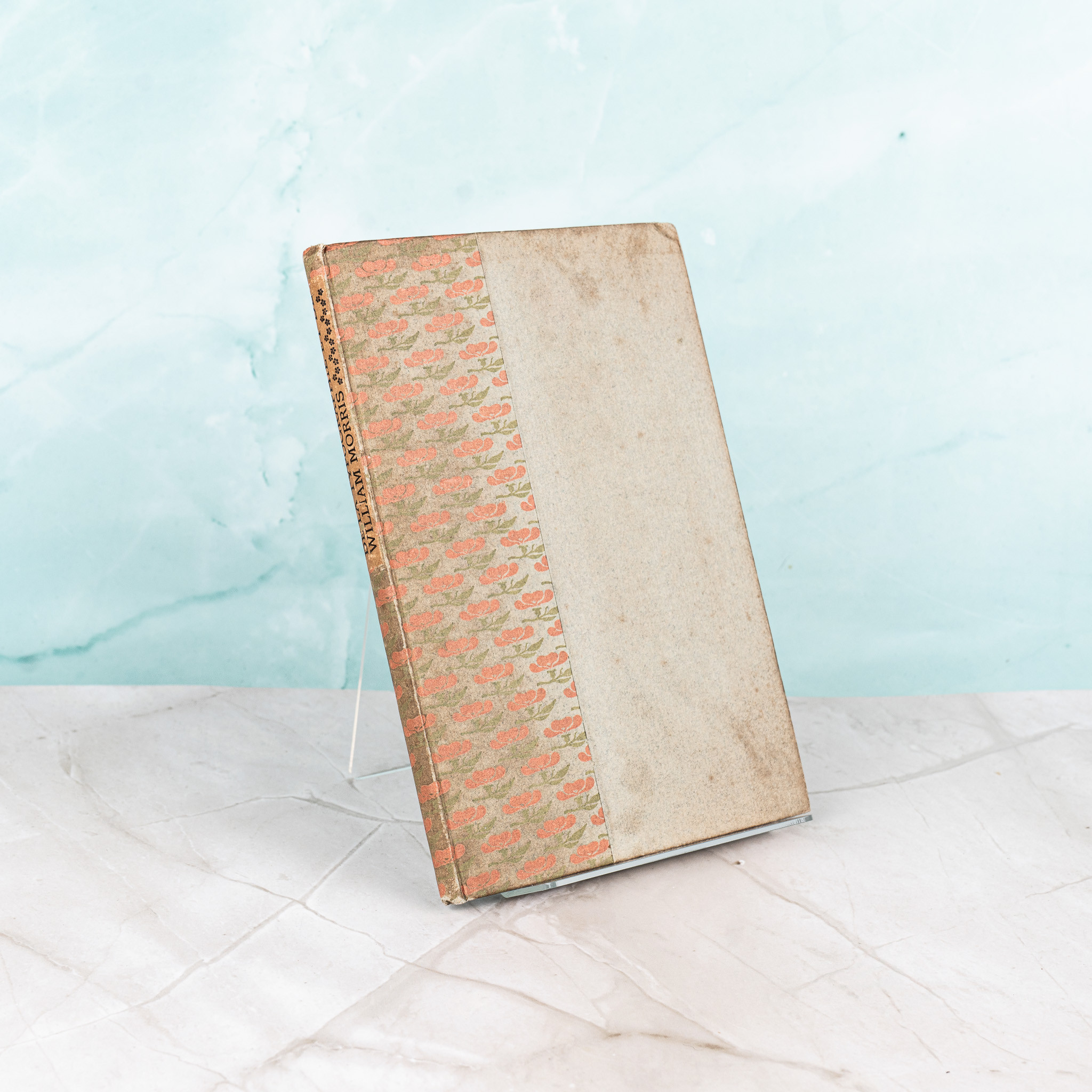
Pissarro, Lucien · Ricketts, Charles
De la typographie et de l’harmonie de la page imprimée. William Morris et son influence sur les arts et métiers
De la typographie et de l’harmonie de la page imprimée is a refined fin-de-siècle publication devoted to the art of the printed page. Lucien Pissarro and Charles Ricketts place William Morris at the centre as a reformer of the book, printing and the applied arts. The work belongs to the circles in which the Arts and Crafts movement, private press ideals and the renewed valuation of typography meet. The title makes clear that typography is not treated as a technical accessory, but as an harmony of type, margin, paper and page design. The edition appeared in 1898, in London from Ricketts and in Paris from Floury, standing between English private press culture and French bibliophile reception. This copy belongs to the issue of 250 copies on Arnold handmade laid paper within a total edition of 256 copies. The present errata slip and only slight corner wear make it bibliographically attractive and complete.
Book
€750
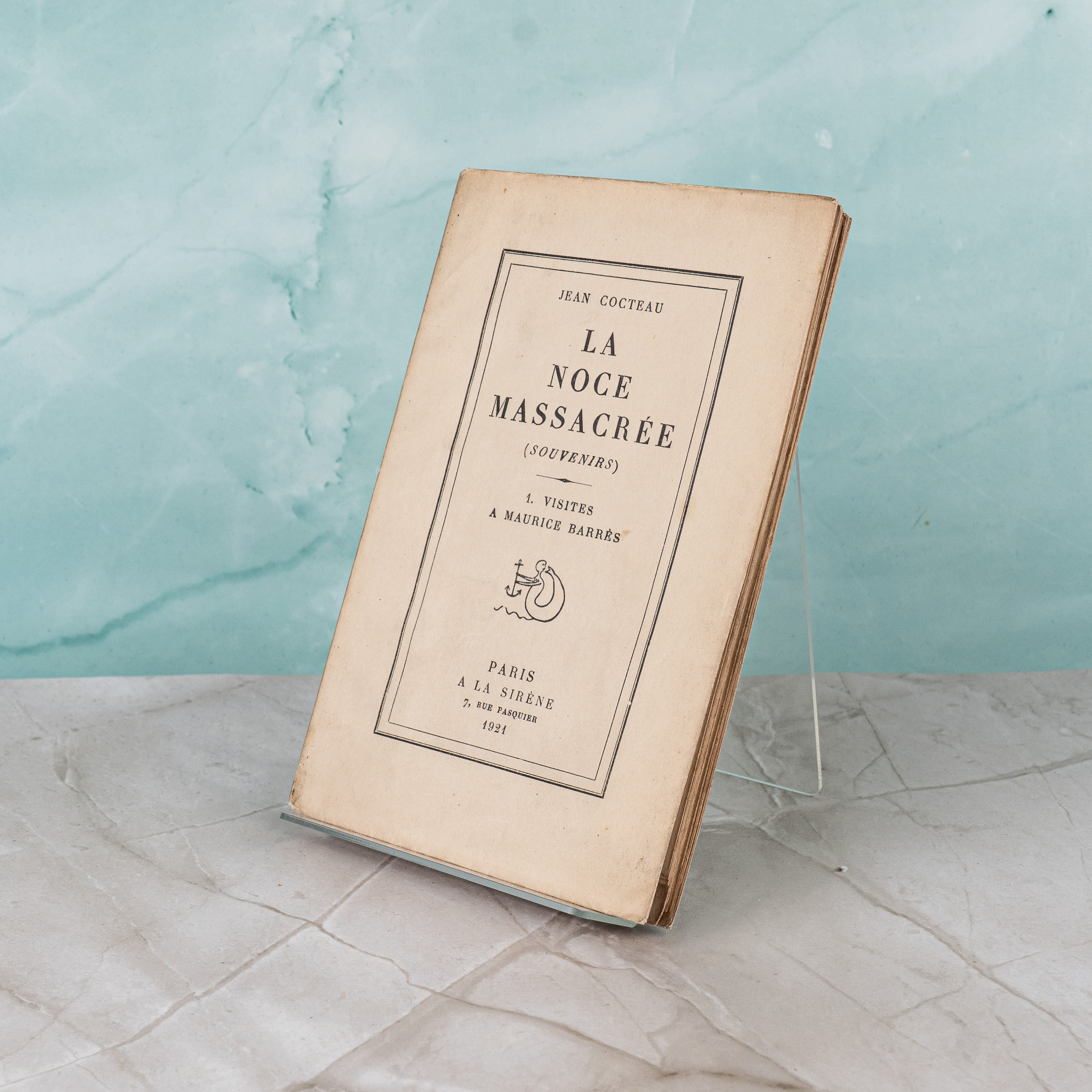
Cocteau, Jean
La Noce massacrée
La Noce massacrée belongs to Jean Cocteau’s early, sharply modernist phase, shortly after Parade and in close proximity to Raymond Radiguet. The book appeared in 1921 with À la Sirène, a publisher closely connected with the Parisian artistic avant-garde and literary modernism. The presence of a vignette after Picasso reinforces that context, although this is not an illustrated artist’s book in the strict sense. Cocteau writes from a milieu in which literature, theatre, ballet, visual art and social polemic constantly intersected. The printed dedication to Radiguet also makes the book a witness to a decisive friendship and intellectual alliance. This copy, n°XIX, belongs to the first 40 copies on vergé d’Arches, the most desirable form of the edition.
