


Cartes à jouer et à tirer
In 1967, Jean Dubuffet partnered with London’s Editions Alecto on *Cartes à jouer et à tirer*, playfully recasting his visual vocabulary into the scale of a deck of cards. The set comprises 52 separate cards, each silkscreen-printed, forming a quirky alphabet of lines, planes, and scribbled textures. The title invites action—both “to play” and “to draw”—letting chance and handling shape meaning. Housed in the publisher’s slipcase, the work sits between artist’s book and portable multiple. This hors commerce copy, marked H.C. 11, is in notably fresh condition. It exemplifies Dubuffet’s anti-aesthetic joined to technical exactitude, an irresistible proposition for bibliophiles at the book-object threshold.
Quantity


Dubuffet, Jean
Cartes à jouer et à tirer
1967 | London | Éditions Alecto
Rare hors-commerce copy, near fine, complete with slipcase.
In 1967, Jean Dubuffet partnered with London’s Editions Alecto on *Cartes à jouer et à tirer*, playfully recasting his visual vocabulary into the scale of a deck of cards. The set comprises 52 separate cards, each silkscreen-printed, forming a quirky alphabet of lines, planes, and scribbled textures. The title invites action—both “to play” and “to draw”—letting chance and handling shape meaning. Housed in the publisher’s slipcase, the work sits between artist’s book and portable multiple. This hors commerce copy, marked H.C. 11, is in notably fresh condition. It exemplifies Dubuffet’s anti-aesthetic joined to technical exactitude, an irresistible proposition for bibliophiles at the book-object threshold.
€2,750
Condition Report:
In-Depth Study
References & Bibliography
Format
Divers
Edition Particulars
Hors commerce, marked H.C. 11.
Print Run
380
Copy Number
11
Inscription
No inscription
Product DETAIL
Here Dubuffet channels his gritty line and granulated matter into the compact field of the playing card. Silkscreen amplifies the surface buzz familiar from his paintings. The cards are not mere reproductions but autonomous carriers, to be arranged sequentially or by chance. The reader-player’s hand becomes part of the reading, reinforcing Dubuffet’s notion of art in the everyday.

BAL BANAL, organisé par l’Union des Artistes Russes
Original admission ticket for the Bal Banal of the Union des Artistes Russes, held Friday 14 March 1924 at Salle Bullier, Paris. The small colour woodcut ticket, designed 1923/24 by Natalia Gontcharova and plate-signed “N. Gontcharova,” is numbered 2962, printed recto only in two colours, and bears two Union stamps. In a handy c. 16 × 22.5 cm format, it fuses function with graphic flair—a rare survivor of the famed artists’ balls linking the Russian émigré scene to Montparnasse.
Other
€350
Rouveyre · Leonor Fini · Matisse, Henri
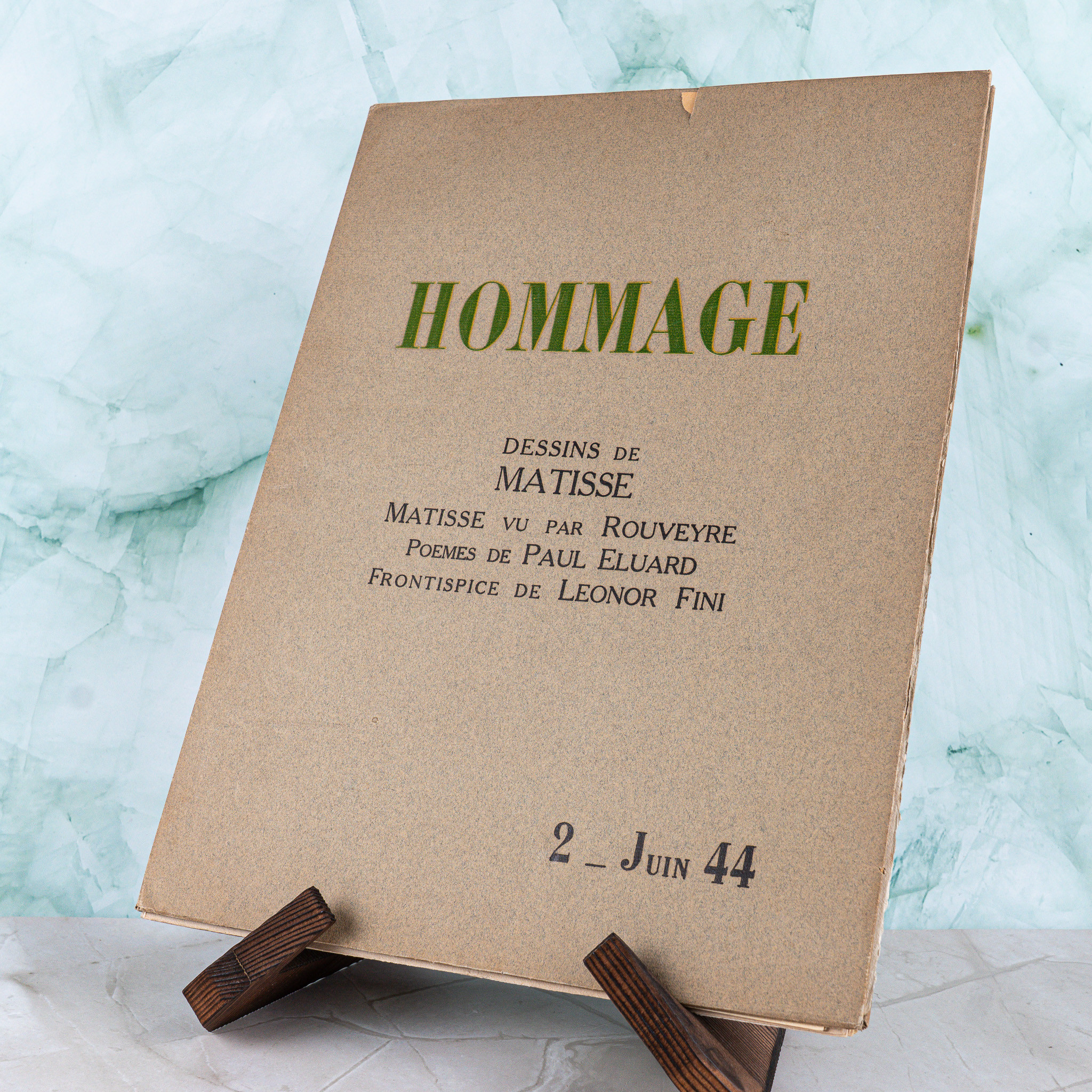
Hommage. Dessins de Matisse
A unique homage to Henri Matisse, published in Monaco during the final stages of World War II. This remarkable book blends literature, photography and visual art, featuring contributions from some of the leading French artists of the 20th century. It includes poetry by Paul Éluard, an essay by André Rouveyre, and a suite of Matisse drawings, complemented by a striking frontispiece by Leonor Fini and an original photograph by Brassaï.
Other
€975
Char, Rene · Stael, Nicolas de
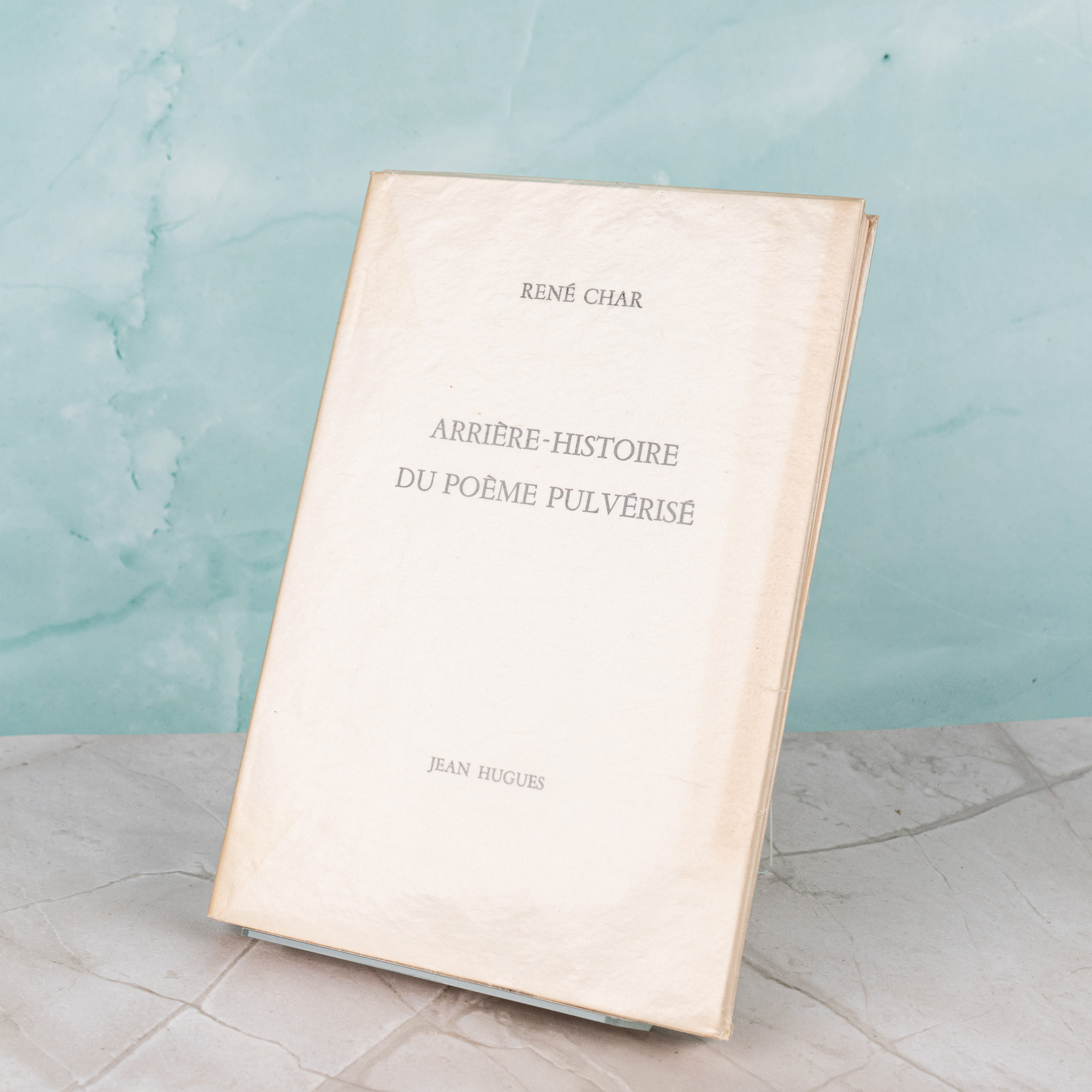
Arrière-histoire du poème pulvérisé
*Arrière-histoire du poème pulvérisé* is a later illustrated edition of a key text in which René Char looks back on the genesis and inner background of *Le Poème pulvérisé*. Published in 1972 by Imprimerie Union, it opens with a colour frontispiece by Nicolas de Staël. The pairing of Char and de Staël is especially charged: two post-war voices, each seeking concentration, clarity, and rupture in his own medium. This copy is one of only six hors commerce copies on Arches and is signed. The autograph presentation inscription to Doctor Marcel Zara, with poetic quotation and October 1972 dating, makes it a deeply personal copy.

