


Chant funèbre pour Ignacio Sanchez Mejias
In this prestigious bibliophile edition, Pierre de Tartas unites the poetry of Federico García Lorca with the visual strength of Pablo Picasso. The book includes five original prints by Picasso, four large color wood engravings, and ten black in-text woodcuts. The combination of literary and visual expressionism gives the work a powerful emotional impact. This grand in-folio edition on vélin d'Arches is luxuriously presented in loose sheets within a black case. A compelling tribute to bullfighter Ignacio Sánchez Mejías, friend of Lorca.
Quantity


Lorca, Federico García
Picasso, Pablo
Chant funèbre pour Ignacio Sanchez Mejias
1976 | Paris | Pierre de Tartas
Sought-after masterpiece: a monumental homage with original works by Picasso.
In this prestigious bibliophile edition, Pierre de Tartas unites the poetry of Federico García Lorca with the visual strength of Pablo Picasso. The book includes five original prints by Picasso, four large color wood engravings, and ten black in-text woodcuts. The combination of literary and visual expressionism gives the work a powerful emotional impact. This grand in-folio edition on vélin d'Arches is luxuriously presented in loose sheets within a black case. A compelling tribute to bullfighter Ignacio Sánchez Mejías, friend of Lorca.
€2,100
Condition Report:
In-Depth Study
References & Bibliography
Format
In-folio (Folio) approx. 30 × 40 cm
Edition Particulars
1 of 220 on grand vélin d'Arches
Print Run
306
Copy Number
250
Paper
vélin d'Arches
Inscription
Signed by the Author
Product DETAIL
These funeral songs pay homage to the bullfighter Ignacio Sánchez Mejías. Lorca’s text, rich in symbolism and dramatic lyricism, is enhanced by Picasso’s expressive visual language. The book forms a symbiosis of word and image, merging poetry with powerful graphics. Ideal for lovers of literary and visual art, with a strong Spanish cultural context. Translated by Randal Lemoine.
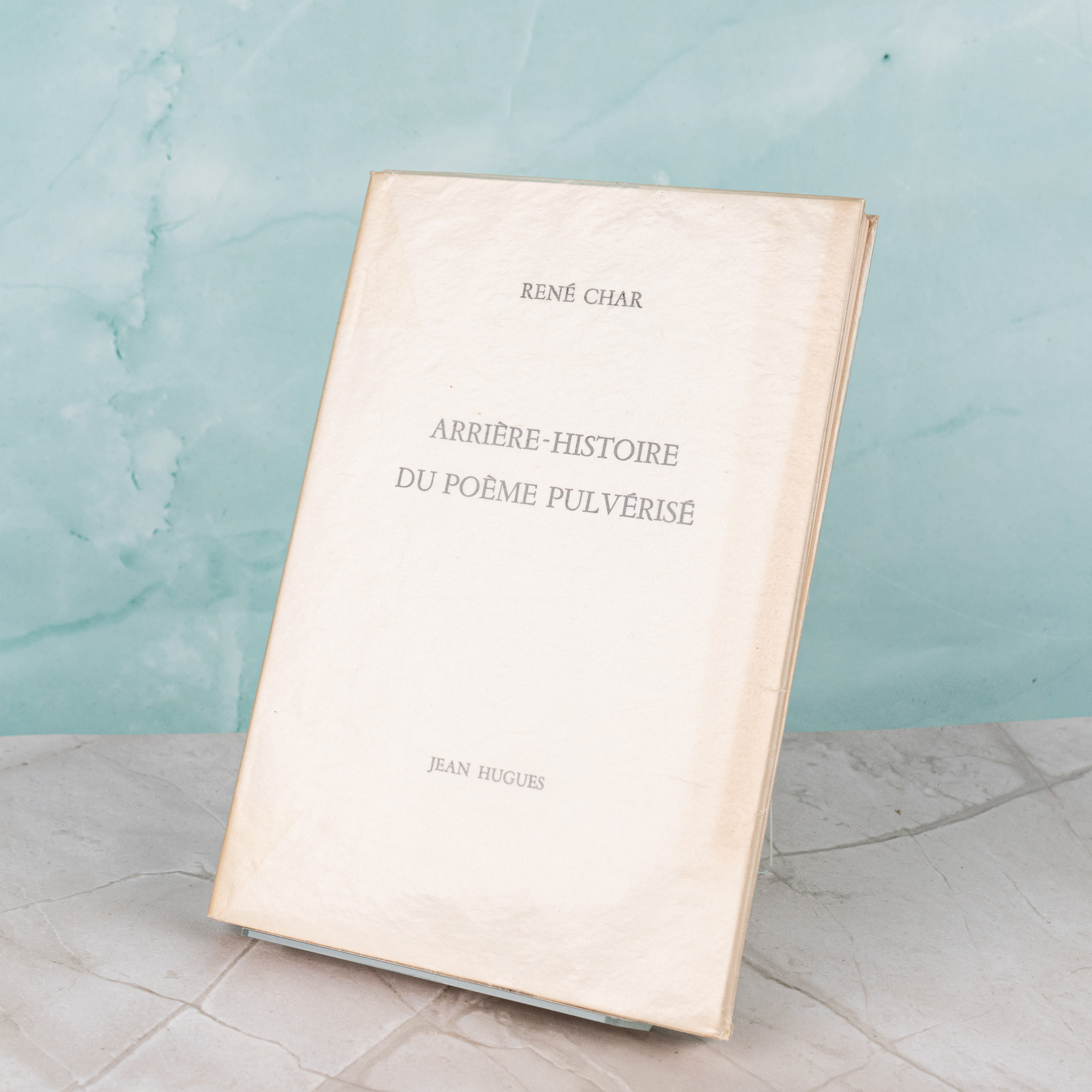
Char, Rene · Stael, Nicolas de
Arrière-histoire du poème pulvérisé
*Arrière-histoire du poème pulvérisé* is a later illustrated edition of a key text in which René Char looks back on the genesis and inner background of *Le Poème pulvérisé*. Published in 1972 by Imprimerie Union, it opens with a colour frontispiece by Nicolas de Staël. The pairing of Char and de Staël is especially charged: two post-war voices, each seeking concentration, clarity, and rupture in his own medium. This copy is one of only six hors commerce copies on Arches and is signed. The autograph presentation inscription to Doctor Marcel Zara, with poetic quotation and October 1972 dating, makes it a deeply personal copy.
Illustrated Book
€920
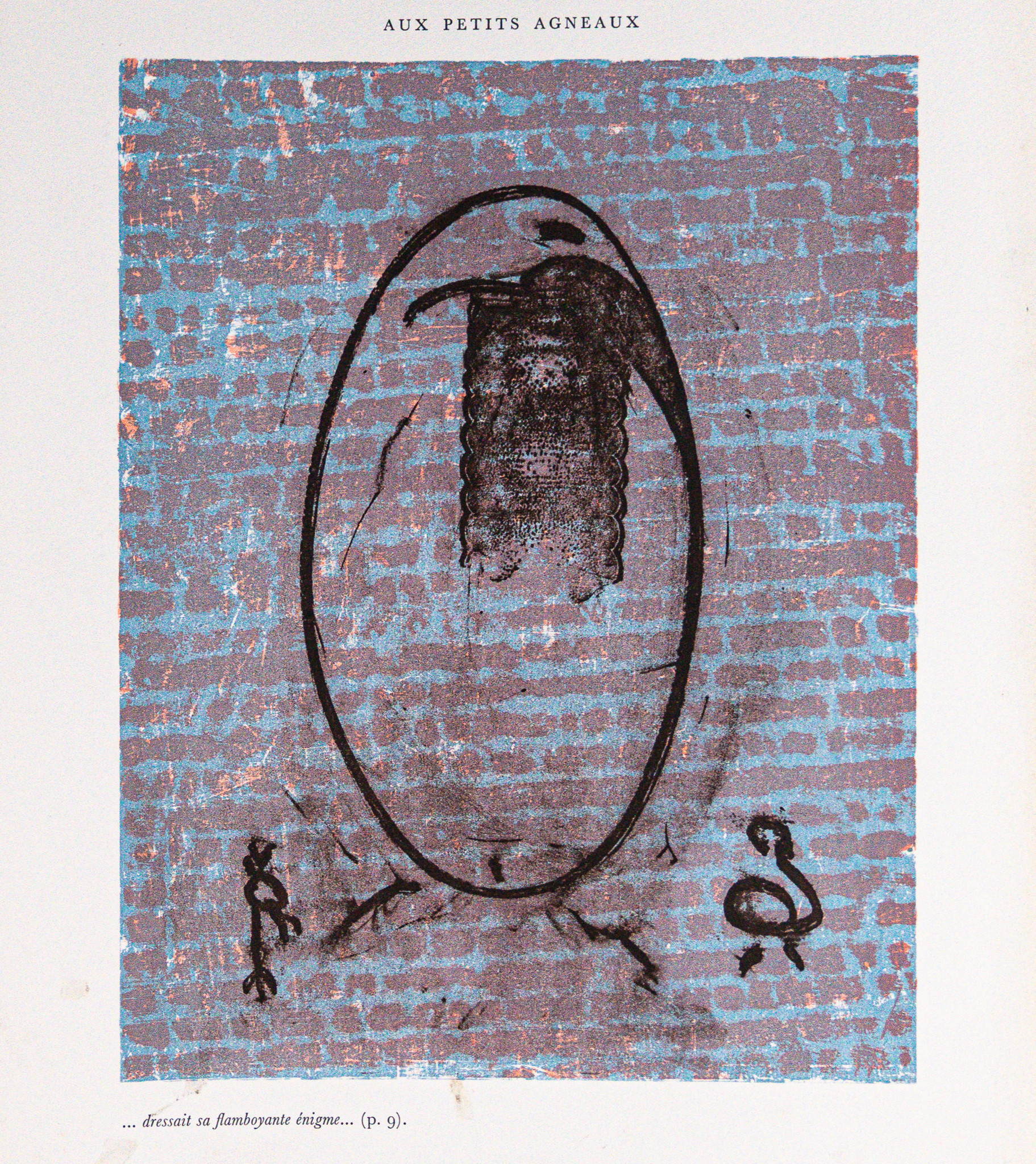
Waldberg, Patrick · Ernst, Max
Aux Petits Agneaux
A artist’s book resulting from the collaboration between writer Patrick Waldberg and surrealist master Max Ernst. This first edition includes 19 original lithographs printed on luxurious vélin d'Arches. Published in Paris in 1971 in a limited edition of 174 copies signed by both author and artist, and presented in a custom publisher’s box.
Illustrated Book
€2,200

Bédouin, Jean-Louis · Hallart, Guy
L'arbre descend du singe
L'Arbre descend du singe is a beautifully illustrated edition that highlights the collaboration between the poet Jean-Louis Bedouin and the artist Guy Hallart. The work, published in a limited edition, is characterized by a rich dialogue between poetry and image, where the visual compositions reflect the dreamy and often cryptic nature of Bedouin's texts. The book is a tangible testament to the artistic symbiosis between the two creators and offers a unique insight into a creative dialogue from the mid-1970s.
Illustrated Book
€700

Michaux, Henri · Bettencourt, Pierre
Arriver à se réveiller
A rare first edition of Arriver à se réveiller, written by Henri Michaux in the tremulous post-war years. The text unfolds as an inward journey toward lucidity, where sleep and waking mirror each other. Printed and published by Pierre Bettencourt in his own workshop, the edition’s small run preserves the work’s intimacy. The title-page vignette, a linocut by Bettencourt, sets a spare, rhythmic visual key that amplifies Michaux’s vigilant, vulnerable tone. This copy is handsomely bound in brown morocco with balsa boards by Miguet, a tactile nod to lightness under tension. For bibliophiles, it is an exemplary union of poetry, craft, and experiment. The volume embodies the independence of the post-war small press and Michaux’s radical sensitivity.
