


Charlot
This brisk biography studies Chaplin’s Tramp—not a scholarly treatise but a lively portrait of a myth that gave modernity a face. Issued in 1931 by Plon in the La grande fable series, the small-format book uses spare, elegant design. Soupault reads the Tramp as emblem of resourceful fragility; between slapstick and melancholy he sketches an ethics of the humble. The quick, precise prose moves in scene-like chapters. For bibliophiles it shows an early Surrealist thinking cinema in prose. This copy is enriched with an inserted autograph poem.
Quantity


Soupault, Philippe
ILLUSTRATORS
ILLUSTRATORS
ILLUSTRATORS
Charlot
1931 | Paris | A La Librairie Plon
A crisp portrait of the Tramp, enhanced by a probably autograph poem.
This brisk biography studies Chaplin’s Tramp—not a scholarly treatise but a lively portrait of a myth that gave modernity a face. Issued in 1931 by Plon in the La grande fable series, the small-format book uses spare, elegant design. Soupault reads the Tramp as emblem of resourceful fragility; between slapstick and melancholy he sketches an ethics of the humble. The quick, precise prose moves in scene-like chapters. For bibliophiles it shows an early Surrealist thinking cinema in prose. This copy is enriched with an inserted autograph poem.
€450
Condition Report:
In-Depth Study
References & Bibliography
Format
In-12 (Duodecimo) approx. 17 × 22 cm
Edition Particulars
Copy accompanied by a probably autograph poem (unsigned, undated).
1
Edition Particulars:
We welcome private inquiries, collaborations with institutions, and acquisition requests. Each message is treated with discretion and respect. We welcome private inquiries, collaborations with institutions, and acquisition requests.
1
Print Run:
Condition Report:
1
Copy Number:
Condition Report:
1
Paper:
Condition Report:
1
Signed:
Condition Report:
Product DETAIL
The book studies the Tramp’s mimicry, rhythm and gestures, linking them to city life, poverty and obstinate hope. Soupault renders film sequences as mini-stories, stressing a poetics of timing and pause. He alternates anecdote with brief analysis and reflections on fame and recognisability. The style is clear and journalistic yet sensitive. The result is a compact portrait that secures the phenomenon for a literary audience.
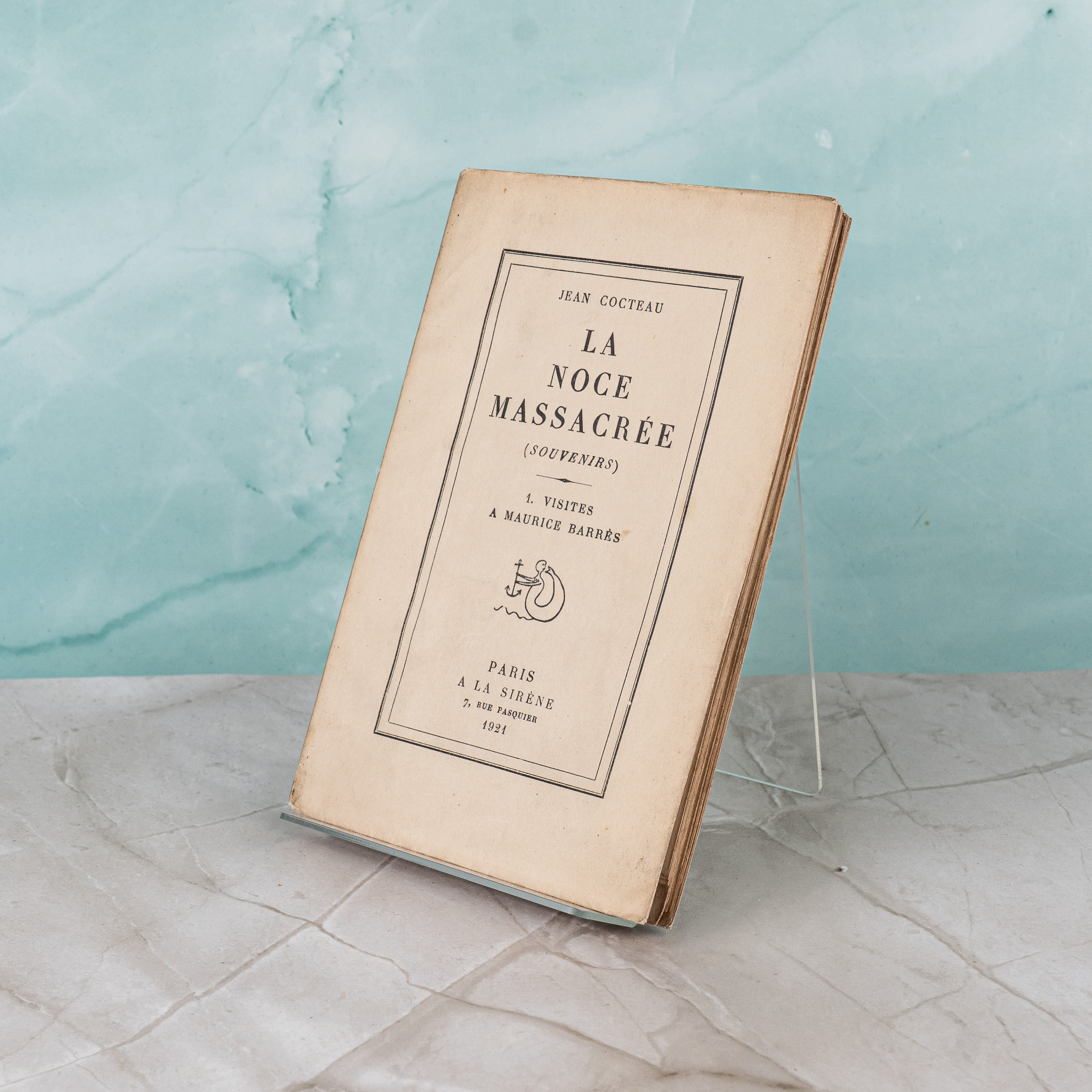
Cocteau, Jean
La Noce massacrée
La Noce massacrée belongs to Jean Cocteau’s early, sharply modernist phase, shortly after Parade and in close proximity to Raymond Radiguet. The book appeared in 1921 with À la Sirène, a publisher closely connected with the Parisian artistic avant-garde and literary modernism. The presence of a vignette after Picasso reinforces that context, although this is not an illustrated artist’s book in the strict sense. Cocteau writes from a milieu in which literature, theatre, ballet, visual art and social polemic constantly intersected. The printed dedication to Radiguet also makes the book a witness to a decisive friendship and intellectual alliance. This copy, n°XIX, belongs to the first 40 copies on vergé d’Arches, the most desirable form of the edition.
Book
€850
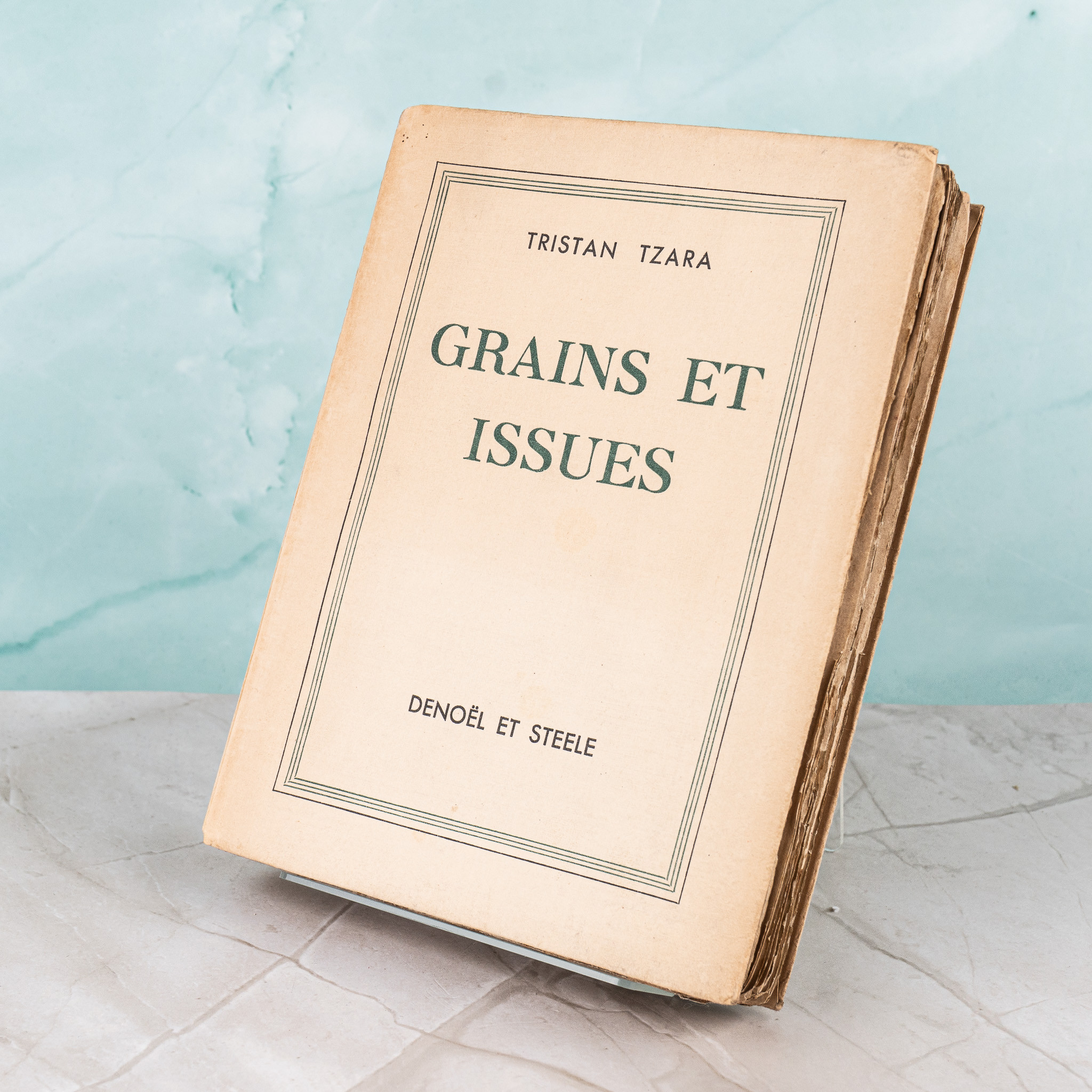
Tzara, Tristan
Grains et issues
Grains et issues is a key publication in Tristan Tzara’s passage from Dadaist disruption to Surrealist and revolutionary reflection. The book appeared in 1935 with Denoël et Steele, at a moment when poetry, politics and theory were becoming increasingly intertwined within the avant-garde. Tzara, once the voice and organizer of Dada in Zurich and Paris, no longer seeks only the explosion of meaning, but also a dialectic between dream, matter, history and liberation. This original edition is bibliophilically notable as a large-paper copy: one of the copies on vergé d’Arches, signed by the author. Its unopened state preserves the tension between the book as an instrument of reading and the book as an untouched object. For The Hidden Page, it is an exceptionally strong match: a major historical avant-garde author, a key text and a scarce signed deluxe variant.
Book
€720
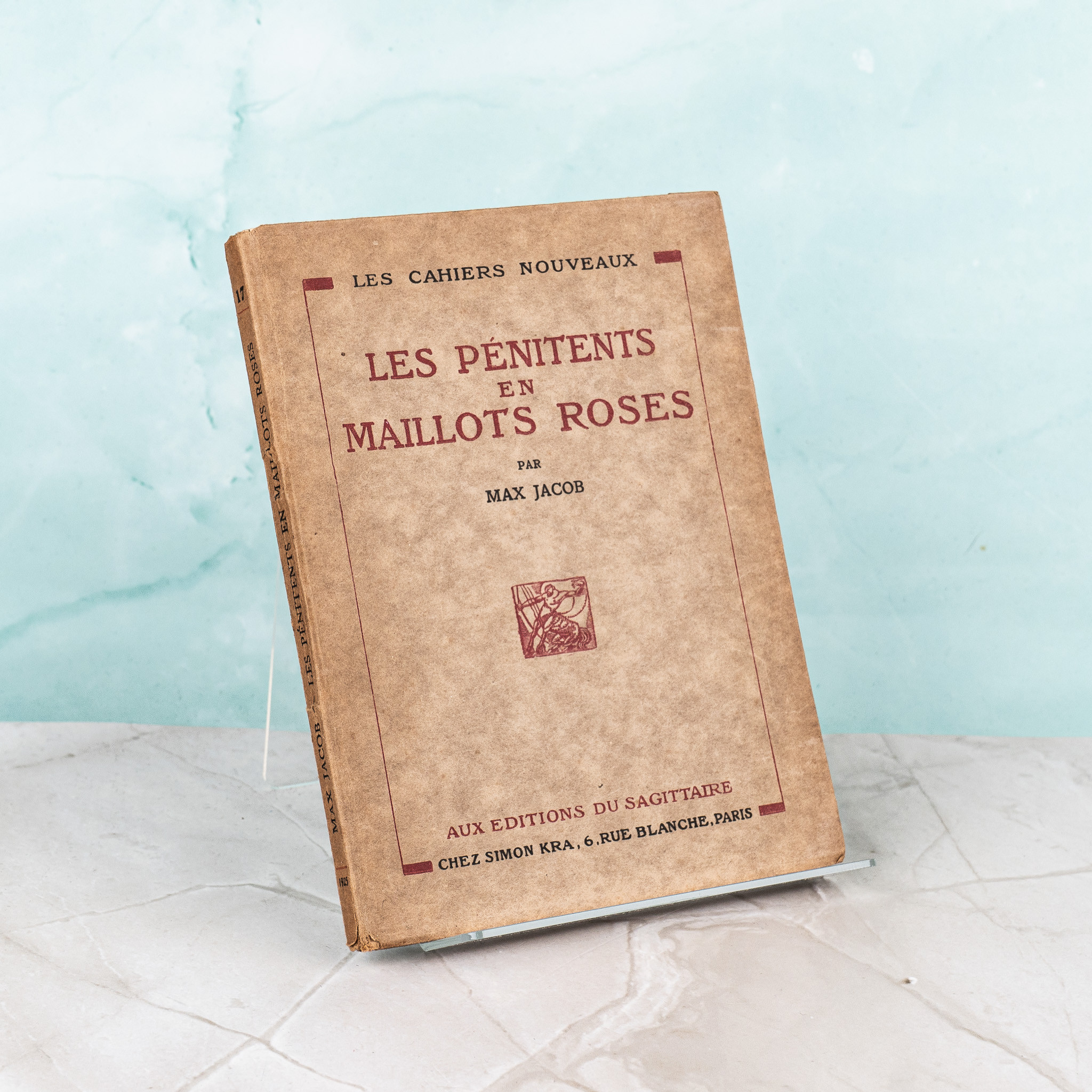
Jacob, Max
Les pénitents en maillots roses
Les pénitents en maillots roses belongs to Max Jacob’s subtle, agile poetry of the years following his conversion and his partial withdrawal from the Parisian scene. The book was published in 1925 by Aux Éditions du Sagittaire, chez Simon Kra, as no. 17 in the series Les Cahiers nouveaux. In this compact volume, burlesque observation, religious unease and verbal lightness meet in a characteristically Jacobian manner. This copy is enriched with a witty, slightly self-mocking inscription in brown ink. The recipient Fouquet is probably Gaëtan Fouquet (1903–1973), a well-known figure within the broader Parisian modernist circle.. For the bibliophile, its appeal lies in the conjunction of first edition, numbered issue and personal envoi.
Book
€320
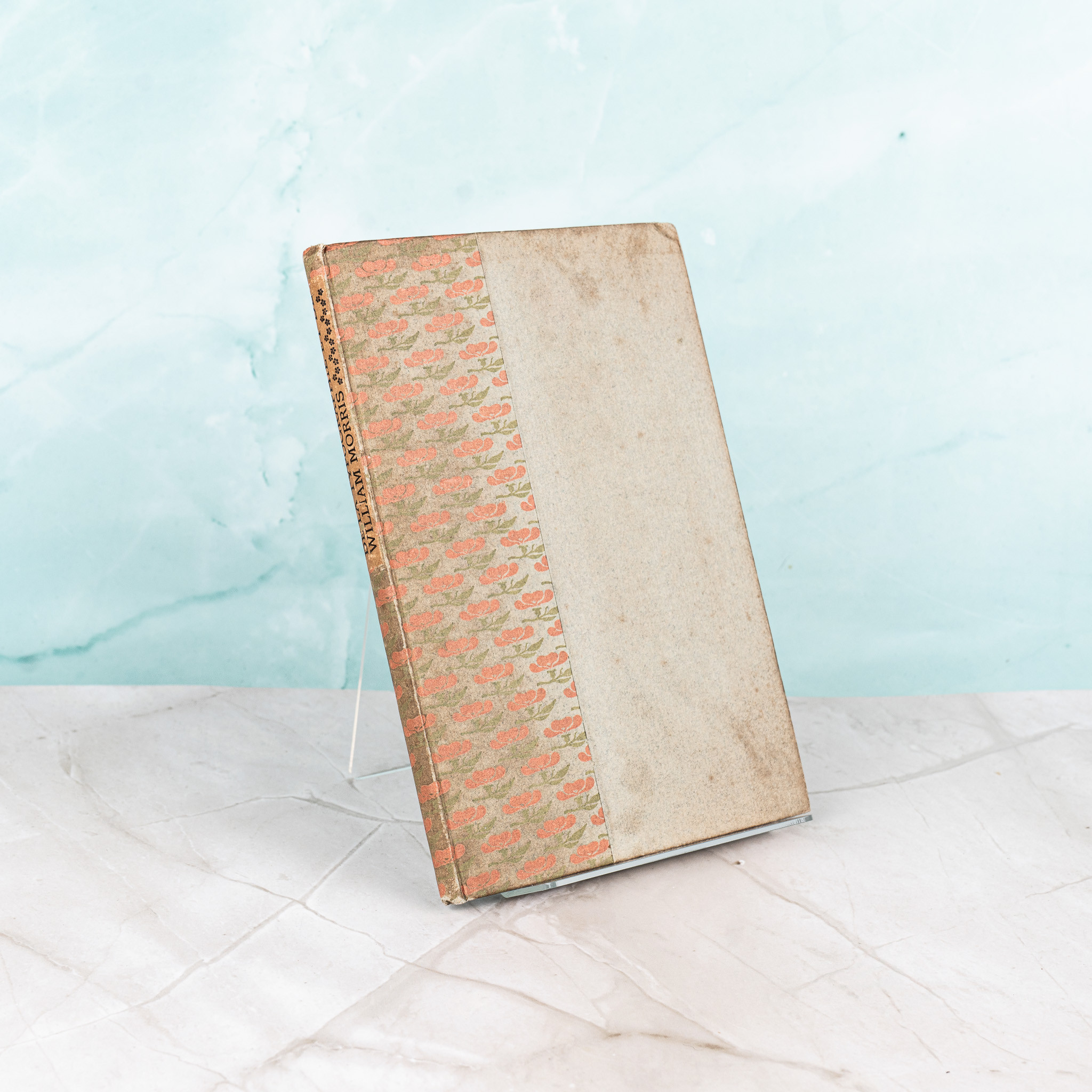
Pissarro, Lucien · Ricketts, Charles
De la typographie et de l’harmonie de la page imprimée. William Morris et son influence sur les arts et métiers
De la typographie et de l’harmonie de la page imprimée is a refined fin-de-siècle publication devoted to the art of the printed page. Lucien Pissarro and Charles Ricketts place William Morris at the centre as a reformer of the book, printing and the applied arts. The work belongs to the circles in which the Arts and Crafts movement, private press ideals and the renewed valuation of typography meet. The title makes clear that typography is not treated as a technical accessory, but as an harmony of type, margin, paper and page design. The edition appeared in 1898, in London from Ricketts and in Paris from Floury, standing between English private press culture and French bibliophile reception. This copy belongs to the issue of 250 copies on Arnold handmade laid paper within a total edition of 256 copies. The present errata slip and only slight corner wear make it bibliographically attractive and complete.
