


DIE BEDEUTUNG DES SCHÖNEN IN DER EXAKTEN NATURWISSENSCHAFT.
This rare and luxurious book unites the profound reflections of Nobel laureate Werner Heisenberg with the visionary art of Max Ernst, resulting in an extraordinary dialogue between science and art. The publication, originating from a lecture by Heisenberg, is enriched with three original color lithographs by Max Ernst, printed by the renowned Pierre Chave. The book is a rare example of a symbiosis between academic depth and artistic expression, published by the Belser-Presse, known for its high-quality and aesthetically superior editions. This unique edition reflects the cultural and intellectual currents of the early 1970s, where the boundaries between disciplines blur and new forms of collaboration emerge. The combination of a prominent physicist and an iconic surrealist artist makes this work a crucial document for both art enthusiasts and science historians.
Quantity


Heisenberg, Werner
Ernst, Max
DIE BEDEUTUNG DES SCHÖNEN IN DER EXAKTEN NATURWISSENSCHAFT.
1971 | Stuttgart | Belser
This specific copy is signed by the artist, Max Ernst, which gives it a special provenance. The English translation by Enrico Cantore adds to the international accessibility of Heisenberg's lecture.
This rare and luxurious book unites the profound reflections of Nobel laureate Werner Heisenberg with the visionary art of Max Ernst, resulting in an extraordinary dialogue between science and art. The publication, originating from a lecture by Heisenberg, is enriched with three original color lithographs by Max Ernst, printed by the renowned Pierre Chave. The book is a rare example of a symbiosis between academic depth and artistic expression, published by the Belser-Presse, known for its high-quality and aesthetically superior editions. This unique edition reflects the cultural and intellectual currents of the early 1970s, where the boundaries between disciplines blur and new forms of collaboration emerge. The combination of a prominent physicist and an iconic surrealist artist makes this work a crucial document for both art enthusiasts and science historians.
€1,920
Condition Report:
In-Depth Study
References & Bibliography
Format
In-folio (Folio) approx. 30 × 40 cm
Edition Particulars
Signed luxury copy in 185 numbered copies.
Print Run
185
Copy Number
136
Paper
Bütten
Inscription
Signed by the Illustrator
Product DETAIL
The book presents Werner Heisenberg's lecture on the meaning of beauty in the exact natural sciences. It explores the aesthetic dimension of scientific theories and discoveries, emphasizing the relationship between mathematical elegance and the truth of nature. Max Ernst's illustrations add an artistic layer, visually interpreting and complementing the abstract concepts of science. The work examines the universal principles present in both art and science, inviting the reader to a multidisciplinary reflection. This work bridges the seemingly separate worlds of natural science and aesthetics, offering a deeper insight into how beauty can guide the pursuit of knowledge. Themes include the intrinsic beauty of natural laws, the role of intuition in scientific discovery, and the subjective experience of aesthetics in an objective reality.
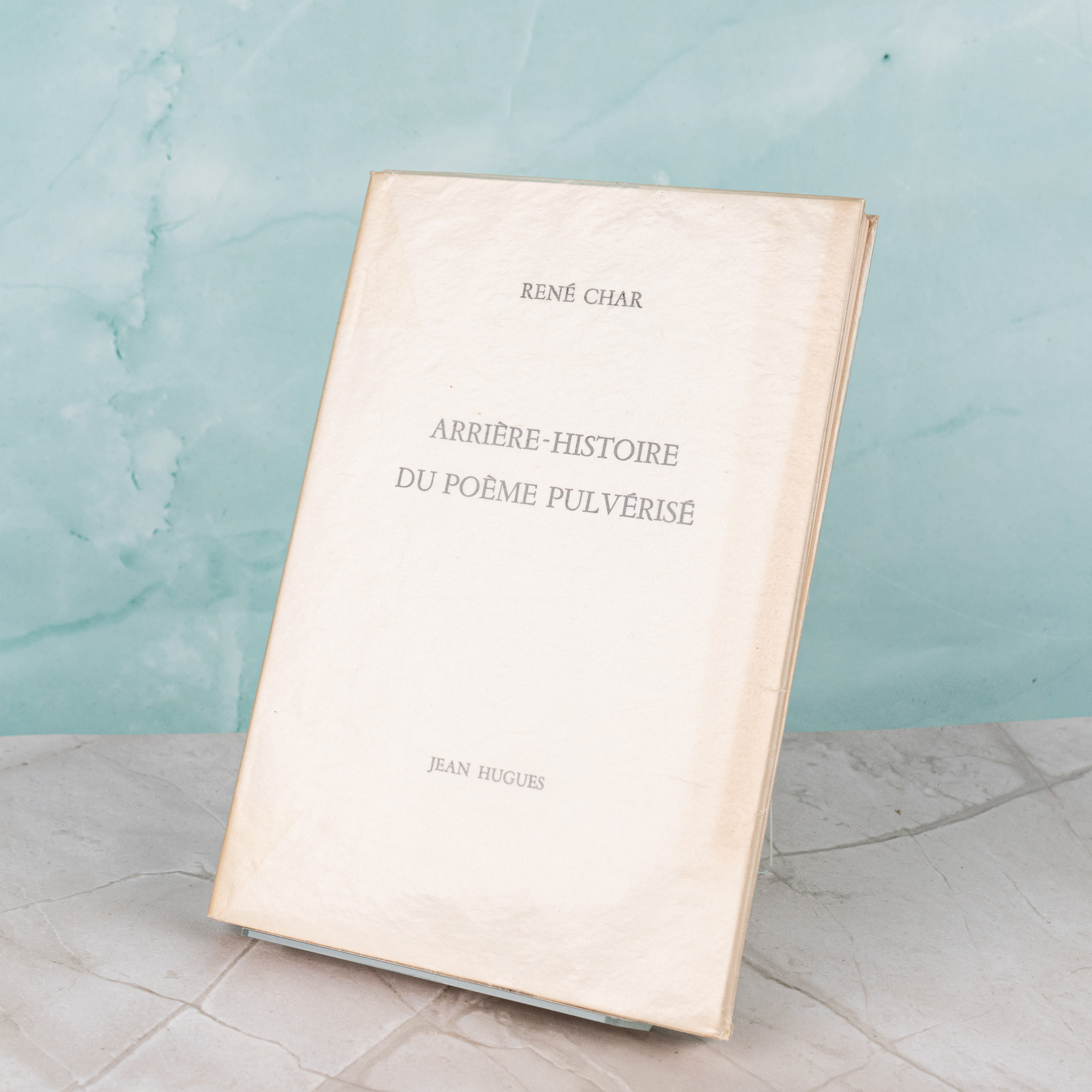
Char, Rene · Stael, Nicolas de
Arrière-histoire du poème pulvérisé
*Arrière-histoire du poème pulvérisé* is a later illustrated edition of a key text in which René Char looks back on the genesis and inner background of *Le Poème pulvérisé*. Published in 1972 by Imprimerie Union, it opens with a colour frontispiece by Nicolas de Staël. The pairing of Char and de Staël is especially charged: two post-war voices, each seeking concentration, clarity, and rupture in his own medium. This copy is one of only six hors commerce copies on Arches and is signed. The autograph presentation inscription to Doctor Marcel Zara, with poetic quotation and October 1972 dating, makes it a deeply personal copy.
Illustrated Book
€920
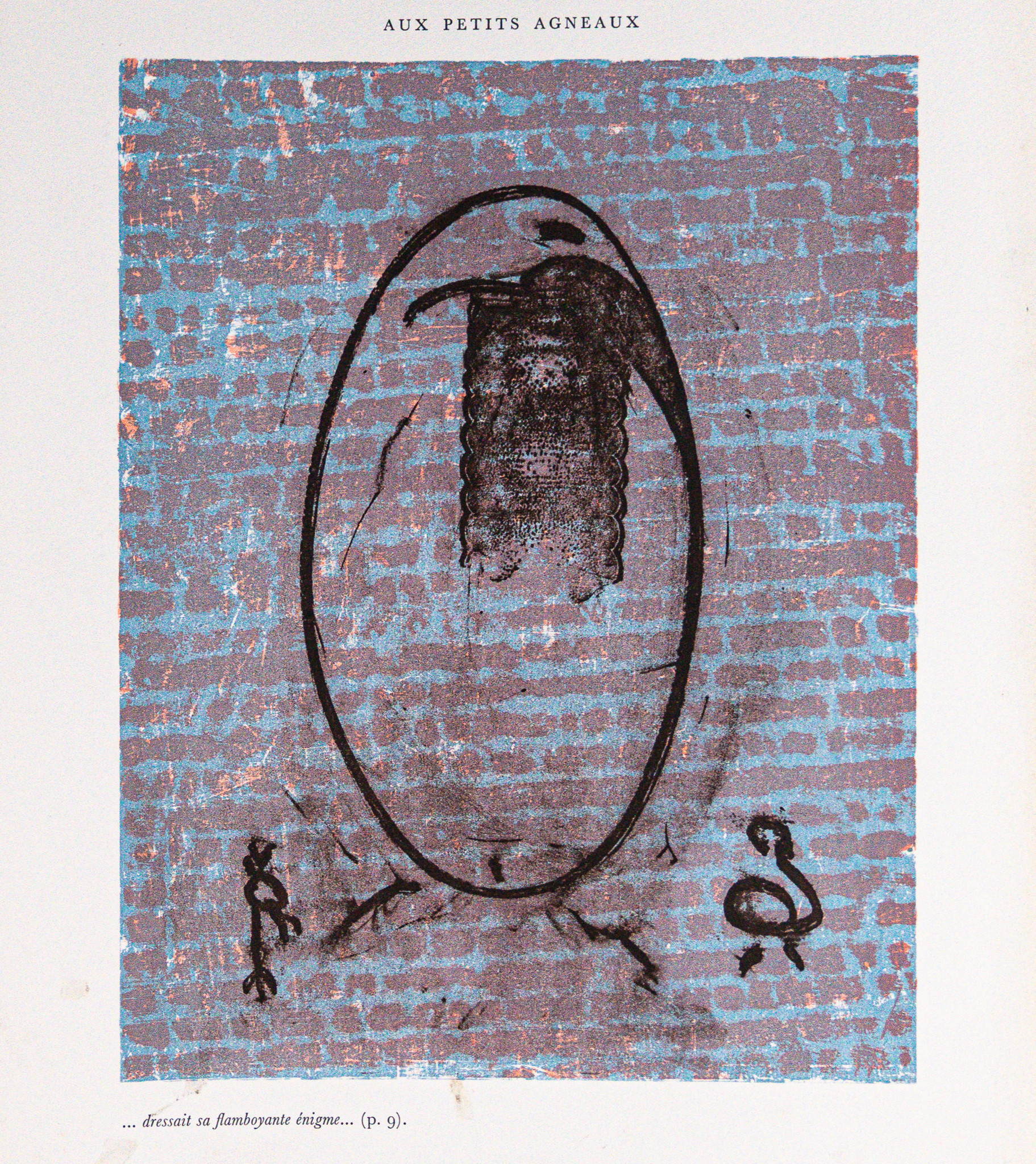
Waldberg, Patrick · Ernst, Max
Aux Petits Agneaux
A artist’s book resulting from the collaboration between writer Patrick Waldberg and surrealist master Max Ernst. This first edition includes 19 original lithographs printed on luxurious vélin d'Arches. Published in Paris in 1971 in a limited edition of 174 copies signed by both author and artist, and presented in a custom publisher’s box.
Illustrated Book
€2,200

Bédouin, Jean-Louis · Hallart, Guy
L'arbre descend du singe
L'Arbre descend du singe is a beautifully illustrated edition that highlights the collaboration between the poet Jean-Louis Bedouin and the artist Guy Hallart. The work, published in a limited edition, is characterized by a rich dialogue between poetry and image, where the visual compositions reflect the dreamy and often cryptic nature of Bedouin's texts. The book is a tangible testament to the artistic symbiosis between the two creators and offers a unique insight into a creative dialogue from the mid-1970s.
Illustrated Book
€700

Michaux, Henri · Bettencourt, Pierre
Arriver à se réveiller
A rare first edition of Arriver à se réveiller, written by Henri Michaux in the tremulous post-war years. The text unfolds as an inward journey toward lucidity, where sleep and waking mirror each other. Printed and published by Pierre Bettencourt in his own workshop, the edition’s small run preserves the work’s intimacy. The title-page vignette, a linocut by Bettencourt, sets a spare, rhythmic visual key that amplifies Michaux’s vigilant, vulnerable tone. This copy is handsomely bound in brown morocco with balsa boards by Miguet, a tactile nod to lightness under tension. For bibliophiles, it is an exemplary union of poetry, craft, and experiment. The volume embodies the independence of the post-war small press and Michaux’s radical sensitivity.
Illustrated Book
€680

When a Signature Becomes Provenance
A signature confirms; a dedication connects; an association copy tells a story.

The Fragile Meaning of ‘Complet’
In auction descriptions, “complete” often sounds reassuring — but it is only meaningful when verified against the colophon, the justification, and the bibliography. For The Hidden Page, clarity begins where vague market language ends.

The Avant-Garde and the Illustrated Word
How the Twentieth Century Recast the Book as an Artistic and Ideological Medium