


Il est toujours trop tard. 1924-1928
This Antwerp publication by La Serfouette (1969) forms an unusually complete set as a “Réunion des 2 tirages” of *Il est toujours trop tard. 1924-1928*. It brings together two issues: an ‘ordinary’ issue in stiff orange paper wrappers and the deluxe issue with Roger van de Wouwer’s graphics. A telling peculiarity: the ordinary issue’s title page also states “Dix Gravures de Roger van de Wouwer”, yet the plates are in fact absent—functioning essentially as a textual ‘copy’ of the deluxe issue. The deluxe issue, by contrast, is complete and accompanied by a “suite de 10 eaux-fortes originales (avec cuvette)”: ten large black etchings, all signed and justified. The ordinary issue is further enriched with an important “envoi autographe signé à Jeanne Abraham et André Stas (note sur la priorité de parution)”, in which Scutenaire insists that this second edition is “in reality, the original” because it appeared weeks, if not months, before the illustrated issue. Together, the two volumes document textual history, bibliophile strategy, and the paradox of publication priority within Antwerp surrealism.
Quantity


Scutenaire, Louis
van de Wouwer, Roger
Il est toujours trop tard. 1924-1928
1969 | Antwerpen | La Serfouette
Rare as a complete “Réunion des 2 tirages”: an ordinary issue claiming the plates without them, plus No. 79/150 on Arches with the full plate-marked suite.
This Antwerp publication by La Serfouette (1969) forms an unusually complete set as a “Réunion des 2 tirages” of *Il est toujours trop tard. 1924-1928*. It brings together two issues: an ‘ordinary’ issue in stiff orange paper wrappers and the deluxe issue with Roger van de Wouwer’s graphics. A telling peculiarity: the ordinary issue’s title page also states “Dix Gravures de Roger van de Wouwer”, yet the plates are in fact absent—functioning essentially as a textual ‘copy’ of the deluxe issue. The deluxe issue, by contrast, is complete and accompanied by a “suite de 10 eaux-fortes originales (avec cuvette)”: ten large black etchings, all signed and justified. The ordinary issue is further enriched with an important “envoi autographe signé à Jeanne Abraham et André Stas (note sur la priorité de parution)”, in which Scutenaire insists that this second edition is “in reality, the original” because it appeared weeks, if not months, before the illustrated issue. Together, the two volumes document textual history, bibliophile strategy, and the paradox of publication priority within Antwerp surrealism.
€950
Condition Report:
In-Depth Study
References & Bibliography
Format
In-folio (Folio) approx. 30 × 40 cm
Edition Particulars
“Réunion des 2 tirages” + ordinary issue on stiff orange paper: title page states “Dix Gravures de Roger van de Wouwer” but plates are absent; “Exemplaire 79/150 sur vélin d’Arches” + “suite de 10 eaux-fortes originales (avec cuvette)” (all signed and justified) + “envoi autographe signé à Jeanne Abraham et André Stas (note sur la priorité de parution)”.
Print Run
150
Copy Number
No. 79
Paper
Vélin d’Arches
Inscription
Envoi,Signed by the Illustrator
1
Edition Particulars:
We welcome private inquiries, collaborations with institutions, and acquisition requests. Each message is treated with discretion and respect. We welcome private inquiries, collaborations with institutions, and acquisition requests.
1
Print Run:
Condition Report:
1
Copy Number:
Condition Report:
1
Paper:
Condition Report:
1
Signed:
Condition Report:
Product DETAIL
The volume gathers Scutenaire’s brief early texts from 1924–1928, where razor-edged aphorism and dry paradox meet. The voice is anti-rhetorical: a clear, often biting minimalism that tilts the everyday toward the absurd. The two issues offer two experiences: ‘naked’ text (the ordinary issue) and text in dialogue with printmaking (the deluxe issue). Notably, the ordinary issue’s title page still reads “Dix Gravures de Roger van de Wouwer”, although the plates are not present. In the illustrated issue, ten large black etchings answer the text with restrained, charged imagery. The set thus becomes a double portrait of the same corpus: reading book and book-object.
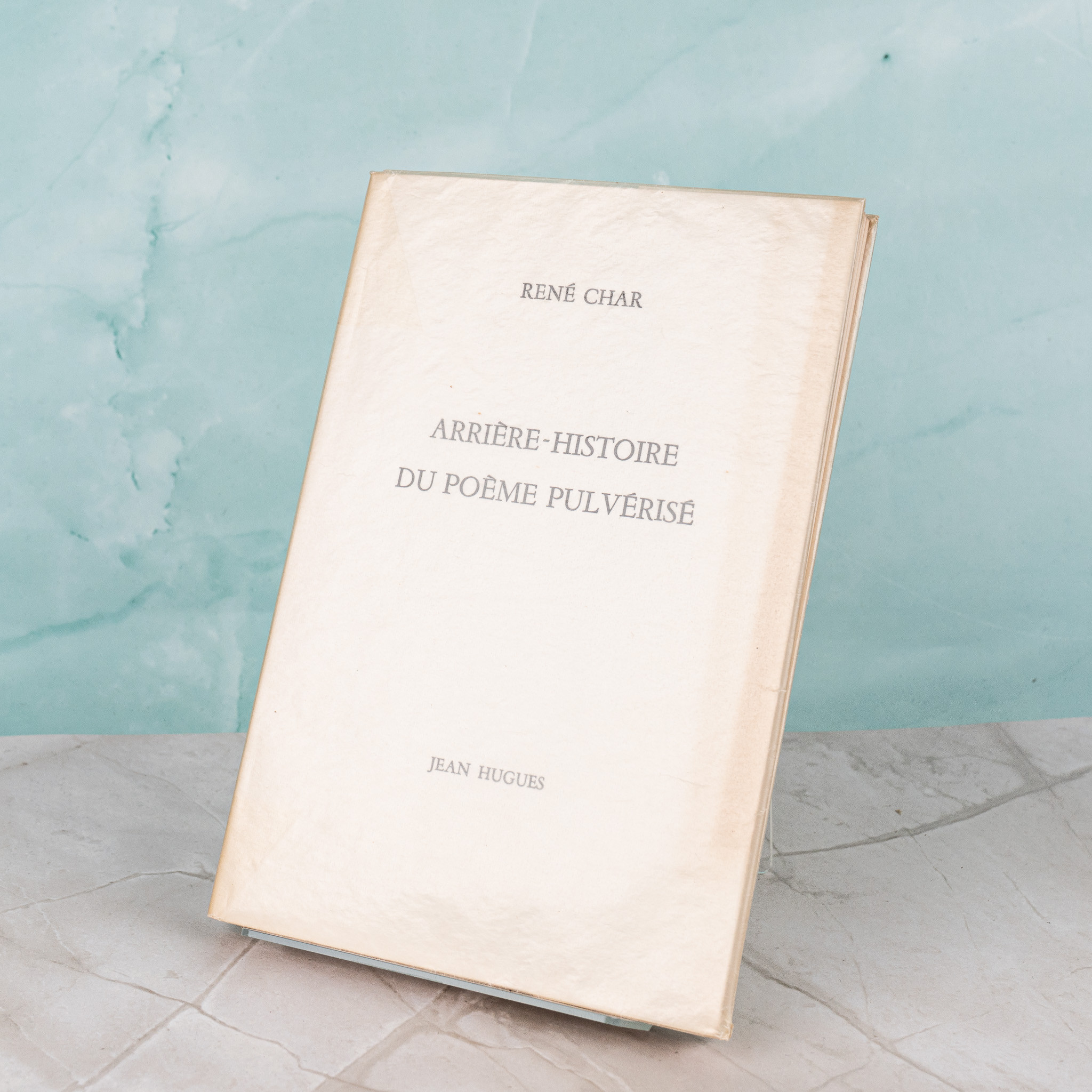
Char, Rene · Stael, Nicolas de
Arrière-histoire du poème pulvérisé
*Arrière-histoire du poème pulvérisé* is a later illustrated edition of a key text in which René Char looks back on the genesis and inner background of *Le Poème pulvérisé*. Published in 1972 by Imprimerie Union, it opens with a colour frontispiece by Nicolas de Staël. The pairing of Char and de Staël is especially charged: two post-war voices, each seeking concentration, clarity, and rupture in his own medium. This copy is one of only six hors commerce copies on Arches and is signed. The autograph presentation inscription to Doctor Marcel Zara, with poetic quotation and October 1972 dating, makes it a deeply personal copy.
Ill Book
€920
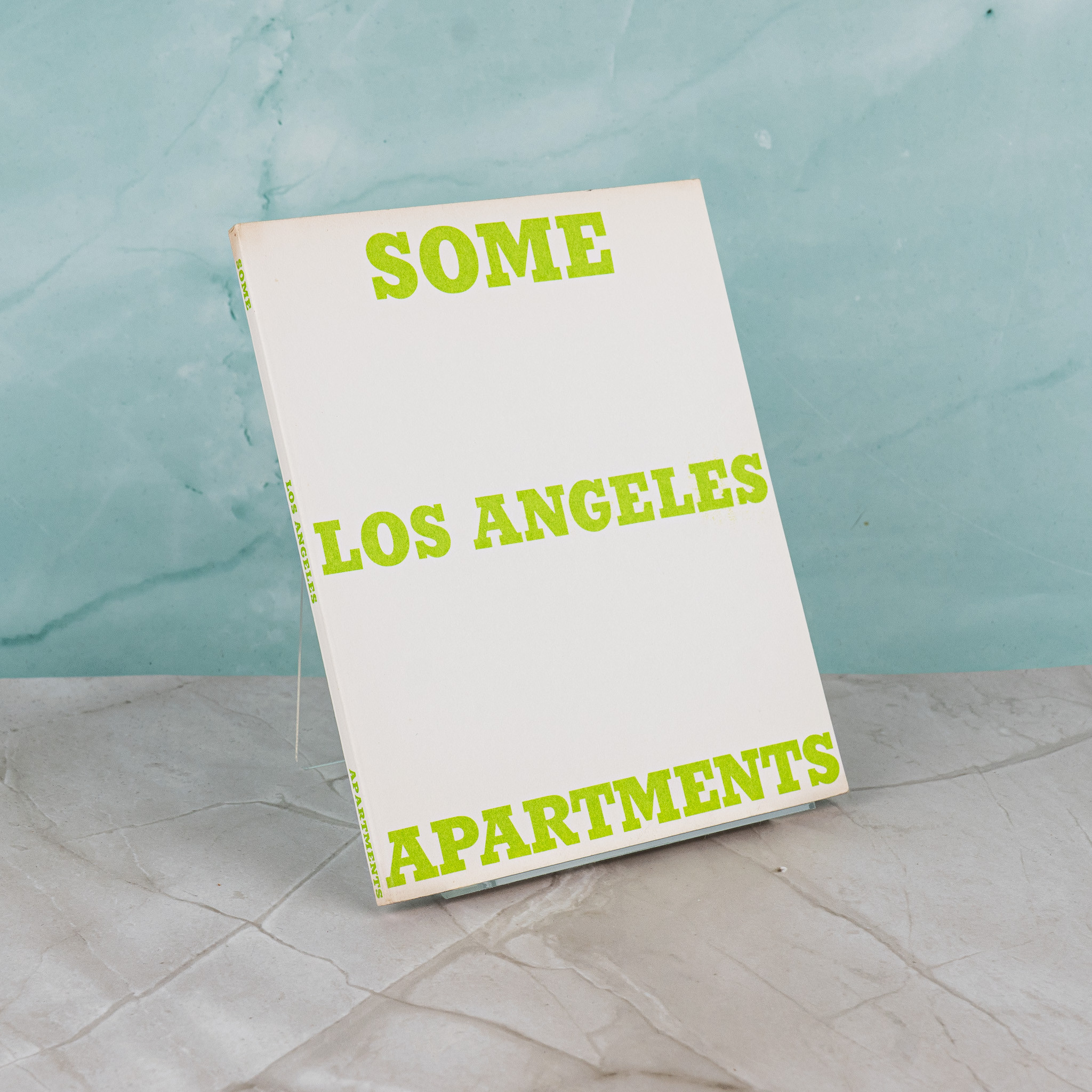
Ruscha, Edward · Ruscha, Ed
Some Los Angeles Apartments
Some Los Angeles Apartments is one of Ed Ruscha’s iconic early artist’s books, devoted to the banal architecture of Los Angeles. Instead of monuments, drama or urban glamour, Ruscha shows ordinary apartment buildings, coolly photographed and without visible sentimentality. This second edition of 1970, printed in 3,000 unnumbered copies, confirms the wider circulation of his conceptual book form. The small format, sober wrappers and original glassine wrapper make it an essential Ruscha object.
Ill Book
€950
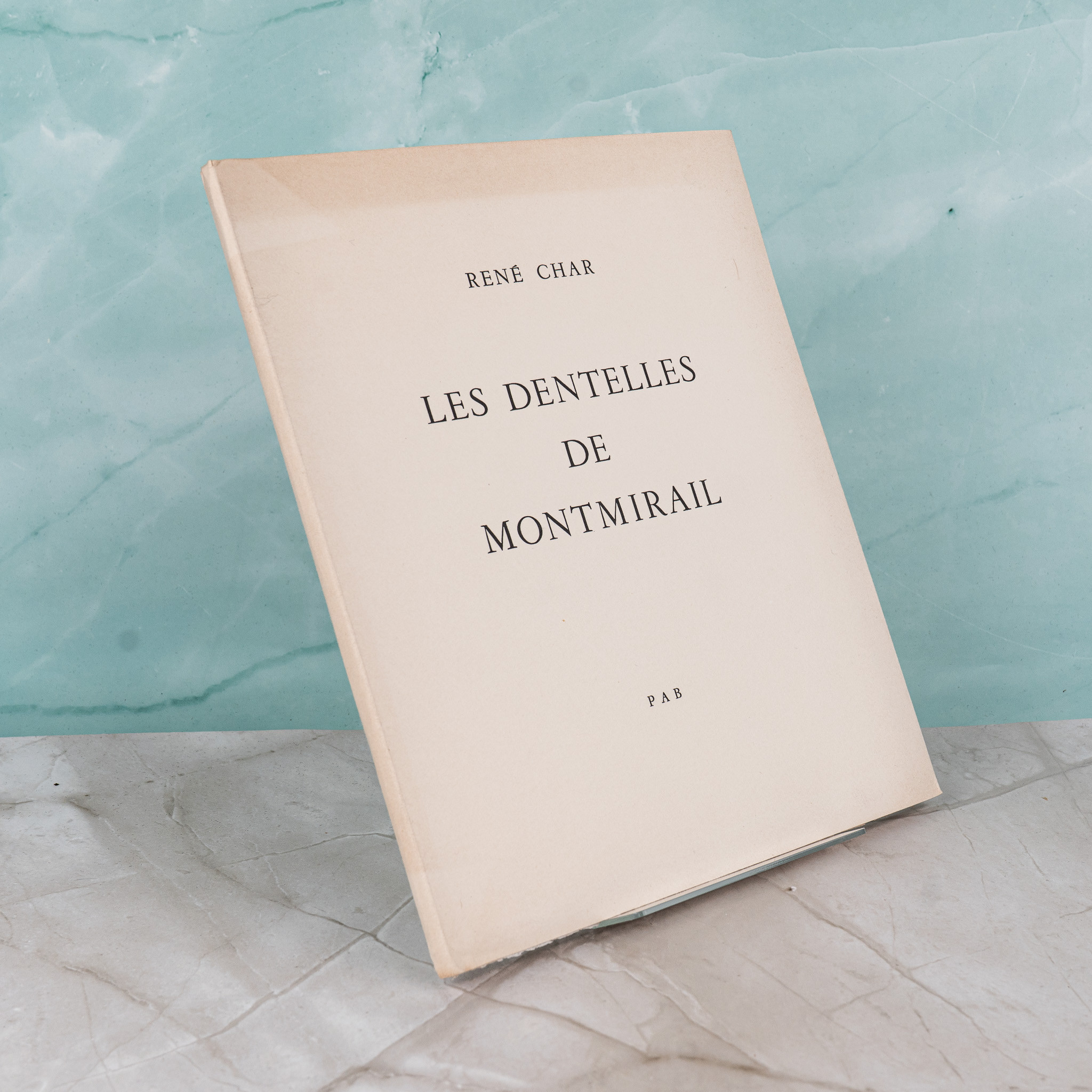
Char, Rene · Pierre Andre Benoit (PAB)
Les Dentelles de Montmirail
Les Dentelles de Montmirail is one of the characteristic small masterpieces born of the collaboration between René Char and PAB. It was published in 1960 between L’Isle-sur-Sorgue and Alès, two places that immediately evoke the geography of Char and that of Pierre André Benoit. The edition joins Char’s brief, aphoristic lyric voice to five natural impressions from Montmirail, so that text and matter quite literally meet. With PAB, poetry often takes on an intimate, almost handmade form, and that quality is especially palpable here. The limited issue on Arches heightens the book’s discreet yet unmistakable bibliophile character. This copy gains further importance from the autograph inscription to Dr Marcel Zara, far more than a routine dedication and almost readable as a small autonomous poem. For collectors, it is an exemplary PAB production in which landscape, trace, inscription, and poem become a single object.
Ill Book
€2,250
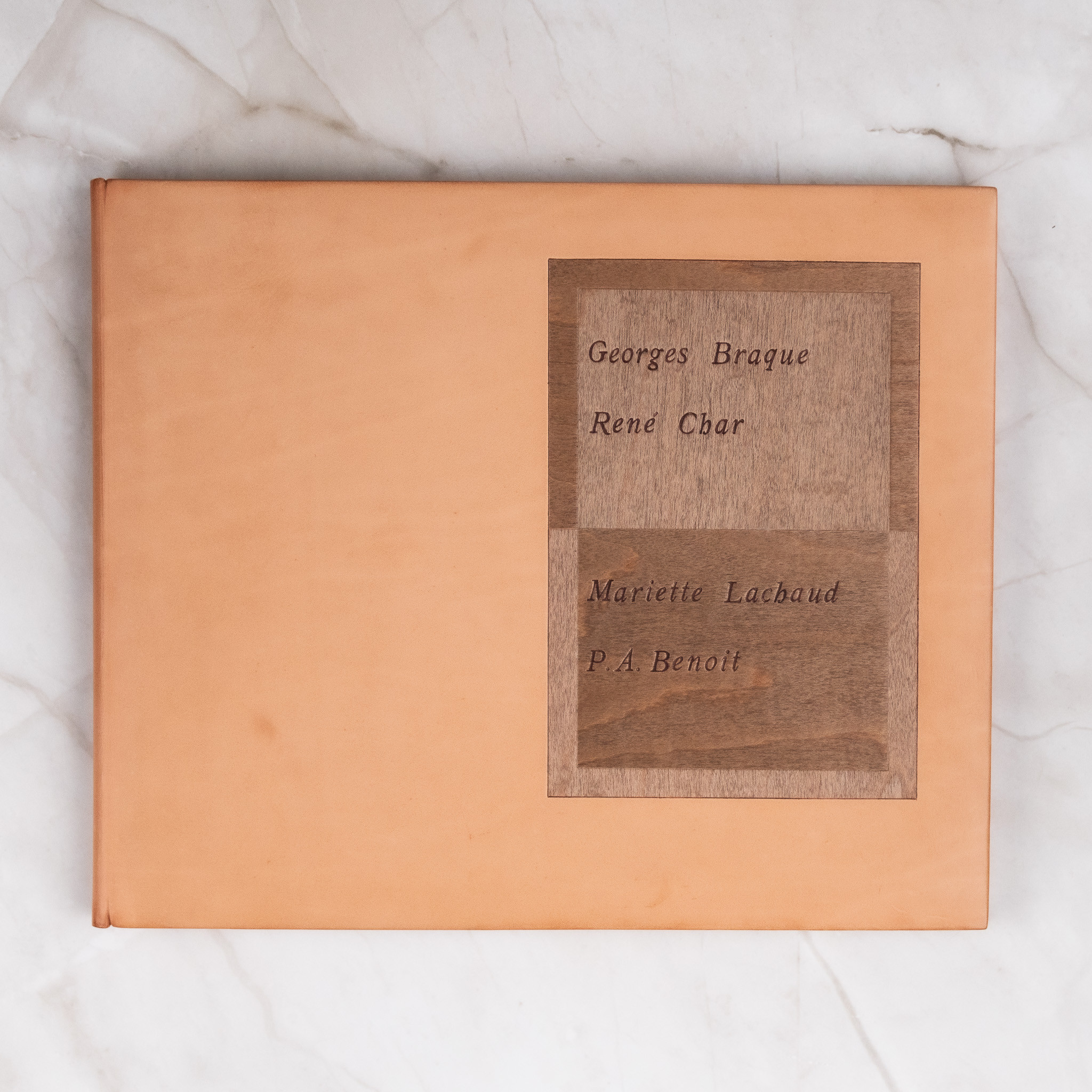
René Char, Georges Braque · Lachaud, Mariette · Pierre Andre Benoit (PAB)
Ainsi va l'amitié
What makes this copy especially memorable is not only its tiny limitation but the way it fixes three friendships at once: that between Char and Braque, that between Char and PAB, and that of all of them with the image that outlives them. The eight original photographs are not an illustrative supplement but the true bearers of presence; they preserve gazes, workspaces, and silences. The fact that PAB and Mariette Lachaud signed this copy gives it an almost confidential status, as though the circle of makers were still present within the book. In such editions, bibliophily becomes more than rarity alone: it becomes a form of shared memory.
