


L’Amour absolu, suivi de L’Autre
Alceste
This edition of *L’Amour absolu, suivi de L’Autre Alceste* brings together two key texts from Alfred Jarry’s singular imaginative world. It was issued by Mercure de France in 1952 with a preface by Maurice Saillet, at a moment when Jarry’s rediscovery was closely tied to the Collège de ’Pataphysique. For the bibliophile, it is more than a neat post-war reissue: it is a material witness to Jarry’s continuing influence on twentieth-century avant-garde culture. *L’Amour absolu* is among his most inward and elusive prose works, where autobiography, mysticism, and parody become inseparable. *L’Autre Alceste* adds a dramatic and mythological counterpoint. This copy is made more significant by its strongly marked pataphysical provenance. The red circular stamps of the Ordre de la Grande Gidouille, together with name-stamps associated with Eugène Ionesco, Raymond Queneau, and Noël Arnaud, give it an exceptional collegiate resonance. It is therefore not merely a reading copy, but an object that visibly circulated within Jarry’s living afterlife.
Quantity


Jarry, Alfred
ILLUSTRATORS
ILLUSTRATORS
ILLUSTRATORS
L’Amour absolu, suivi de L’Autre
Alceste
1952 | Parijs | Mercure de France
A numbered Jarry copy that visibly passed through the hands of his pataphysical heirs.
This edition of *L’Amour absolu, suivi de L’Autre Alceste* brings together two key texts from Alfred Jarry’s singular imaginative world. It was issued by Mercure de France in 1952 with a preface by Maurice Saillet, at a moment when Jarry’s rediscovery was closely tied to the Collège de ’Pataphysique. For the bibliophile, it is more than a neat post-war reissue: it is a material witness to Jarry’s continuing influence on twentieth-century avant-garde culture. *L’Amour absolu* is among his most inward and elusive prose works, where autobiography, mysticism, and parody become inseparable. *L’Autre Alceste* adds a dramatic and mythological counterpoint. This copy is made more significant by its strongly marked pataphysical provenance. The red circular stamps of the Ordre de la Grande Gidouille, together with name-stamps associated with Eugène Ionesco, Raymond Queneau, and Noël Arnaud, give it an exceptional collegiate resonance. It is therefore not merely a reading copy, but an object that visibly circulated within Jarry’s living afterlife.
€450
Condition Report:
In-Depth Study
References & Bibliography
Format
In-12 (Duodecimo) approx. 17 × 22 cm
Edition Particulars
One of 1900 numbered copies on alfa paper, bearing multiple pataphysical ownership and office stamps.
Print Run
1900
Copy Number
No. 1051
Paper
alfa
Inscription
Association Copy
1
Edition Particulars:
We welcome private inquiries, collaborations with institutions, and acquisition requests. Each message is treated with discretion and respect. We welcome private inquiries, collaborations with institutions, and acquisition requests.
1
Print Run:
Condition Report:
1
Copy Number:
Condition Report:
1
Paper:
Condition Report:
1
Signed:
Condition Report:
Product DETAIL
In *L’Amour absolu*, the reader follows Emmanuel Dieu, a condemned prisoner who seems at once a child, a messianic figure, and a distorted self-portrait of Jarry. The book moves between a prison cell, memories of Brittany, religious scenes, and hallucinatory family tableaux. The relation to the mother is central, bound up with images of virginity, origin, childhood, and divine incarnation. Emmanuel does not pass through a linear plot but through a succession of visionary episodes in which education, faith, desire, and identity keep shifting. *L’Autre Alceste* reworks the classical myth in a free, ironic, and deliberately destabilising dramatic mode. Sacrifice, love, and substitution are treated not heroically but with strangeness and sharp intellectual tension. Together, the two texts show how Jarry transforms mythic and autobiographical matter into a radical literary form. The prevailing atmosphere is prophetic, playful, and unsettling, poised between symbolism and the absurd yet to come.
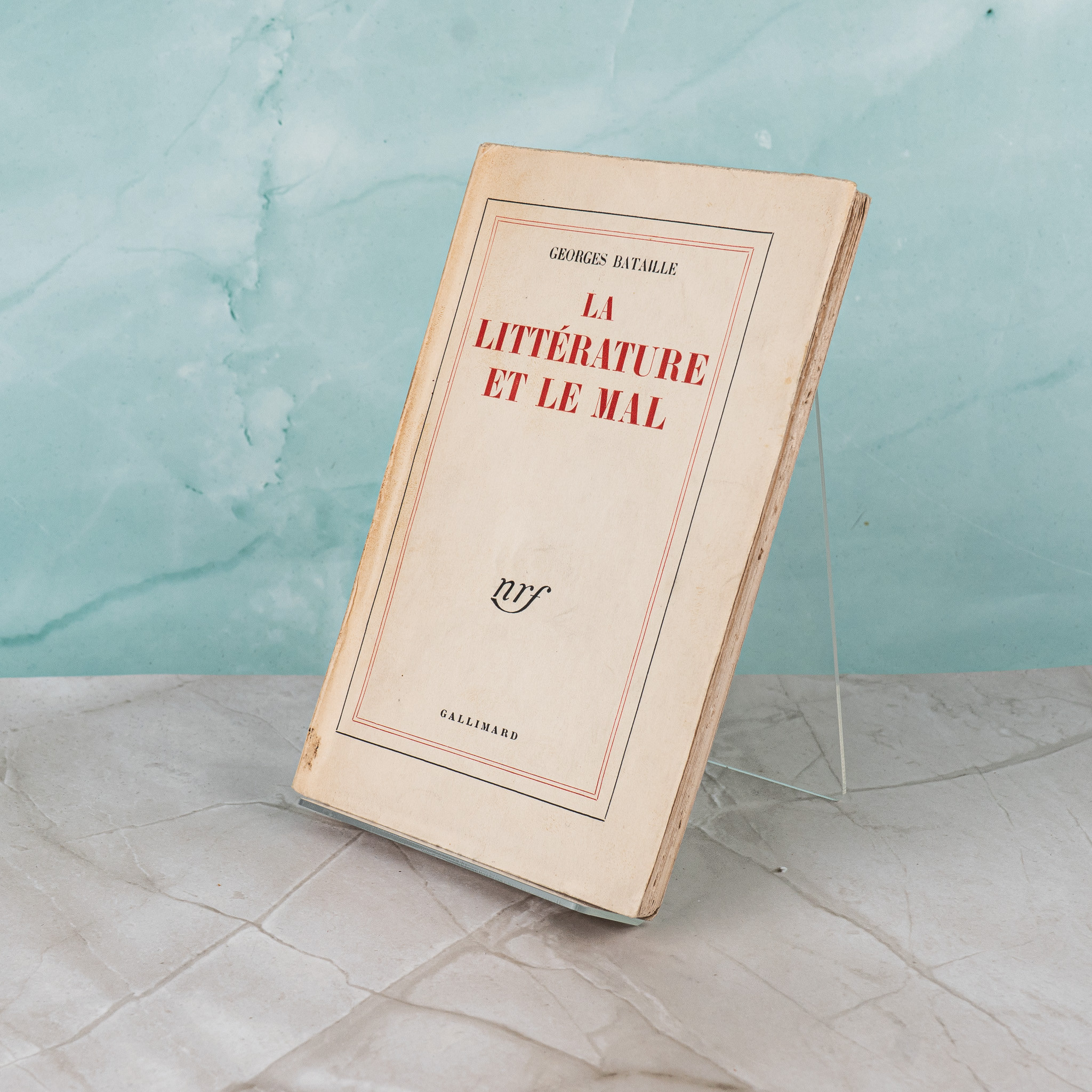
Bataille, Georges
La littérature et le mal
La littérature et le mal is one of Georges Bataille’s most penetrating books on the moral and metaphysical stakes of literature. In these essays he examines how major writers approach the boundary between law and transgression, guilt and sovereignty, eroticism and destruction. The volume brings together Emily Brontë, Baudelaire, Michelet, Blake, Sade, Proust, Kafka and Genet in a radical reading of literature as an experience of the forbidden. For Bataille, the literary work is not a polite mirror of morality, but a place where human beings encounter their most dangerous freedom. This copy is remarkable for its paper issue: one of only 25 on vélin pur fil Lafuma-Navarre, the sole large-paper issue.
Book
€1,600
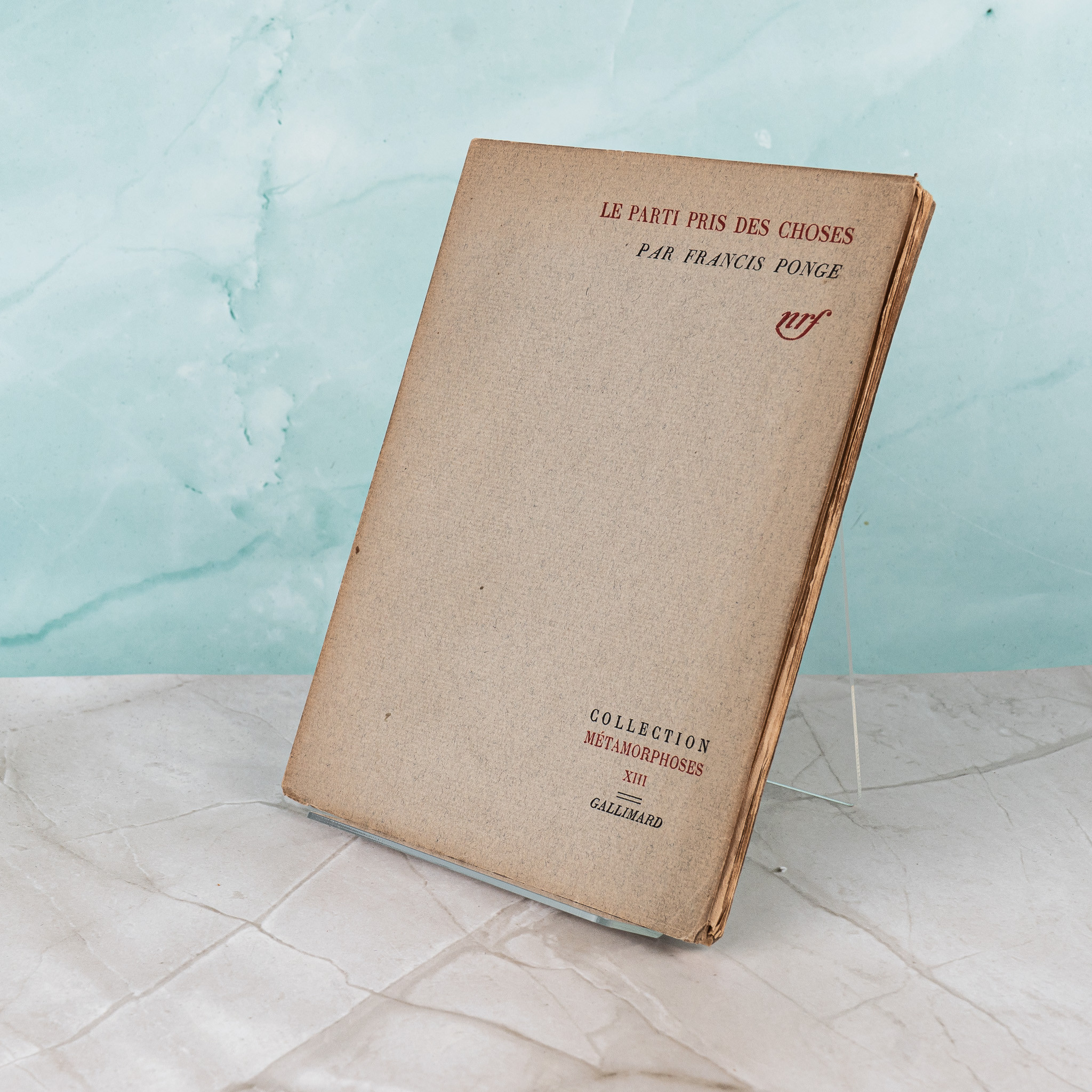
Ponge, Francis
Le Parti pris des choses
These two copies of Le Parti pris des choses form a remarkable paired witness to Francis Ponge’s visit to Zurich in March 1949. The book itself is one of the decisive prose works of French modernity: not lyrical confession, but a precise encounter with the mute dignity of things. Ponge gives ordinary objects — soap, bread, an oyster, a pebble, a cigarette — a language at once exact, ironic and sensuous. The double inscription to Frank Thiessing and to Madame Frank Thiessing gives the pair a strongly personal resonance. Frank C. Thiessing belonged to the Swiss world of graphic design, publishing and visual modernism, notably in relation to Hans Erni. These copies therefore connect Ponge’s literary materialism with the artistic and typographic networks of post-war Zurich.
Book
€1,300
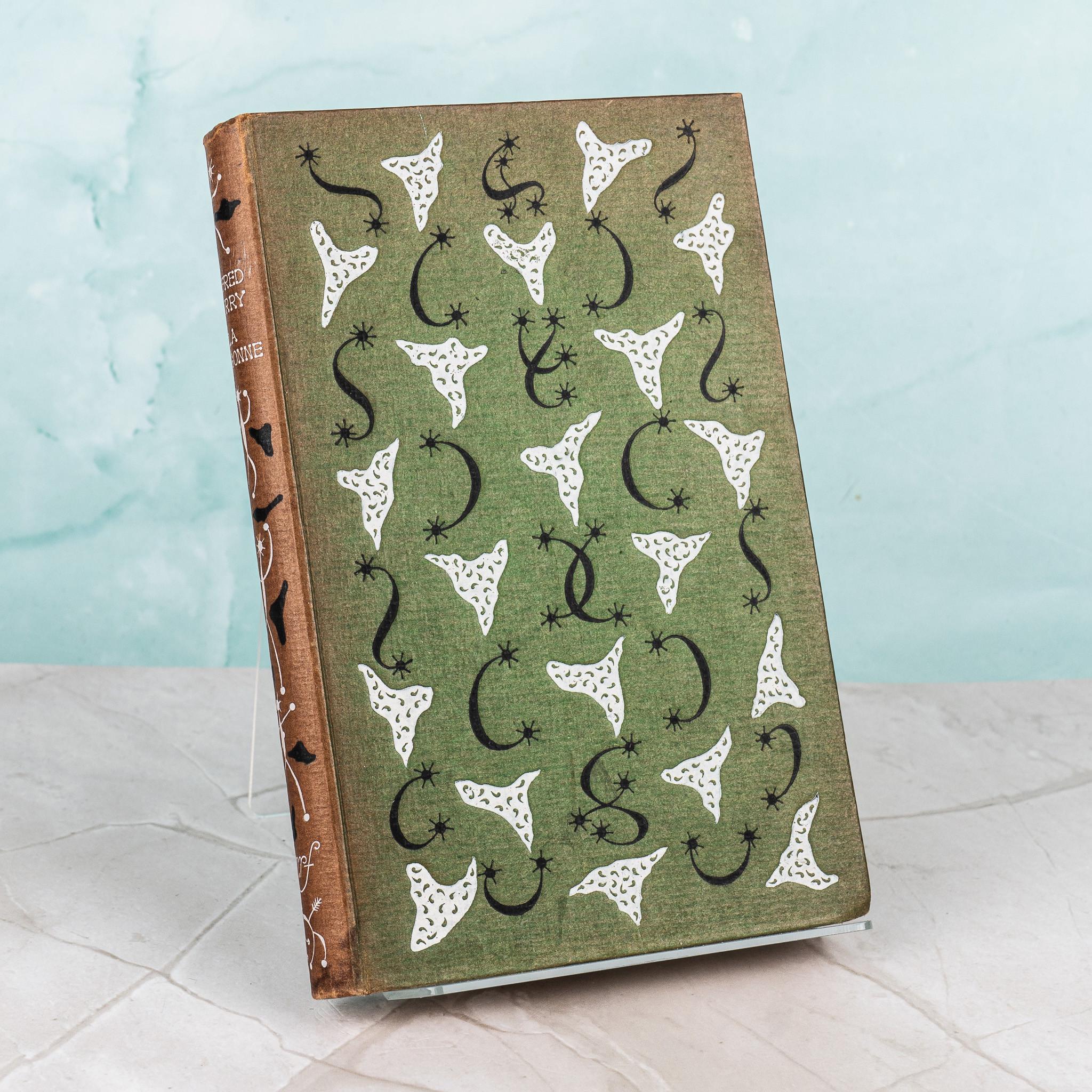
Jarry, Alfred
La Dragonne
La Dragonne is the posthumous first edition of Alfred Jarry’s final novel, published in 1943 by Gallimard/N.R.F. with a preface by Jean Saltas. The book carries the tension of a text that long remained suspended between completion and fragment before taking printed form decades after Jarry’s death. It reveals Jarry’s late imaginative world through autobiographical echoes, Breton legend and Symbolist narrative structures. This copy is further distinguished by its green publisher’s decorated boards, designed after a model by Mario Prassinos, placing it within the bibliophile culture of NRF bindings. The combination of a posthumous Jarry text, an artist-designed binding and a numbered copy on Alfa Mousse gives the volume particular appeal. It is not an illustrated artist’s book in the strict sense, but an object in which literature, publishing history and binding design meet with unusual tact.
Book
€280
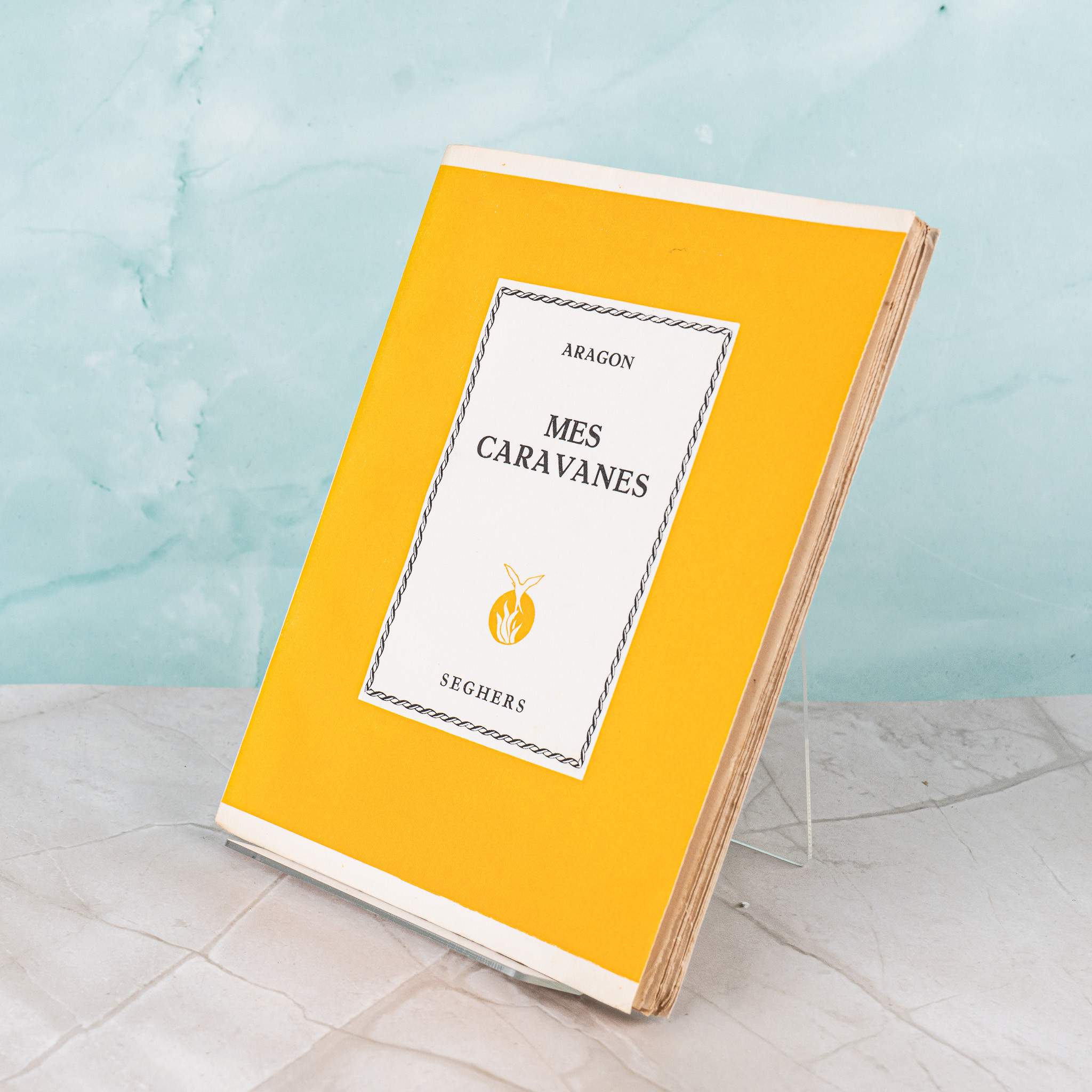
Aragon, Louis
Mes caravanes
Mes caravanes is a poetic publication from Aragon’s post-war period, issued in 1954 by Seghers. The collection no longer stands at the centre of historical Surrealism, yet it bears the name of one of the major figures who helped shape that adventure. Here Aragon is the poet of engagement, memory and political conviction rather than the young Surrealist provocateur of the 1920s. For The Hidden Page, the appeal lies in the combination of a major avant-garde author with an extremely small deluxe limitation. This copy, number 15 of only 40 on Hollande, belongs to the sole large-paper issue. A post-war poetry booklet thus acquires particular bibliophilic sharpness and collector interest.

