


L’Opium
*L’Opium* is a slight yet electric publication in which an early visionary prose text by Alfred Jarry is reawakened through four original engravings by Dado. Fata Morgana was an especially apt publisher for such a project, having long championed works in which image, poetry, and altered states of mind converge. Jarry’s text is not among his most famous books, yet it reaches directly into the imaginative territory that would later prove crucial to the modern avant-garde. Dado answers that feverish intensity not with mere illustration but with an autonomous visual language of his own, organic and unsettling. The result is more than a reprint: it becomes a genuine reinterpretation. The small edition on vélin d’Arches gives the work the aura of a refined artist’s book. For the bibliophile, it offers a discreet yet highly meaningful encounter between a proto-avant-garde writer and one of the late twentieth century’s most visionary artists.
Quantity


Jarry, Alfred
Dado
L’Opium
1984 | Montpellier | Fata Morgana
A small yet intensely charged artist’s book, in which Jarry’s visionary early text meets Dado’s engraving with singular force.
*L’Opium* is a slight yet electric publication in which an early visionary prose text by Alfred Jarry is reawakened through four original engravings by Dado. Fata Morgana was an especially apt publisher for such a project, having long championed works in which image, poetry, and altered states of mind converge. Jarry’s text is not among his most famous books, yet it reaches directly into the imaginative territory that would later prove crucial to the modern avant-garde. Dado answers that feverish intensity not with mere illustration but with an autonomous visual language of his own, organic and unsettling. The result is more than a reprint: it becomes a genuine reinterpretation. The small edition on vélin d’Arches gives the work the aura of a refined artist’s book. For the bibliophile, it offers a discreet yet highly meaningful encounter between a proto-avant-garde writer and one of the late twentieth century’s most visionary artists.
€680
Condition Report:
In-Depth Study
References & Bibliography
Format
In-8 (Octavo) approx. 20 × 26 cm
Edition Particulars
One of the 72 copies on vélin d’Arches.
Print Run
72
Copy Number
No. 35
Paper
vélin d’Arches
Inscription
No inscription
1
Edition Particulars:
We welcome private inquiries, collaborations with institutions, and acquisition requests. Each message is treated with discretion and respect. We welcome private inquiries, collaborations with institutions, and acquisition requests.
1
Print Run:
Condition Report:
1
Copy Number:
Condition Report:
1
Paper:
Condition Report:
1
Signed:
Condition Report:
Product DETAIL
In this short hallucinatory text, Alfred Jarry leads the reader through an opium dream that almost immediately breaks away from ordinary reality. The narrator begins in a feverish state and feels his astral body separating from his earthly one. He then enters an immense mortuary space where corpses, water, ice, and movement merge into a strange rhythm. He climbs glistening stairways, encounters an attendant among the dead, and is directed onward into further chambers where poets, murderers, and bureaucratic counters coexist. He next crosses a fantastic realm of cages, animals, books, and religious or musical visions. By the end he returns to his chair and to his body, as if the entire journey had formed a circular dream. The piece is not narrative in the conventional sense, but unfolds as a sequence of metamorphoses and linked images. Its atmosphere is one of Symbolist fever, black humour, and visionary dislocation.
Dorgelès, Roland · Dunoyer de Segonzac
La Boule de gui
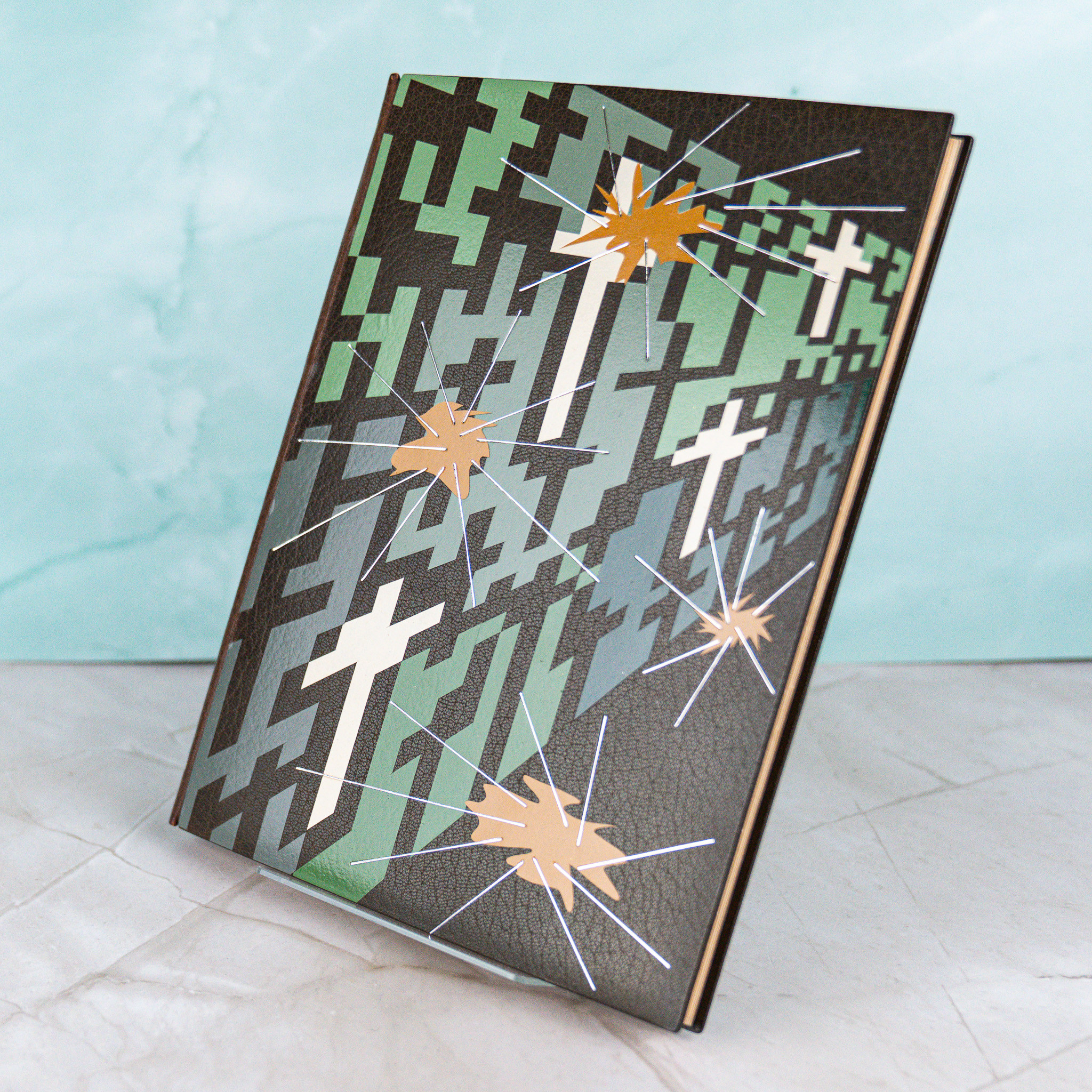
This first edition brings together three war episodes omitted from Les Croix de bois: La Boule de gui, Permissionnaires, and Le Prisonnier bénévole, formerly titled L’Ennemi des vieux. Published in 1922, it is also the first illustrated issue of these texts. André Dunoyer de Segonzac accompanies Dorgelès’s front-line prose with 42 reproduced drawings and five original drypoints hors texte, including the frontispiece. His nervous, direct line closely matches the stories’ hard observation and comradeship. This copy, number 401 on tinted Lafuma paper, belongs to the regular yet still limited issue of 519 copies on this stock. Devauchelle’s exceptional artist’s binding translates trenches, crosses, and explosions into a forceful modern design, turning the volume into a distinctive bibliophile object.
Ill Book
€1,150
Char, Rene · Stael, Nicolas de
Arrière-histoire du poème pulvérisé
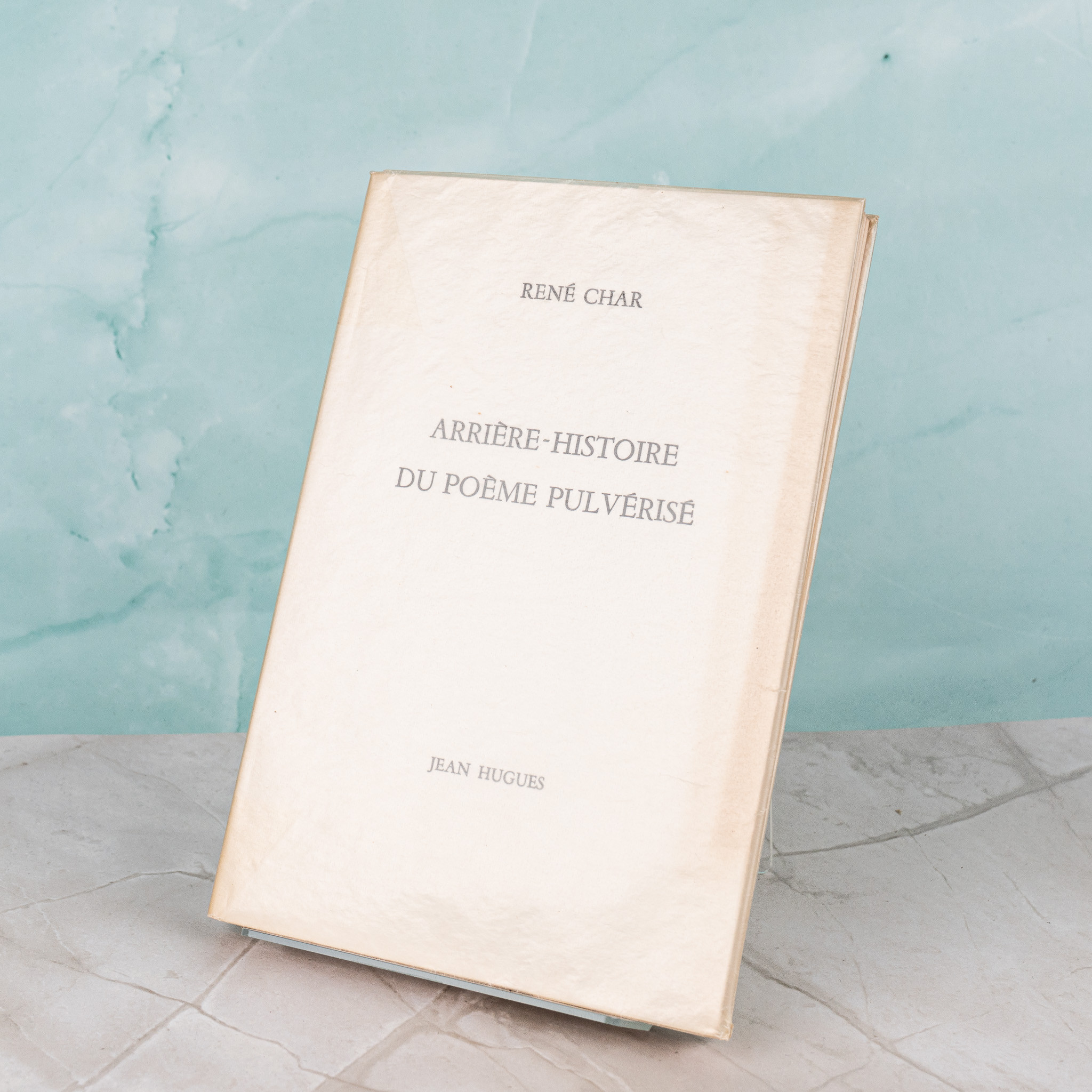
*Arrière-histoire du poème pulvérisé* is a later illustrated edition of a key text in which René Char looks back on the genesis and inner background of *Le Poème pulvérisé*. Published in 1972 by Imprimerie Union, it opens with a colour frontispiece by Nicolas de Staël. The pairing of Char and de Staël is especially charged: two post-war voices, each seeking concentration, clarity, and rupture in his own medium. This copy is one of only six hors commerce copies on Arches and is signed. The autograph presentation inscription to Doctor Marcel Zara, with poetic quotation and October 1972 dating, makes it a deeply personal copy.
Ill Book
€920
Crevel, René · Tchelitchew, Pavel
L’esprit contre la raison
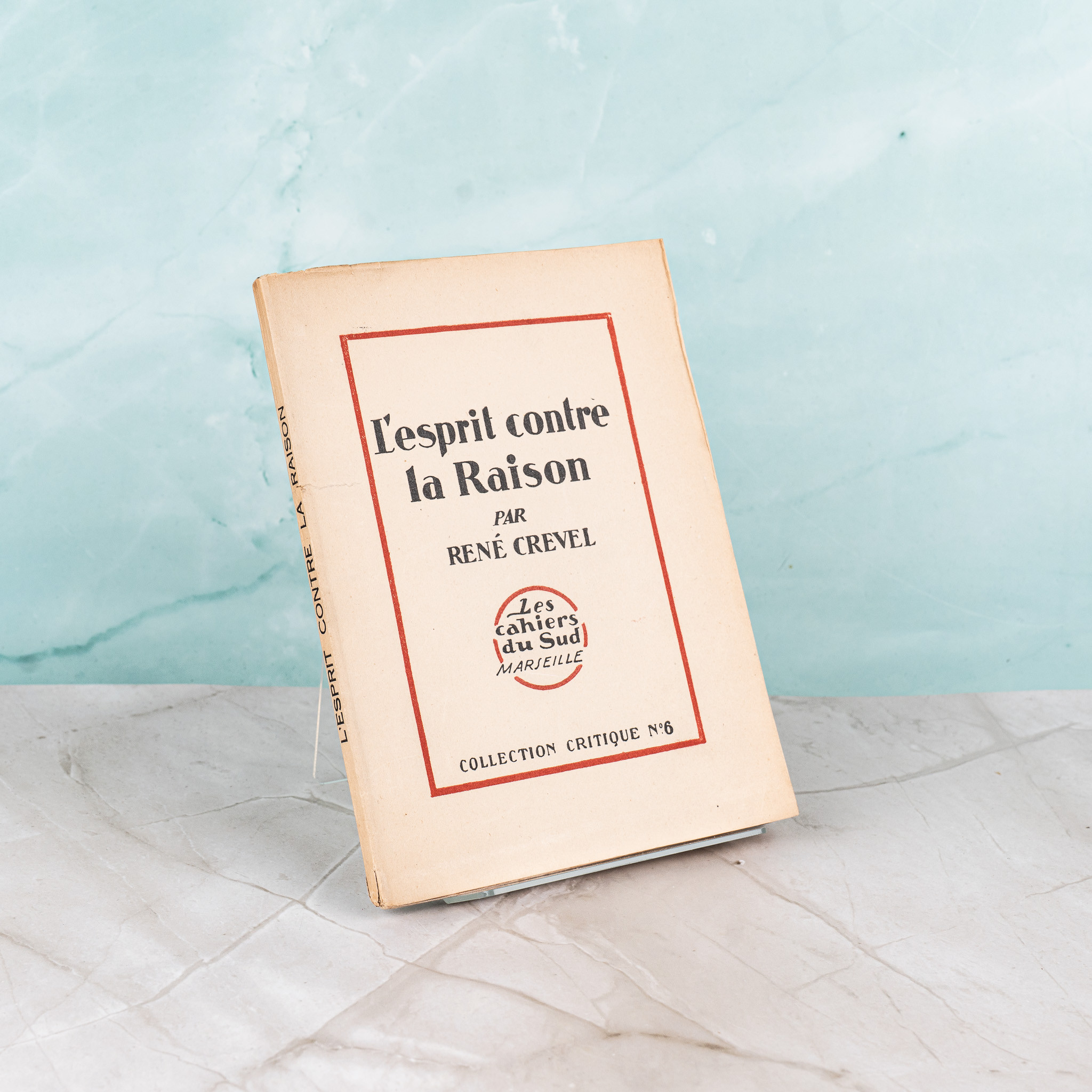
L’esprit contre la raison is a brief, vehement text from the heart of French Surrealism. René Crevel writes here not as a systematic philosopher, but as a polemicist intent on disturbing the order of reason, morality and bourgeois clarity. The book was published in 1927 by Les Cahiers du Sud, a review and publishing circle receptive to literary experiment beyond the Parisian centre. Pavel Tchelitchew’s frontispiece portrait gives the volume a strong visual presence and links Crevel’s voice to the cosmopolitan artistic world of the 1920s. In its original wrappers, the copy preserves the sober, nervous materiality of a text that reads more like an assault than a treatise. Its status as a review copy also marks it as a book meant to move through the literary networks of its moment.
Ill Book
€280

Ruscha, Edward · Ruscha, Ed
Some Los Angeles Apartments
Some Los Angeles Apartments is one of Ed Ruscha’s iconic early artist’s books, devoted to the banal architecture of Los Angeles. Instead of monuments, drama or urban glamour, Ruscha shows ordinary apartment buildings, coolly photographed and without visible sentimentality. This second edition of 1970, printed in 3,000 unnumbered copies, confirms the wider circulation of his conceptual book form. The small format, sober wrappers and original glassine wrapper make it an essential Ruscha object.

