


La Machine Infernale. Pièce en 4 actes
A refined *édition originale* of Cocteau’s tragedy in a luxury binding mirroring the play’s classical setting. The design — symmetry, restraint, gilt on dark morocco — amplifies Cocteau’s play with ancient myth and modern cadence. Sixteen previously unpublished plates by the author follow the 224 pages of text. The handy duodecimo scale belies the work’s monumental themes, while preserved wrappers and a protective case attest to careful stewardship. An exemplary fusion of literature, drawing, and bookcraft.
Quantity


Cocteau, Jean
ILLUSTRATORS
ILLUSTRATORS
ILLUSTRATORS
La Machine Infernale. Pièce en 4 actes
1934 | Paris | Grasset
A bibliophile first in classical finery: lucid in language, spare in line, and — in this binding — especially compelling.
A refined *édition originale* of Cocteau’s tragedy in a luxury binding mirroring the play’s classical setting. The design — symmetry, restraint, gilt on dark morocco — amplifies Cocteau’s play with ancient myth and modern cadence. Sixteen previously unpublished plates by the author follow the 224 pages of text. The handy duodecimo scale belies the work’s monumental themes, while preserved wrappers and a protective case attest to careful stewardship. An exemplary fusion of literature, drawing, and bookcraft.
€950
Condition Report:
In-Depth Study
References & Bibliography
Format
In-12 (Duodecimo) approx. 17 × 22 cm
Edition Particulars
One of 33 numbered copies on Arches wove, all margins uncut (second paper).
Print Run
33
Copy Number
25
Paper
vélin d'Arches
1
Edition Particulars:
We welcome private inquiries, collaborations with institutions, and acquisition requests. Each message is treated with discretion and respect. We welcome private inquiries, collaborations with institutions, and acquisition requests.
1
Print Run:
Condition Report:
1
Copy Number:
Condition Report:
1
Paper:
Condition Report:
1
Signed:
Condition Report:
Product DETAIL
Cocteau reframes the Oedipus myth in four acts: a lucid stylisation where fate and irony intersect. The diction is spare and musical; dialogue locks together like cogs — the “machine” of the title. The arc moves from seduction and warning to revelation and catastrophe. Sixteen closing plates distil motifs (Sphinx, oracle, dream-image) in dialogue with the stage. Classical structure, modern tone.
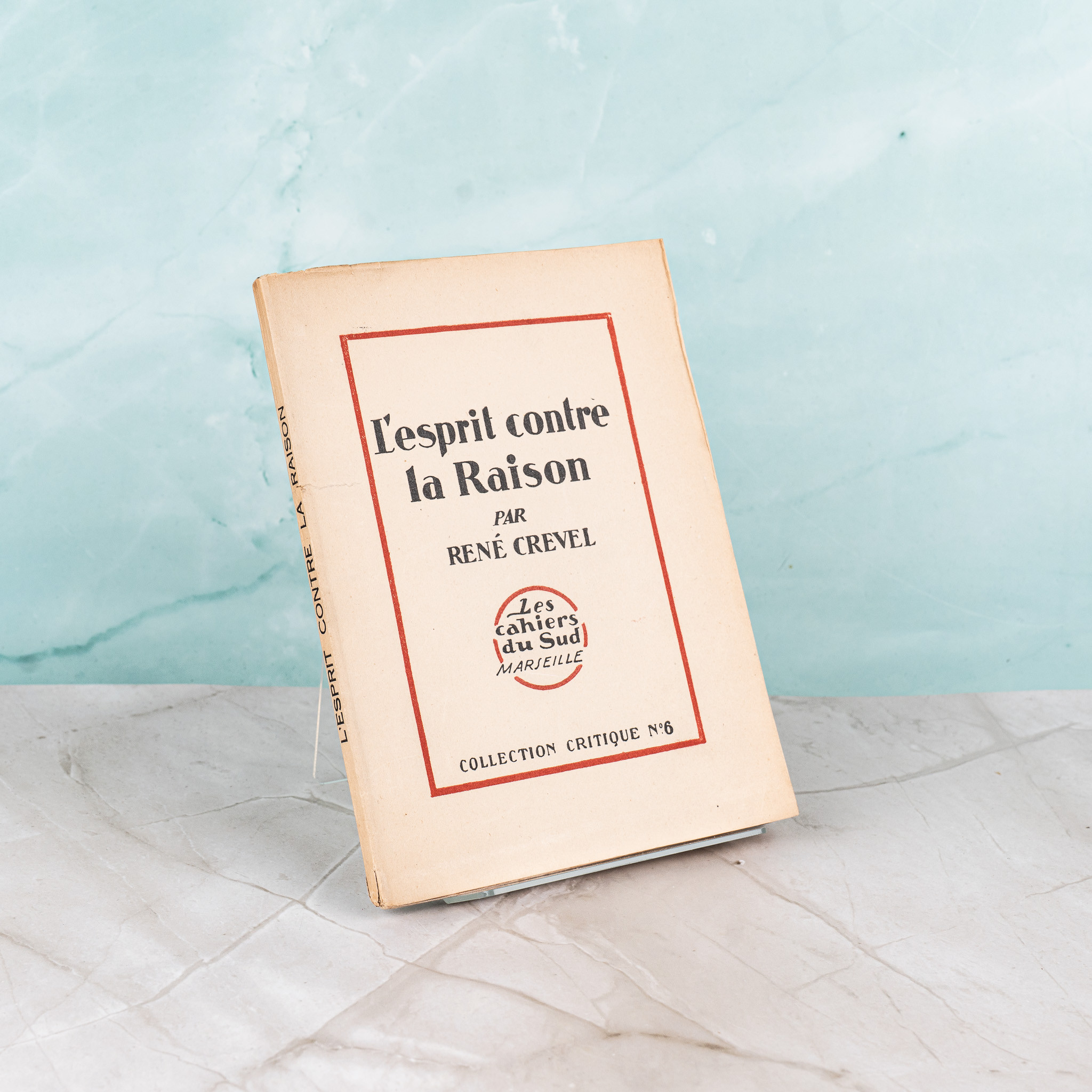
Crevel, René · Tchelitchew, Pavel
L’esprit contre la raison
L’esprit contre la raison is a brief, vehement text from the heart of French Surrealism. René Crevel writes here not as a systematic philosopher, but as a polemicist intent on disturbing the order of reason, morality and bourgeois clarity. The book was published in 1927 by Les Cahiers du Sud, a review and publishing circle receptive to literary experiment beyond the Parisian centre. Pavel Tchelitchew’s frontispiece portrait gives the volume a strong visual presence and links Crevel’s voice to the cosmopolitan artistic world of the 1920s. In its original wrappers, the copy preserves the sober, nervous materiality of a text that reads more like an assault than a treatise. Its status as a review copy also marks it as a book meant to move through the literary networks of its moment.
Ill Book
€280
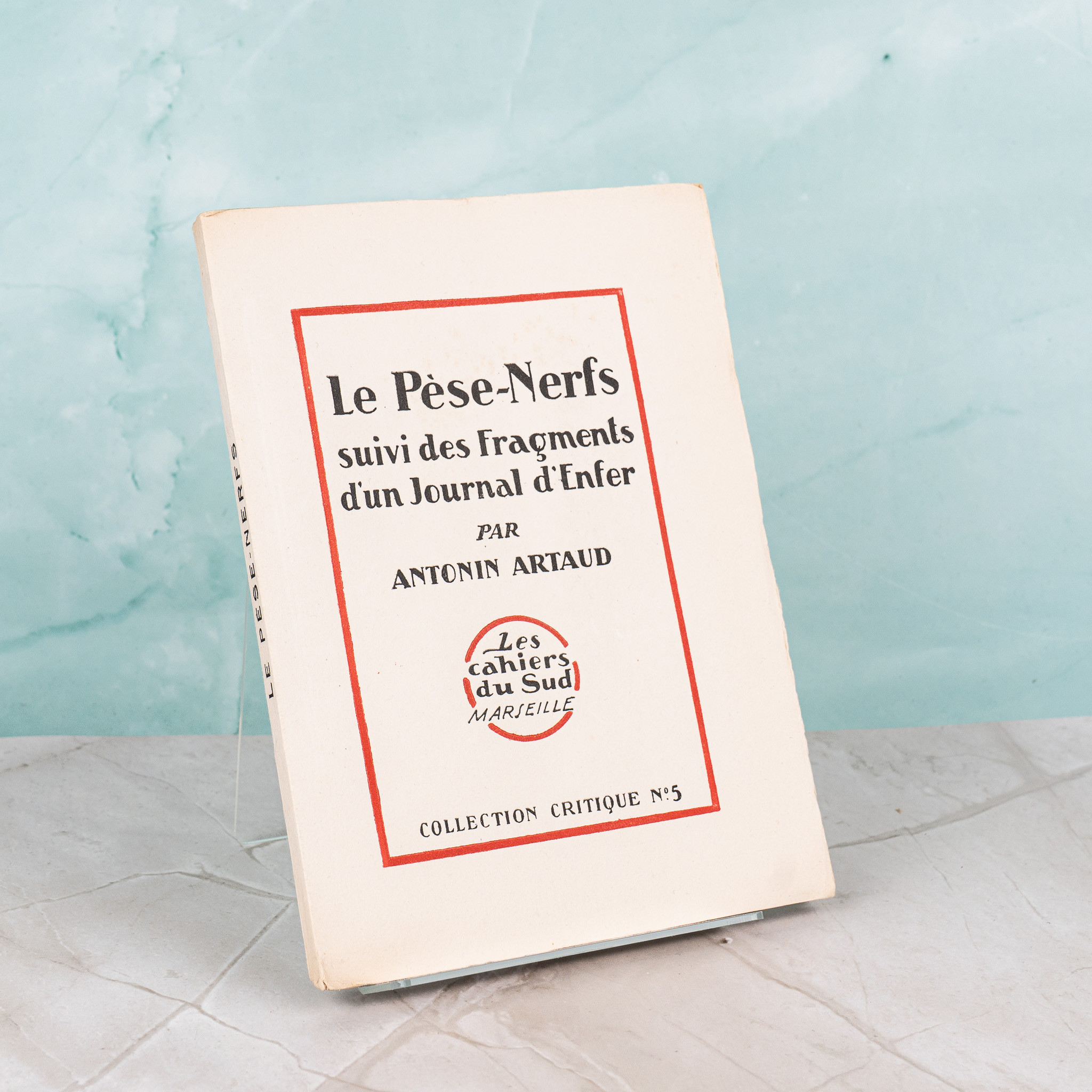
Artaud, Antonin · Masson, André
Le Pèse-Nerfs suivi des Fragments d’un Journal d’Enfer
With Le Pèse-Nerfs followed by Fragments d’un Journal d’Enfer, Antonin Artaud emerges in 1927 as a writer of inner derangement. This early edition was published in Marseille by Les Cahiers du Sud as the fifth title in the Critique series. It belongs among the first books in which Artaud’s broken, nervous and visionary voice appears in full force. The text moves between prose, note, incantation and self-investigation. André Masson’s frontispiece places the work in direct proximity to the Surrealist milieu. As a Lafuma copy, numbered 14 of 321, this edition carries both literary and bibliographical importance.
Ill Book
€2,100
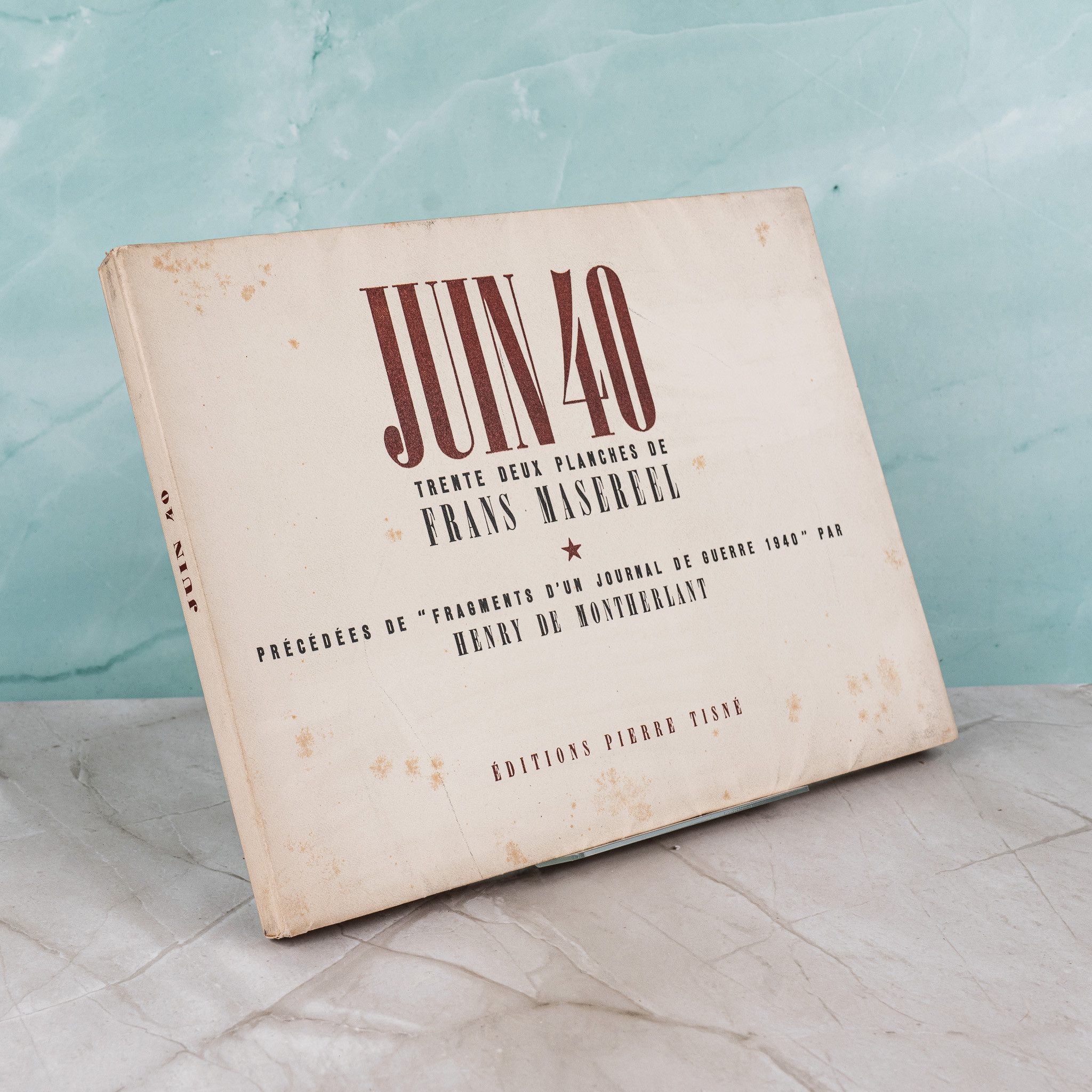
Montherlant, Henry de · Masereel, Frans
Juin 40
Juin 40 is a powerful illustrated war book in which Frans Masereel gives visual form, through 32 plates, to the French defeat and disarray of June 1940. The plates are preceded by Henry de Montherlant’s Fragments d’un journal de guerre 1940, so that text and image together create a double testimony: literary, historical and moral. Masereel, renowned for his woodcuts and wordless novels, here brings his expressive black-and-white drama to bear on an immediate historical trauma. The oblong format gives the plates a horizontal, almost cinematic space in which flight, soldiers, civilians and destruction can unfold. The book appeared in Paris with Pierre Tisné in 1942, in the midst of the war, giving it a special tension between memory, censorship, mourning and visual urgency. This copy, n°16, belongs to the first 350 copies on vélin Lana Bélier within a total edition of 1,550. It is an early and materially attractive copy of a book in which Masereel’s humanist graphic art retains its historical edge.
Ill Book
€420
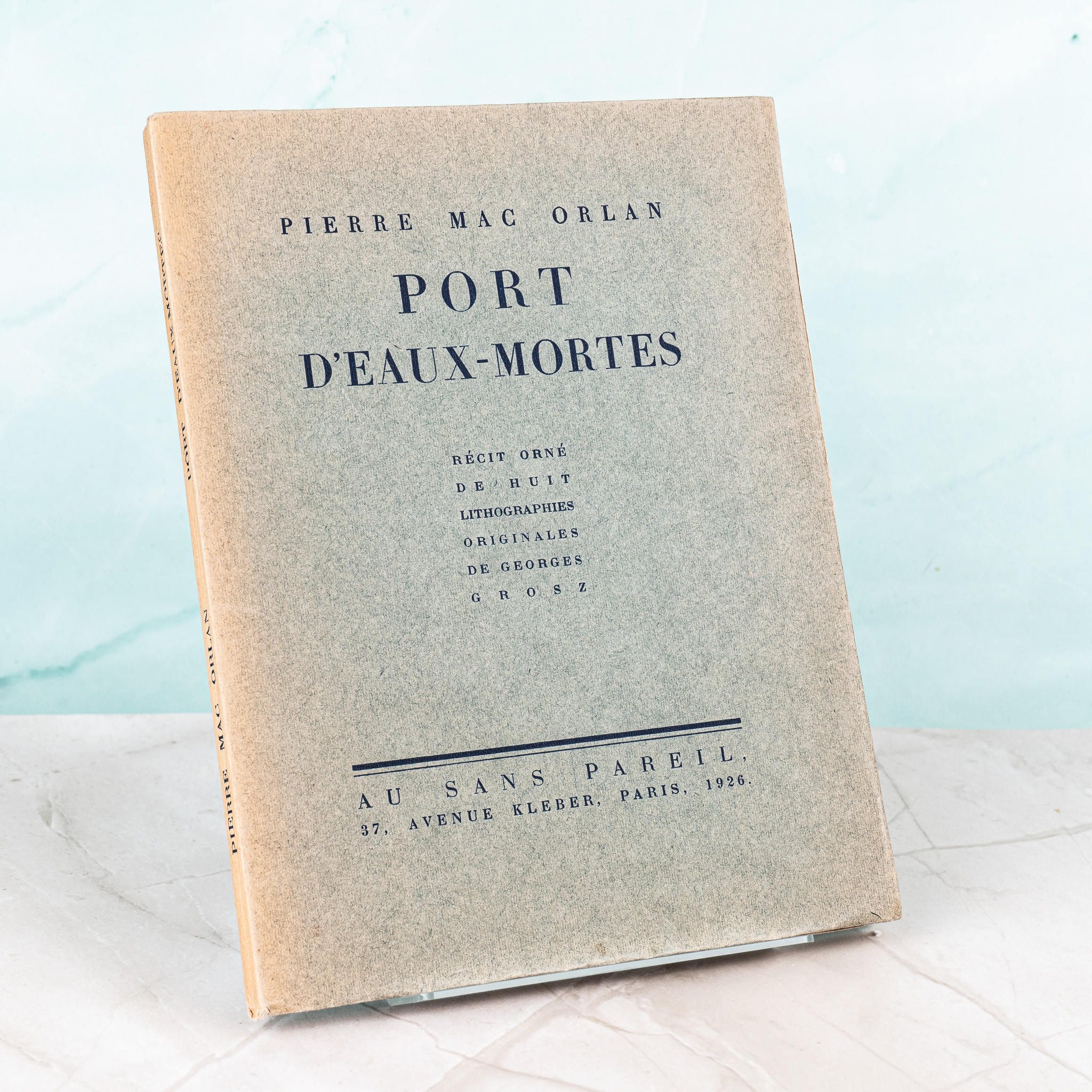
Orlan, Pierre Mac · Grosz, Georges
Port d’eaux mortes
Port d’eaux mortes is a particularly strong encounter between Pierre Mac Orlan’s literary world and the incisive visual language of Georges Grosz. Published in 1926 by Au Sans Pareil, it belongs to an interwar catalogue marked by modernity and bibliophilic daring. Mac Orlan’s imagination of ports, marginal lives and moral twilight is here set against Grosz’s nervous, satirical and metropolitan graphic art. The eight original lithographs make the volume more than an illustrated novel: it is a fully fledged modernist artist’s book. This copy, number 615, is one of 1000 on vélin Lafuma de Voiron within a total edition of 1260 copies. For The Hidden Page, its appeal is clear: a numbered original edition with original prints by a key figure of Berlin Dada and Neue Sachlichkeit.
