


La Noce massacrée
La Noce massacrée belongs to Jean Cocteau’s early, sharply modernist phase, shortly after Parade and in close proximity to Raymond Radiguet. The book appeared in 1921 with À la Sirène, a publisher closely connected with the Parisian artistic avant-garde and literary modernism. The presence of a vignette after Picasso reinforces that context, although this is not an illustrated artist’s book in the strict sense. Cocteau writes from a milieu in which literature, theatre, ballet, visual art and social polemic constantly intersected. The printed dedication to Radiguet also makes the book a witness to a decisive friendship and intellectual alliance. This copy, n°XIX, belongs to the first 40 copies on vergé d’Arches, the most desirable form of the edition.
Quantity


Cocteau, Jean
ILLUSTRATORS
ILLUSTRATORS
ILLUSTRATORS
La Noce massacrée
1921 | Paris | Éditions de la Sirène
An early Cocteau in the most desirable paper issue, with Radiguet and Picasso as immediate modernist coordinates. It is not a spectacular livre de peintre, but a subtle and highly charged Parisian object from 1921.
La Noce massacrée belongs to Jean Cocteau’s early, sharply modernist phase, shortly after Parade and in close proximity to Raymond Radiguet. The book appeared in 1921 with À la Sirène, a publisher closely connected with the Parisian artistic avant-garde and literary modernism. The presence of a vignette after Picasso reinforces that context, although this is not an illustrated artist’s book in the strict sense. Cocteau writes from a milieu in which literature, theatre, ballet, visual art and social polemic constantly intersected. The printed dedication to Radiguet also makes the book a witness to a decisive friendship and intellectual alliance. This copy, n°XIX, belongs to the first 40 copies on vergé d’Arches, the most desirable form of the edition.
€850
Condition Report:
In-Depth Study
References & Bibliography
Format
In-12 (Duodecimo) approx. 17 × 22 cm
Edition Particulars
Number XIX, one of the first 40 copies on vergé d’Arches, followed by 300 copies on vergé pur fil Corvol.
Print Run
340
Copy Number
No. XIX
Paper
vergé d’Arches
Inscription
No inscription
1
Edition Particulars:
We welcome private inquiries, collaborations with institutions, and acquisition requests. Each message is treated with discretion and respect. We welcome private inquiries, collaborations with institutions, and acquisition requests.
1
Print Run:
Condition Report:
1
Copy Number:
Condition Report:
1
Paper:
Condition Report:
1
Signed:
Condition Report:
Product DETAIL
La Noce massacrée, with the contextual subtitle Souvenirs. I. Visites à Maurice Barrès, is conceived as a short memoiristic and reflective text around Cocteau’s visits to Maurice Barrès. The book is situated in the world of literary encounters, admiration, distance and generational self-awareness in early 1920s Paris. Cocteau does not merely offer anecdote, but uses the figure of Barrès to define his position in relation to fame, style, tradition and the role of the writer. The text moves between portrait, recollection and polemical self-positioning. The printed dedication to Raymond Radiguet places the work within Cocteau’s young modernist circle. Its core is not a plot, but an intellectual scene in which visit, conversation and memory become a literary gesture.
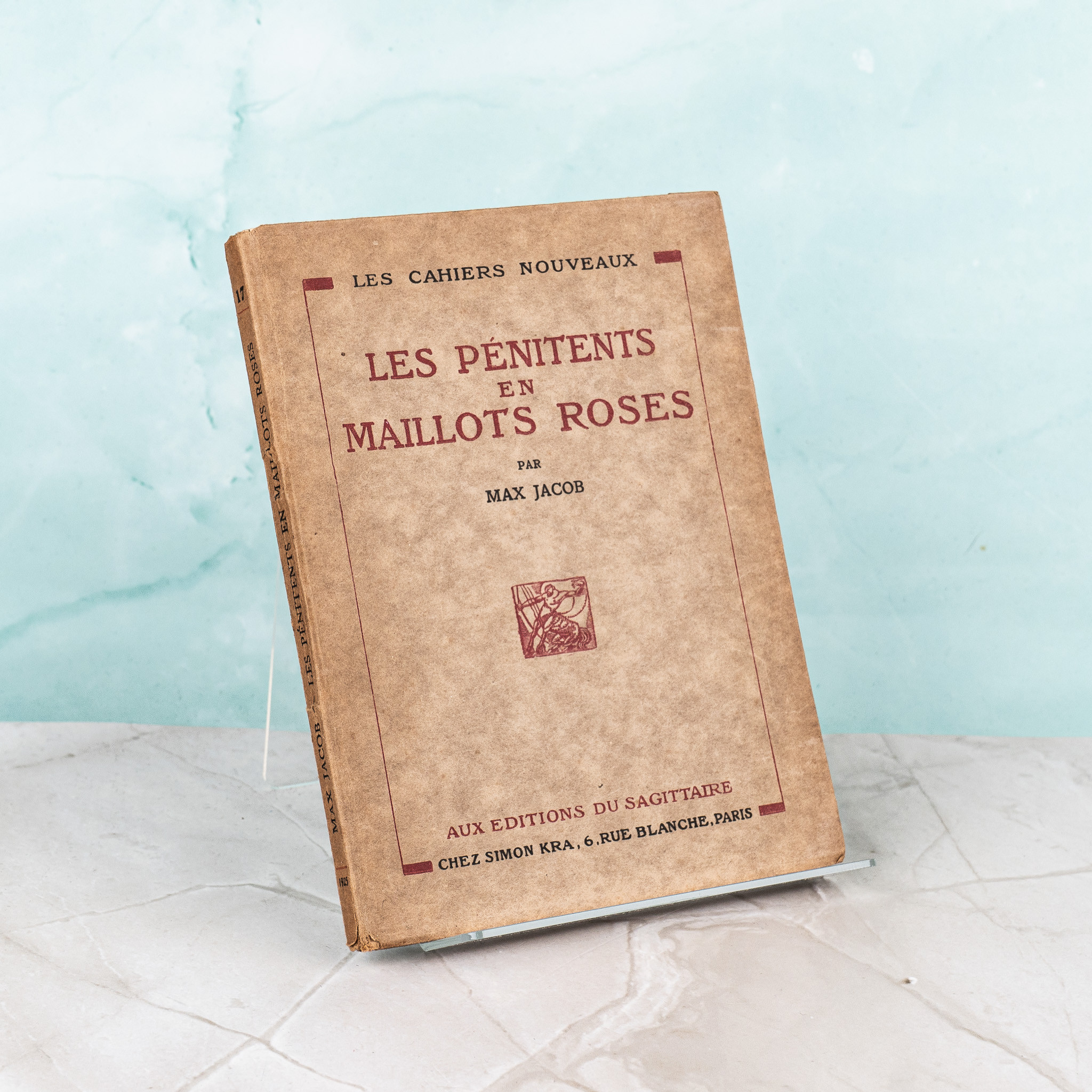
Jacob, Max
Les pénitents en maillots roses
Les pénitents en maillots roses belongs to Max Jacob’s subtle, agile poetry of the years following his conversion and his partial withdrawal from the Parisian scene. The book was published in 1925 by Aux Éditions du Sagittaire, chez Simon Kra, as no. 17 in the series Les Cahiers nouveaux. In this compact volume, burlesque observation, religious unease and verbal lightness meet in a characteristically Jacobian manner. This copy is enriched with a witty, slightly self-mocking inscription in brown ink. The recipient Fouquet is probably Gaëtan Fouquet (1903–1973), a well-known figure within the broader Parisian modernist circle.. For the bibliophile, its appeal lies in the conjunction of first edition, numbered issue and personal envoi.
Book
€320
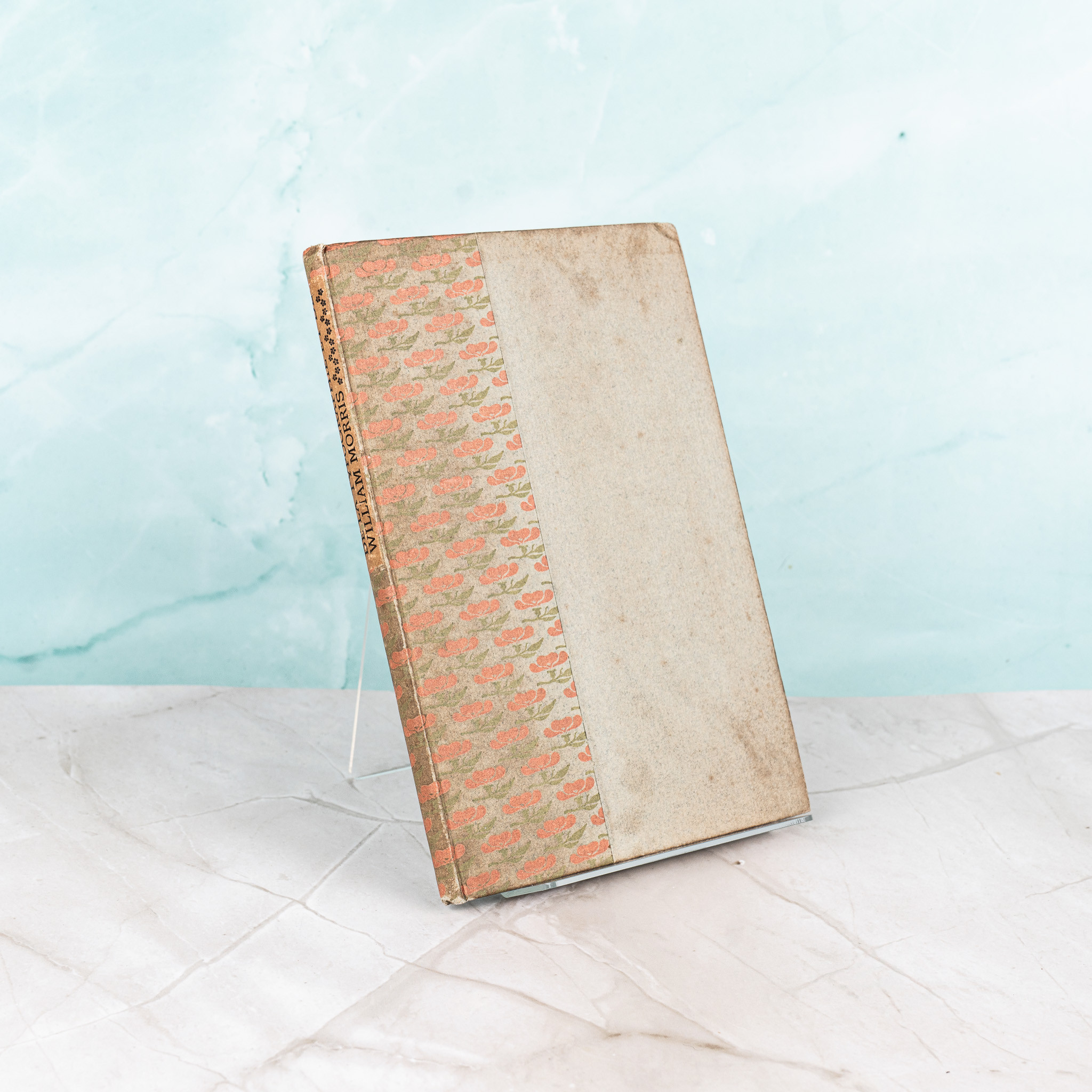
Pissarro, Lucien · Ricketts, Charles
De la typographie et de l’harmonie de la page imprimée. William Morris et son influence sur les arts et métiers
De la typographie et de l’harmonie de la page imprimée is a refined fin-de-siècle publication devoted to the art of the printed page. Lucien Pissarro and Charles Ricketts place William Morris at the centre as a reformer of the book, printing and the applied arts. The work belongs to the circles in which the Arts and Crafts movement, private press ideals and the renewed valuation of typography meet. The title makes clear that typography is not treated as a technical accessory, but as an harmony of type, margin, paper and page design. The edition appeared in 1898, in London from Ricketts and in Paris from Floury, standing between English private press culture and French bibliophile reception. This copy belongs to the issue of 250 copies on Arnold handmade laid paper within a total edition of 256 copies. The present errata slip and only slight corner wear make it bibliographically attractive and complete.
Book
€750
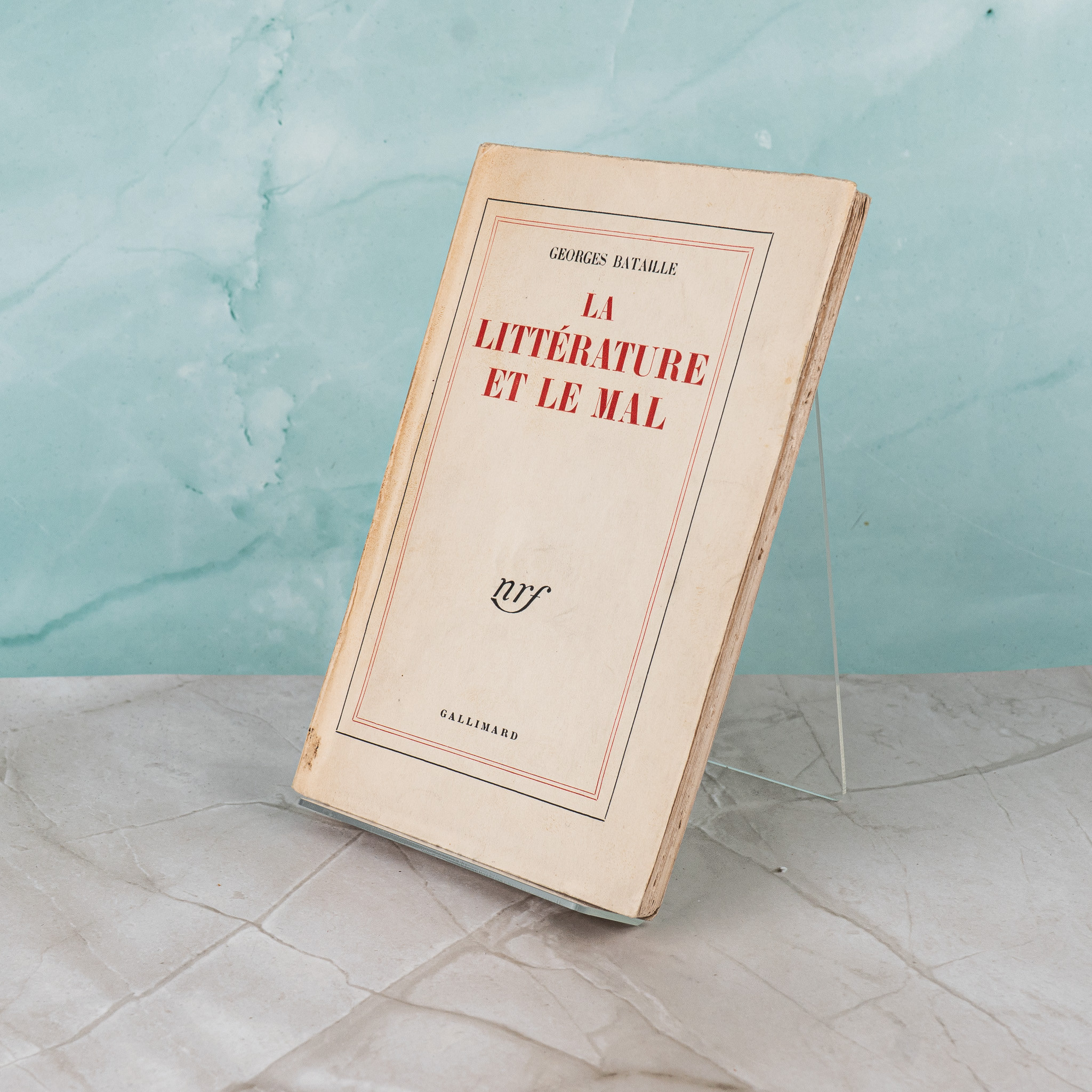
Bataille, Georges
La littérature et le mal
La littérature et le mal is one of Georges Bataille’s most penetrating books on the moral and metaphysical stakes of literature. In these essays he examines how major writers approach the boundary between law and transgression, guilt and sovereignty, eroticism and destruction. The volume brings together Emily Brontë, Baudelaire, Michelet, Blake, Sade, Proust, Kafka and Genet in a radical reading of literature as an experience of the forbidden. For Bataille, the literary work is not a polite mirror of morality, but a place where human beings encounter their most dangerous freedom. This copy is remarkable for its paper issue: one of only 25 on vélin pur fil Lafuma-Navarre, the sole large-paper issue.
Book
€1,600
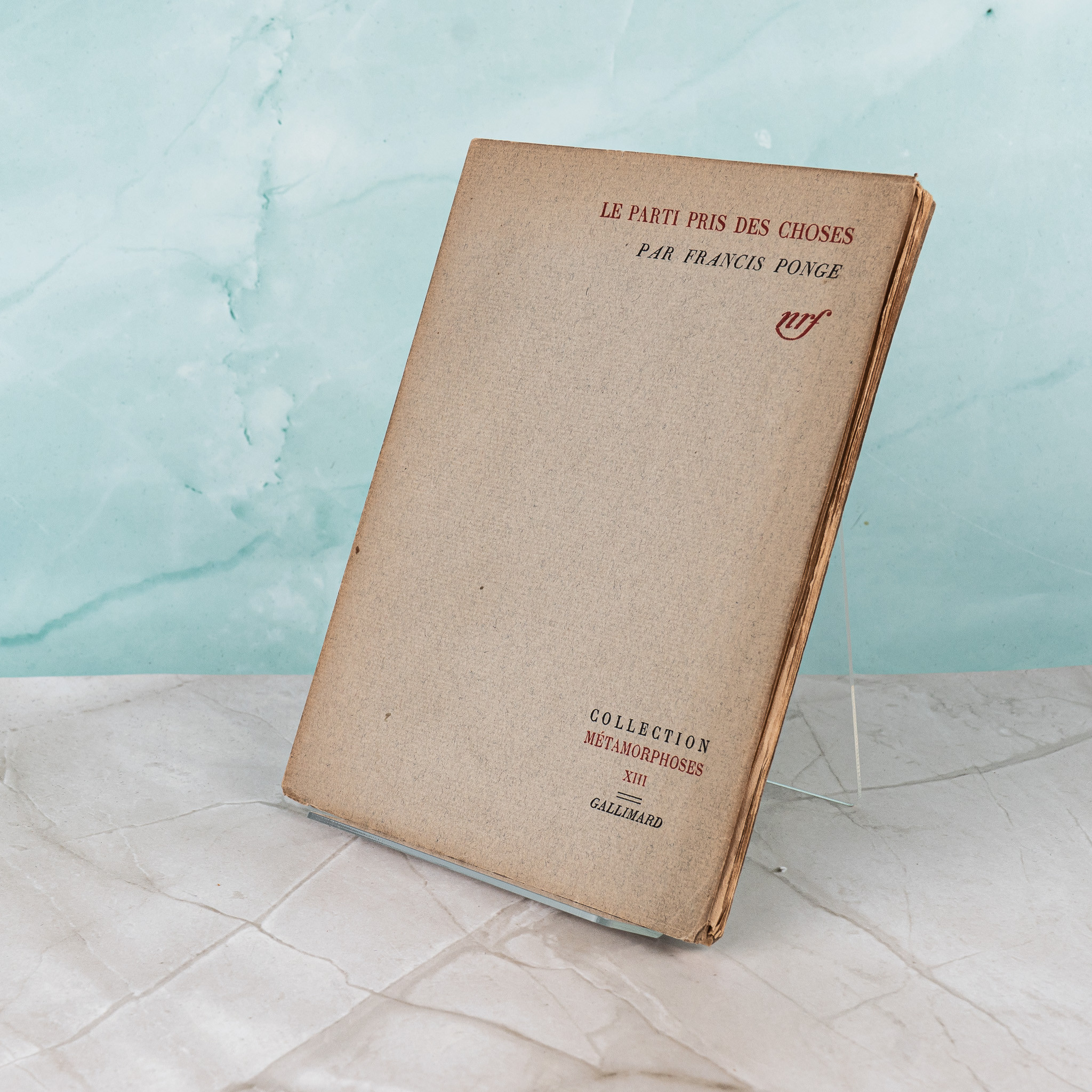
Ponge, Francis
Le Parti pris des choses
These two copies of Le Parti pris des choses form a remarkable paired witness to Francis Ponge’s visit to Zurich in March 1949. The book itself is one of the decisive prose works of French modernity: not lyrical confession, but a precise encounter with the mute dignity of things. Ponge gives ordinary objects — soap, bread, an oyster, a pebble, a cigarette — a language at once exact, ironic and sensuous. The double inscription to Frank Thiessing and to Madame Frank Thiessing gives the pair a strongly personal resonance. Frank C. Thiessing belonged to the Swiss world of graphic design, publishing and visual modernism, notably in relation to Hans Erni. These copies therefore connect Ponge’s literary materialism with the artistic and typographic networks of post-war Zurich.
