


Le Parti pris des choses
These two copies of Le Parti pris des choses form a remarkable paired witness to Francis Ponge’s visit to Zurich in March 1949. The book itself is one of the decisive prose works of French modernity: not lyrical confession, but a precise encounter with the mute dignity of things. Ponge gives ordinary objects — soap, bread, an oyster, a pebble, a cigarette — a language at once exact, ironic and sensuous. The double inscription to Frank Thiessing and to Madame Frank Thiessing gives the pair a strongly personal resonance. Frank C. Thiessing belonged to the Swiss world of graphic design, publishing and visual modernism, notably in relation to Hans Erni. These copies therefore connect Ponge’s literary materialism with the artistic and typographic networks of post-war Zurich.
Quantity


Ponge, Francis
ILLUSTRATORS
ILLUSTRATORS
ILLUSTRATORS
Le Parti pris des choses
1942 | Paris | Gallimard
A rarely meaningful pair: two copies of Ponge’s key book, both inscribed on the same day in Zurich. The combination of literary modernity, personal presentation and Swiss design provenance gives the ensemble unusual resonance.
These two copies of Le Parti pris des choses form a remarkable paired witness to Francis Ponge’s visit to Zurich in March 1949. The book itself is one of the decisive prose works of French modernity: not lyrical confession, but a precise encounter with the mute dignity of things. Ponge gives ordinary objects — soap, bread, an oyster, a pebble, a cigarette — a language at once exact, ironic and sensuous. The double inscription to Frank Thiessing and to Madame Frank Thiessing gives the pair a strongly personal resonance. Frank C. Thiessing belonged to the Swiss world of graphic design, publishing and visual modernism, notably in relation to Hans Erni. These copies therefore connect Ponge’s literary materialism with the artistic and typographic networks of post-war Zurich.
€1,300
Condition Report:
In-Depth Study
References & Bibliography
Format
In-12 (Duodecimo) approx. 17 × 22 cm
Edition Particulars
Two copies, each with an autograph presentation inscription by Francis Ponge: one to Frank Thiessing and one to Madame Frank Thiessing, both dated Zurich, 19 March 1949.
Inscription
Envoi
1
Edition Particulars:
We welcome private inquiries, collaborations with institutions, and acquisition requests. Each message is treated with discretion and respect. We welcome private inquiries, collaborations with institutions, and acquisition requests.
1
Print Run:
Condition Report:
1
Copy Number:
Condition Report:
1
Paper:
Condition Report:
1
Signed:
Condition Report:
Product DETAIL
Le Parti pris des choses consists of short prose pieces in which Francis Ponge places a concrete object, natural phenomenon or everyday reality at the centre. The reader encounters bread, the oyster, the cigarette, the orange, rain, the pebble and the snail, among other subjects. Each text begins from close observation: form, surface, smell, texture, movement and use are examined as though the object were being granted its own voice. There is no continuous plot, but rather a sequence of linguistic and sensory approaches to the material world. Ponge tries to avoid the clichés of the lyrical self and to find a language that does not dominate things but comes near them. The collection is therefore description, meditation and poetic experiment at once. Its modernity lies in the shift from human emotion to objective attention.
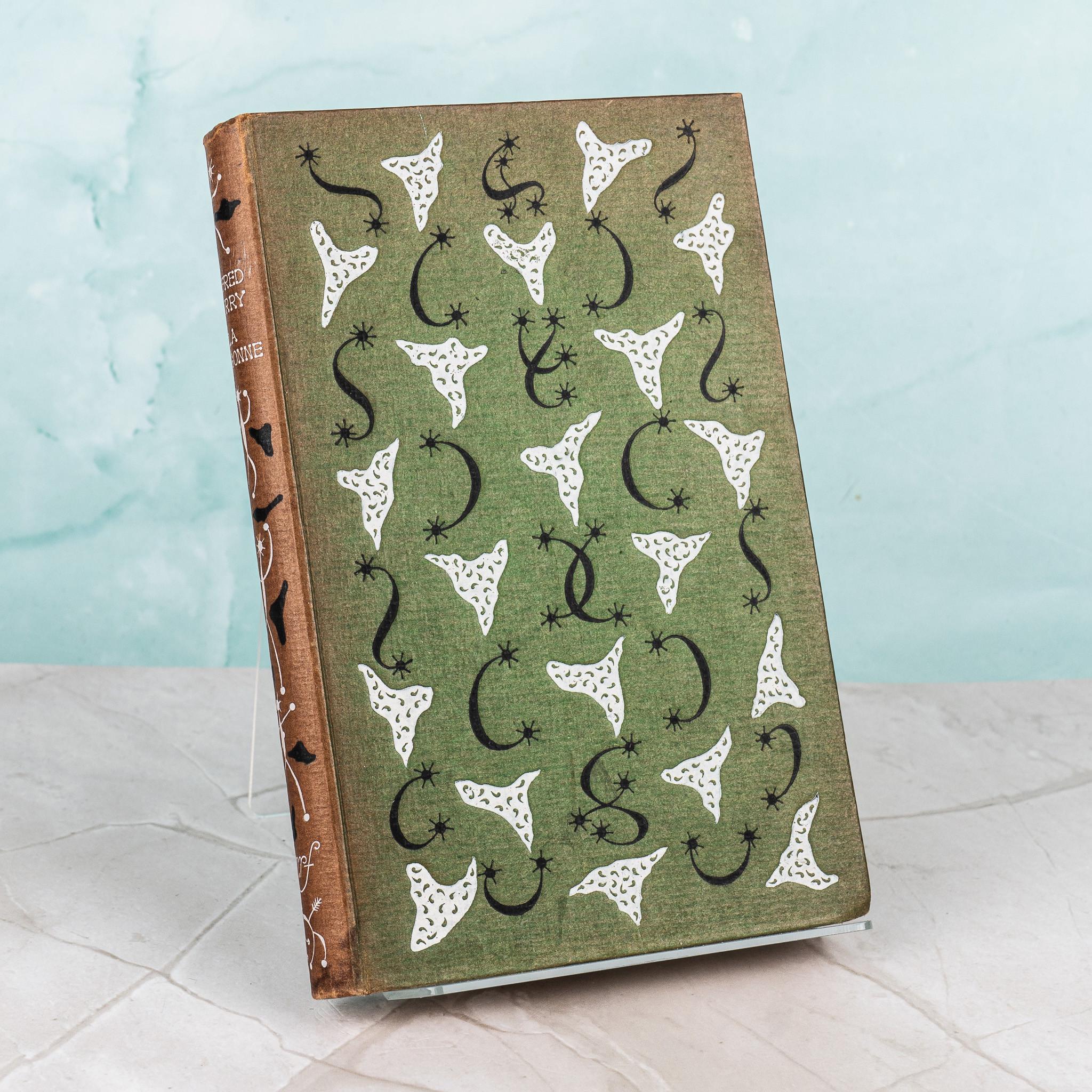
Jarry, Alfred
La Dragonne
La Dragonne is the posthumous first edition of Alfred Jarry’s final novel, published in 1943 by Gallimard/N.R.F. with a preface by Jean Saltas. The book carries the tension of a text that long remained suspended between completion and fragment before taking printed form decades after Jarry’s death. It reveals Jarry’s late imaginative world through autobiographical echoes, Breton legend and Symbolist narrative structures. This copy is further distinguished by its green publisher’s decorated boards, designed after a model by Mario Prassinos, placing it within the bibliophile culture of NRF bindings. The combination of a posthumous Jarry text, an artist-designed binding and a numbered copy on Alfa Mousse gives the volume particular appeal. It is not an illustrated artist’s book in the strict sense, but an object in which literature, publishing history and binding design meet with unusual tact.
Book
€280
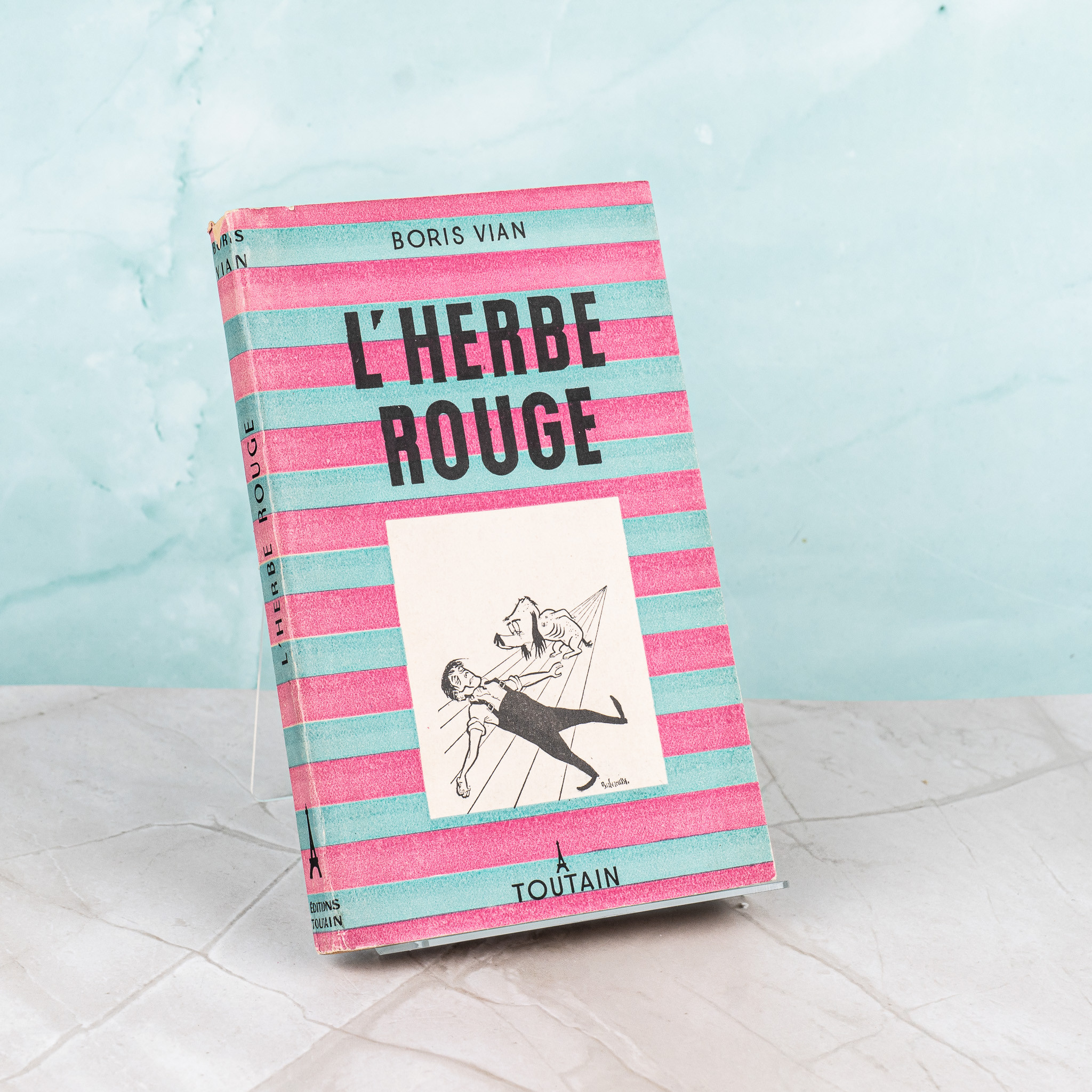
Vian, Boris
L’Herbe rouge
L’Herbe rouge is one of Boris Vian’s most singular novels, born of the nervous imagination of post-war Saint-Germain-des-Prés. The first edition appeared in 1950 with Toutain and belongs to the group of Vian publications that often met with limited success during his lifetime before acquiring cult status. The book combines science-fiction-like invention, existential anxiety, absurdist humour and emotional disarray. That mixture makes it especially relevant to The Hidden Page: it is not part of a strict historical avant-garde, but it breathes the pataphysical and experimental spirit of post-war literature. This copy is materially weak, with a reglued spine, pasted-down first leaf and lacking final blank. It nevertheless remains bibliographically and literarily meaningful as the original edition of a central Vian text.
Book
€250
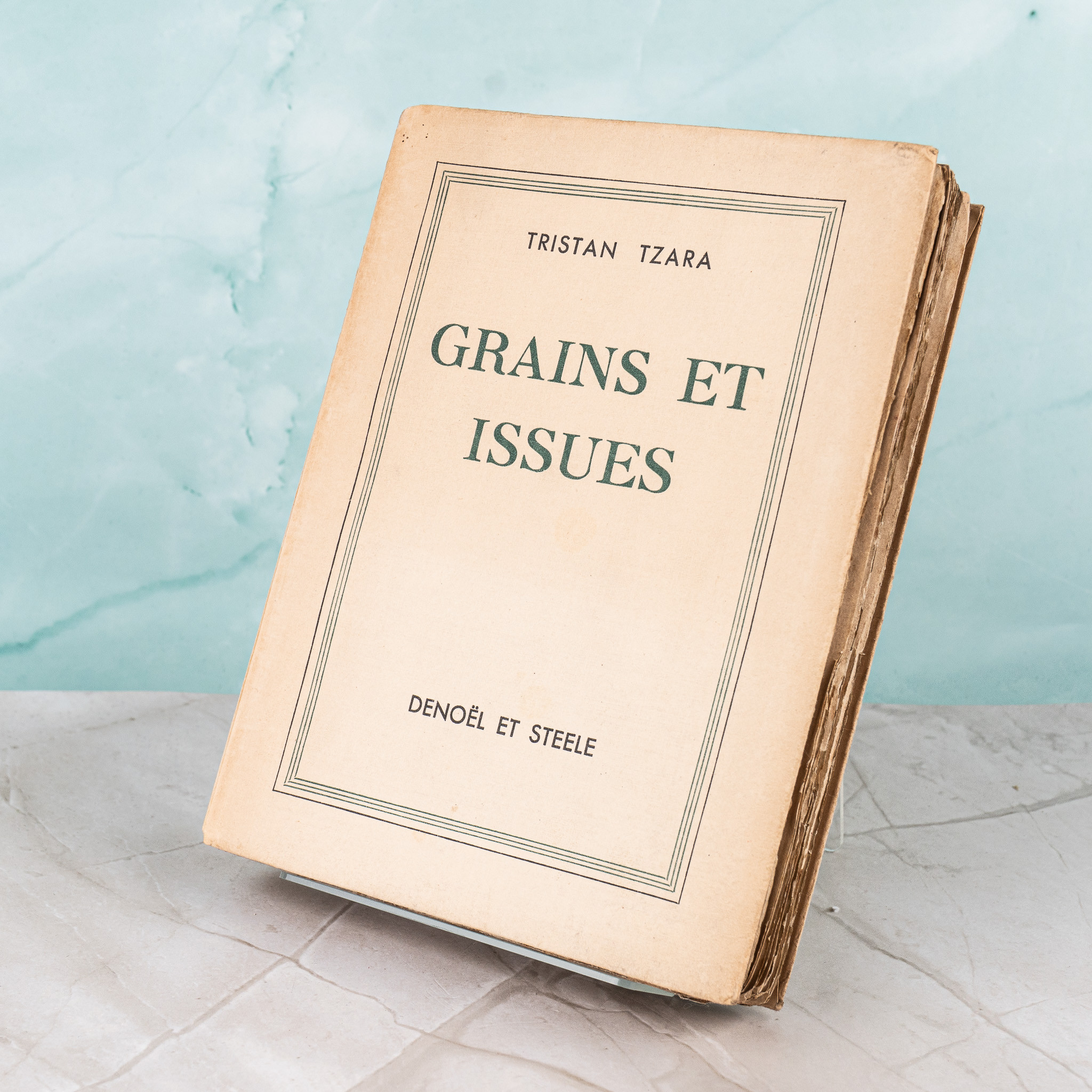
Tzara, Tristan
Grains et issues
Grains et issues is a key publication in Tristan Tzara’s passage from Dadaist disruption to Surrealist and revolutionary reflection. The book appeared in 1935 with Denoël et Steele, at a moment when poetry, politics and theory were becoming increasingly intertwined within the avant-garde. Tzara, once the voice and organizer of Dada in Zurich and Paris, no longer seeks only the explosion of meaning, but also a dialectic between dream, matter, history and liberation. This original edition is bibliophilically notable as a large-paper copy: one of the copies on vergé d’Arches, signed by the author. Its unopened state preserves the tension between the book as an instrument of reading and the book as an untouched object. For The Hidden Page, it is an exceptionally strong match: a major historical avant-garde author, a key text and a scarce signed deluxe variant.
Book
€720
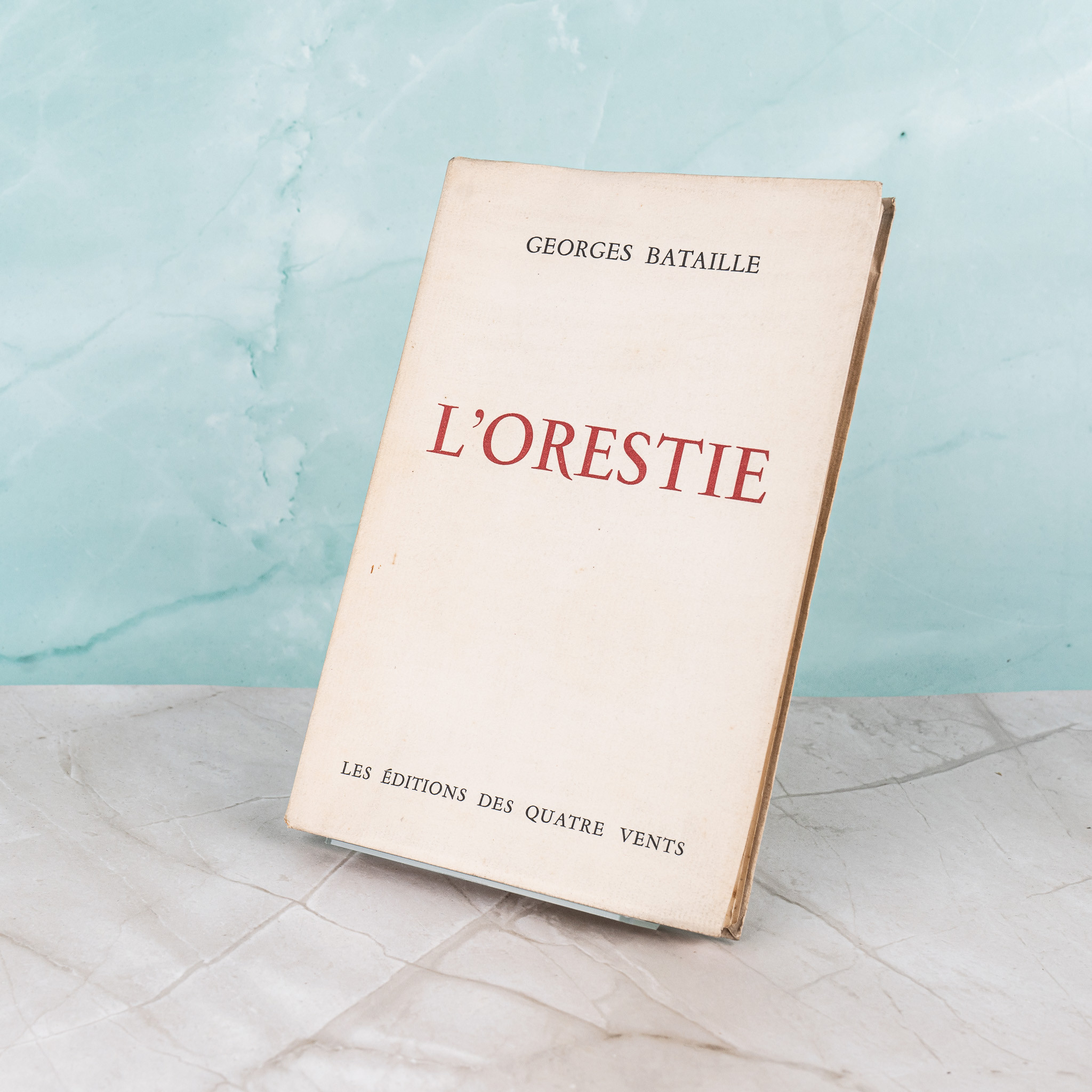
Bataille, Georges
L’Orestie
L’Orestie is one of Georges Bataille’s most concentrated and unsettling poetic books. Its title invokes Orestes and the tragic inheritance of guilt, blood and madness, yet Bataille offers no classical retelling. The book is instead a brief, severe cycle in which poetry places itself under pressure and almost turns against its own possibility. Published shortly after the war by Les Éditions des Quatre Vents, it retains the tension of the years in which it was written: hunger, fear, desire, religious emptiness and bodily dread. The edition is austere, but bibliographically precise in its limited printing on tinted nacreous paper. This copy belongs to the 175 copies issued for commerce and bears the very early number 7. Its uncut state heightens the sense of an intact, still-closed object from Bataille’s rare poetic production.

