


Les Hommes abandonnés
Les Hommes abandonnés is a powerful bibliophile edition in which Georges Duhamel’s humanist prose meets the rough graphic language of Maurice de Vlaminck. The book appeared in Paris in 1927 from Seheur, in a limited edition of 345 numbered copies. The combination of a copper-engraved frontispiece and 24 black lithographs gives the edition striking graphic weight. Vlaminck’s images do not accompany the text decoratively; they intensify its hard and troubled humanity. The title suggests abandonment, social fracture and moral vulnerability, themes that resonate strongly in the interwar period. This copy belongs to the series of 300 copies on vélin d’Arches. It is therefore the principal issue of a carefully produced artist’s book in which literature and expressionistic intensity meet.
Quantity


Duhamel, Georges
Vlaminck, Maurice de
Les Hommes abandonnés
1927 | Paris | Seheur
This copy of Les Hommes abandonnés is a strong French artist’s book from the interwar period. Vlaminck’s 24 lithographs and copper-engraved frontispiece give Duhamel’s humanist text powerful visual gravity. As one of 300 copies on vélin d’Arches within a total edition of 345, it is bibliographically clear and collectible.
Les Hommes abandonnés is a powerful bibliophile edition in which Georges Duhamel’s humanist prose meets the rough graphic language of Maurice de Vlaminck. The book appeared in Paris in 1927 from Seheur, in a limited edition of 345 numbered copies. The combination of a copper-engraved frontispiece and 24 black lithographs gives the edition striking graphic weight. Vlaminck’s images do not accompany the text decoratively; they intensify its hard and troubled humanity. The title suggests abandonment, social fracture and moral vulnerability, themes that resonate strongly in the interwar period. This copy belongs to the series of 300 copies on vélin d’Arches. It is therefore the principal issue of a carefully produced artist’s book in which literature and expressionistic intensity meet.
€735
Condition Report:
In-Depth Study
References & Bibliography
Format
In-4 (Quarto) approx. 25 × 32 cm
Edition Particulars
One of 300 numbered copies on vélin d’Arches within a total edition of 345.
Print Run
345
Copy Number
No. 58
Paper
Vélin d’Arches
Inscription
No inscription
Product DETAIL
The work focuses on people pushed to the margins by circumstance, society or inner disarray. Duhamel does not seek spectacular adventure, but the human fate of those who are abandoned, misunderstood or morally wounded. The text belongs to his broader concern with ordinary lives, social responsibility and the spiritual consequences of modern disruption. The tone is serious and empathetic, attentive to vulnerability, suffering and dignity. The title condenses that theme into one strong image: the human being as an abandoned figure in a harsh world. Vlaminck’s lithographs give the characters and situations a visual density that reinforces the emotional content. The whole reads as an interwar book about human solitude, not merely as naturalistic reportage.
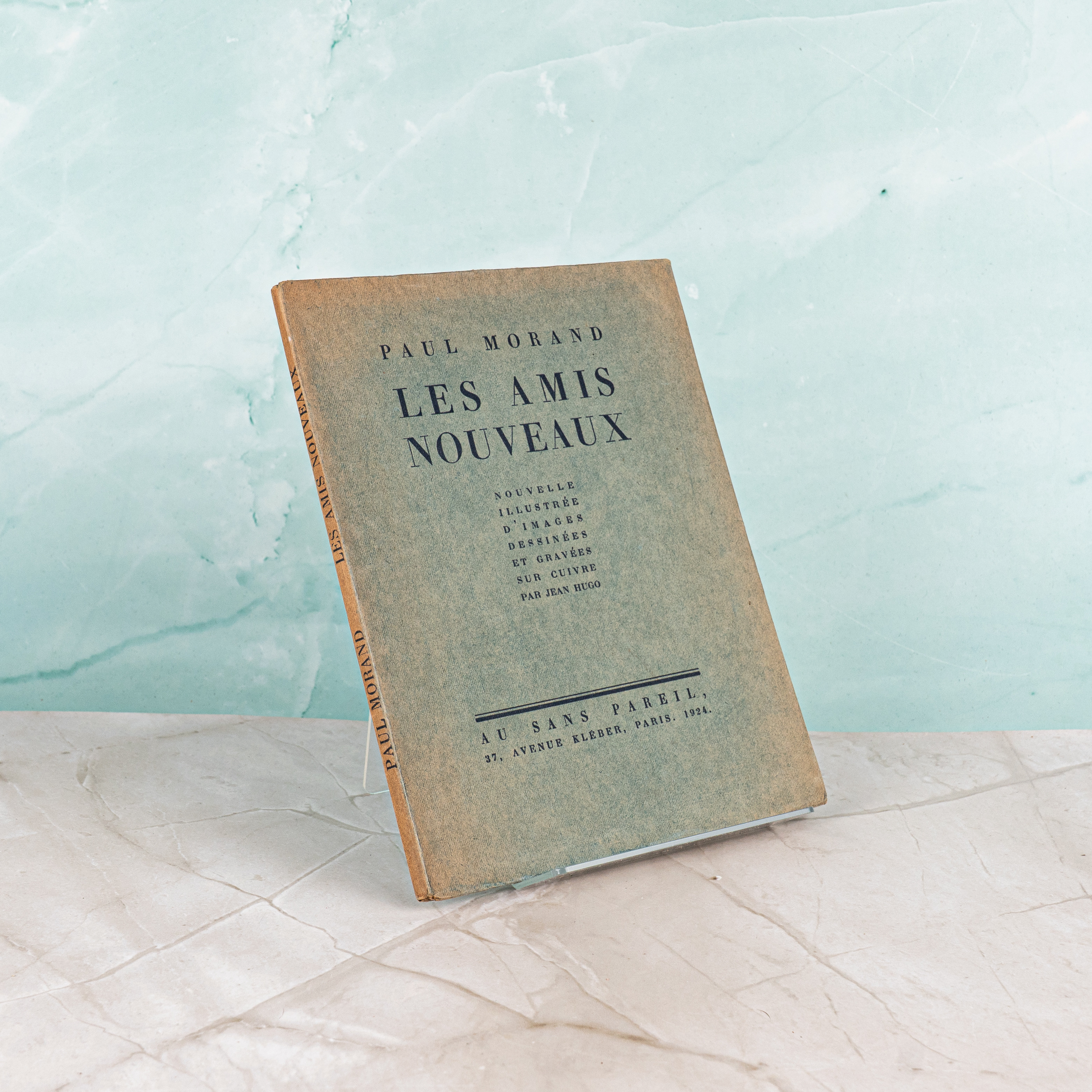
Morand, Paul · Hugo, Jean
Les Amis nouveaux
This first separate edition of *Les Amis nouveaux* combines Paul Morand’s swift, ironic prose with nine original copper drypoints by Jean Hugo. The brief novella compresses a love triangle into the tense intimacy of a single dinner. Morand’s controlled dialogue and incisive observations reveal how rivalry can unexpectedly turn into mutual understanding. Hugo accompanies the text with a refined linear vocabulary that heightens its worldly lightness and psychological ambiguity. The bistre or sanguine tones give the prints a warm, almost intimate presence on the page. As a numbered large-paper copy on vergé d’Arches, the book has considerable bibliophilic appeal.
Illustrated Book
€260

Soupault, Philippe
Aquarium
Aquarium by Philippe Soupault, published in 1917, is the literary debut of one of the most influential figures of the twentieth-century French avant-garde. The work was published by the young publishing house Au Sans Pareil, which would play a key role in the publication of the Dadaist and Surrealist movements in the years to come. The book is a collection of short poetic prose texts that explore an urban landscape and the interiority of modern man. This is a rare, early edition that not only marks Soupault's literary start but also the birth of an important publishing platform for the avant-garde. It is a tangible document of the period of artistic renewal that led to Surrealism. The form and concept of the publication reflect an experimental approach, typical of the radical artistic movements of the time.
Illustrated Book
€950

Michaux, Henri · Bettencourt, Pierre
Arriver à se réveiller
A rare first edition of Arriver à se réveiller, written by Henri Michaux in the tremulous post-war years. The text unfolds as an inward journey toward lucidity, where sleep and waking mirror each other. Printed and published by Pierre Bettencourt in his own workshop, the edition’s small run preserves the work’s intimacy. The title-page vignette, a linocut by Bettencourt, sets a spare, rhythmic visual key that amplifies Michaux’s vigilant, vulnerable tone. This copy is handsomely bound in brown morocco with balsa boards by Miguet, a tactile nod to lightness under tension. For bibliophiles, it is an exemplary union of poetry, craft, and experiment. The volume embodies the independence of the post-war small press and Michaux’s radical sensitivity.
Illustrated Book
€680
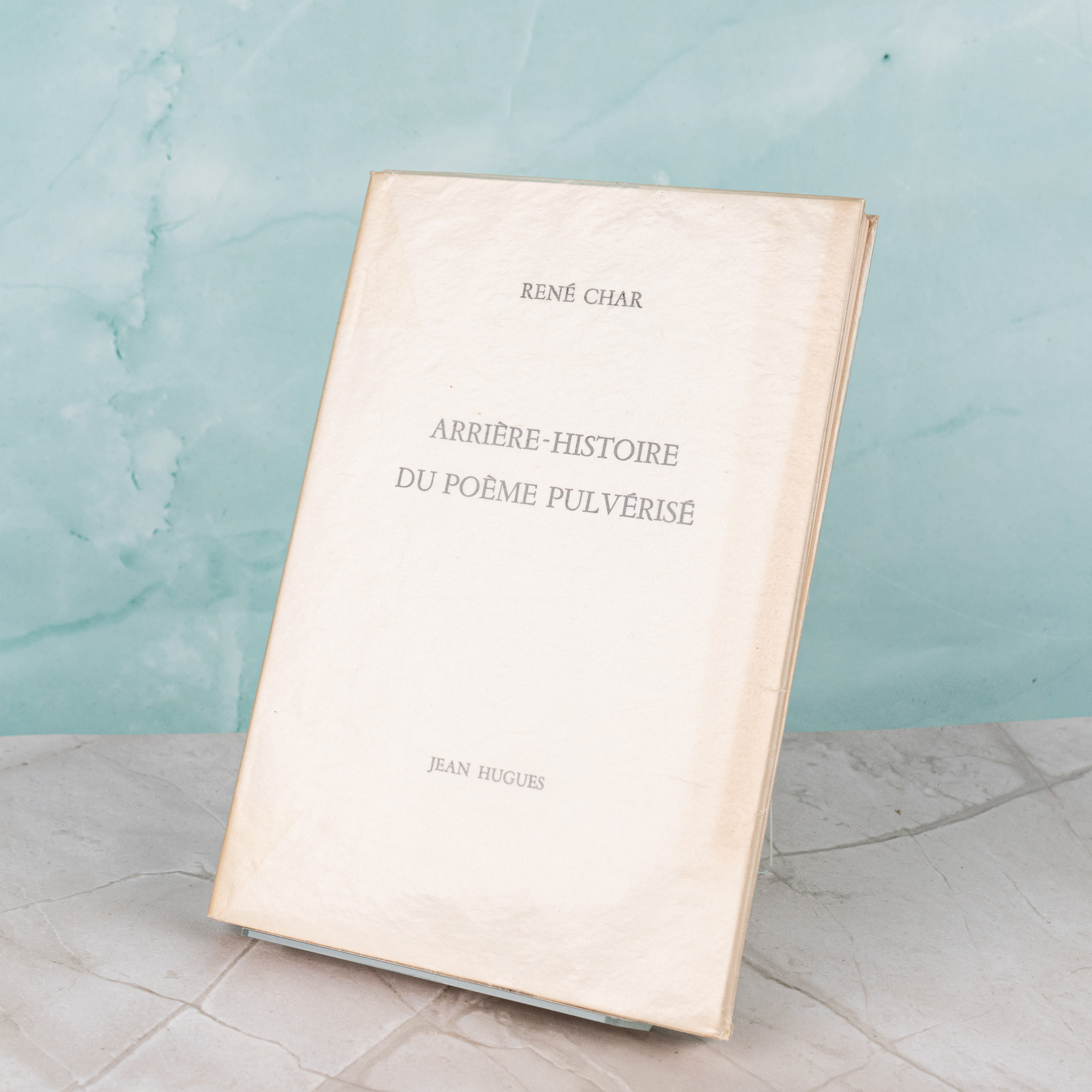
Char, Rene · Stael, Nicolas de
Arrière-histoire du poème pulvérisé
*Arrière-histoire du poème pulvérisé* is a later illustrated edition of a key text in which René Char looks back on the genesis and inner background of *Le Poème pulvérisé*. Published in 1972 by Imprimerie Union, it opens with a colour frontispiece by Nicolas de Staël. The pairing of Char and de Staël is especially charged: two post-war voices, each seeking concentration, clarity, and rupture in his own medium. This copy is one of only six hors commerce copies on Arches and is signed. The autograph presentation inscription to Doctor Marcel Zara, with poetic quotation and October 1972 dating, makes it a deeply personal copy.