


Les Pays égarés
Les Pays égarés is an early and rare publication by Max Bucaille, issued in 1937 by René Debresse under the imprint Le Loup Pendu. The book belongs to that pre-war territory where poetry, visual experiment and Surrealist sensibility meet on an intimate scale. Its seven impressions on green glossy paper give the modest octavo volume an unusual visual intensity. Bucaille’s imagination here is not merely literary but also plastic: poem and image seem to open a lost inner landscape together. This copy is especially meaningful because of the autograph inscription to Georges Hugnet, poet, artist, publisher and a key figure of the Surrealist milieu. The date, 18 December 1937, places the copy close to publication and gives it the warmth of a direct artistic transmission.
Quantity


Bucaille, Max
ILLUSTRATORS
ILLUSTRATORS
ILLUSTRATORS
Les Pays égarés
1937 | Parijs | Debresse, éd. Le Loup Pendu
A rare early Bucaille in which text, image and Surrealist network come together with exceptional force. The numbered copy inscribed to Georges Hugnet gives the book a special provenance and historical resonance.
Les Pays égarés is an early and rare publication by Max Bucaille, issued in 1937 by René Debresse under the imprint Le Loup Pendu. The book belongs to that pre-war territory where poetry, visual experiment and Surrealist sensibility meet on an intimate scale. Its seven impressions on green glossy paper give the modest octavo volume an unusual visual intensity. Bucaille’s imagination here is not merely literary but also plastic: poem and image seem to open a lost inner landscape together. This copy is especially meaningful because of the autograph inscription to Georges Hugnet, poet, artist, publisher and a key figure of the Surrealist milieu. The date, 18 December 1937, places the copy close to publication and gives it the warmth of a direct artistic transmission.
€300
Condition Report:
In-Depth Study
References & Bibliography
Format
In-8 (Octavo) approx. 20 × 26 cm
Edition Particulars
Number 141 of 205 copies, with an autograph inscription by Max Bucaille to Georges Hugnet, dated 18/XII/37.
Print Run
205
Copy Number
No. 141
Paper
papier glacé vert
Inscription
Association Copy
1
Edition Particulars:
We welcome private inquiries, collaborations with institutions, and acquisition requests. Each message is treated with discretion and respect. We welcome private inquiries, collaborations with institutions, and acquisition requests.
1
Print Run:
Condition Report:
1
Copy Number:
Condition Report:
1
Paper:
Condition Report:
1
Signed:
Condition Report:
Product DETAIL
The collection brings together short poetic texts in which Bucaille evokes imaginary countries, inner wanderings and displaced realities. The book does not follow a narrative plot, but unfolds a sequence of mental landscapes in which place names, images and atmospheres alternate. The title suggests a world gone astray: territories that are less geographical than psychic or dreamlike. The seven impressions on green glossy paper accompany this displacement and heighten the sense of estrangement. The reader moves through a poetic space of fragment, dream and association. Thematically, the work is close to Surrealism, though its voice remains personal, concentrated and more enigmatic than programmatic.
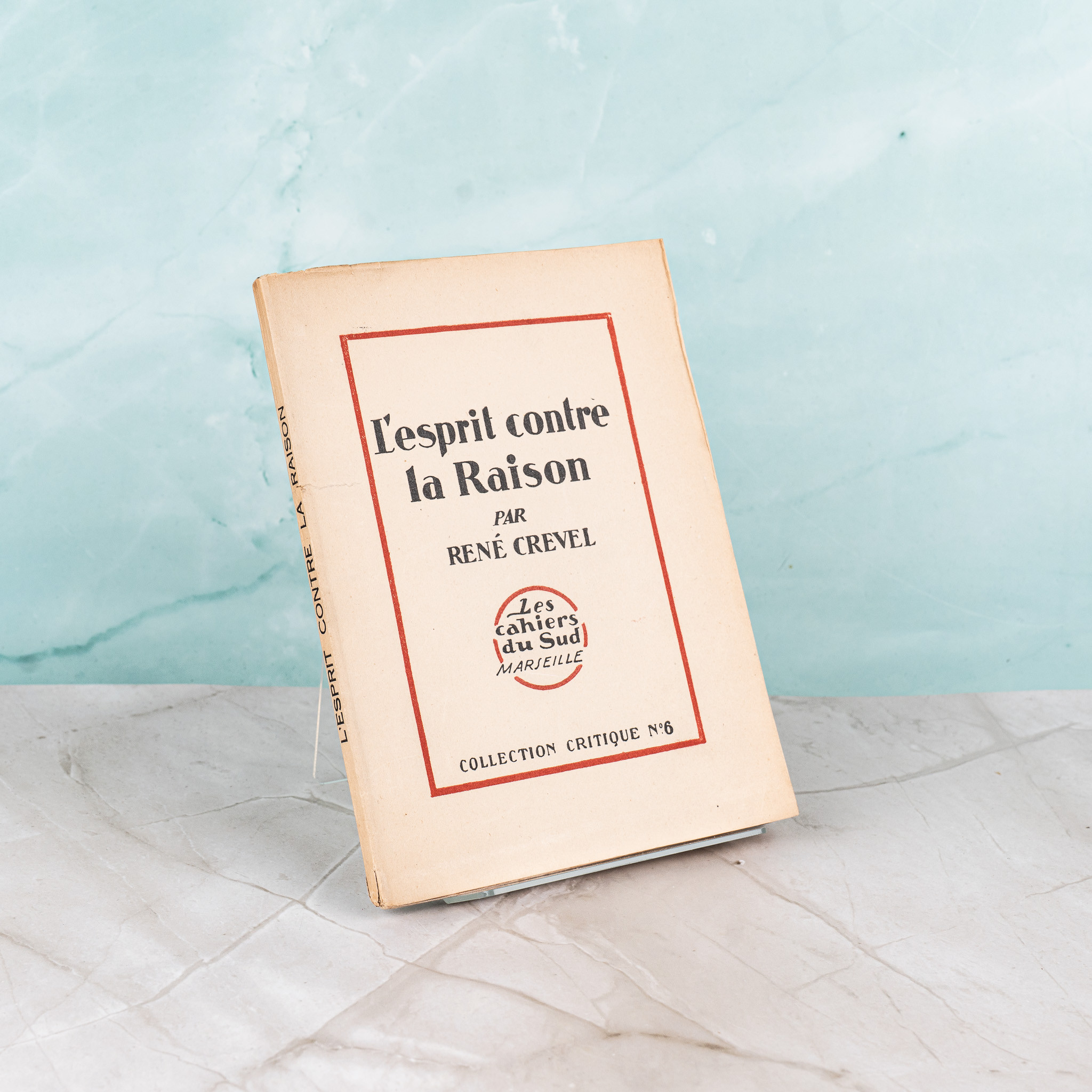
Crevel, René · Tchelitchew, Pavel
L’esprit contre la raison
L’esprit contre la raison is a brief, vehement text from the heart of French Surrealism. René Crevel writes here not as a systematic philosopher, but as a polemicist intent on disturbing the order of reason, morality and bourgeois clarity. The book was published in 1927 by Les Cahiers du Sud, a review and publishing circle receptive to literary experiment beyond the Parisian centre. Pavel Tchelitchew’s frontispiece portrait gives the volume a strong visual presence and links Crevel’s voice to the cosmopolitan artistic world of the 1920s. In its original wrappers, the copy preserves the sober, nervous materiality of a text that reads more like an assault than a treatise. Its status as a review copy also marks it as a book meant to move through the literary networks of its moment.
Ill Book
€280
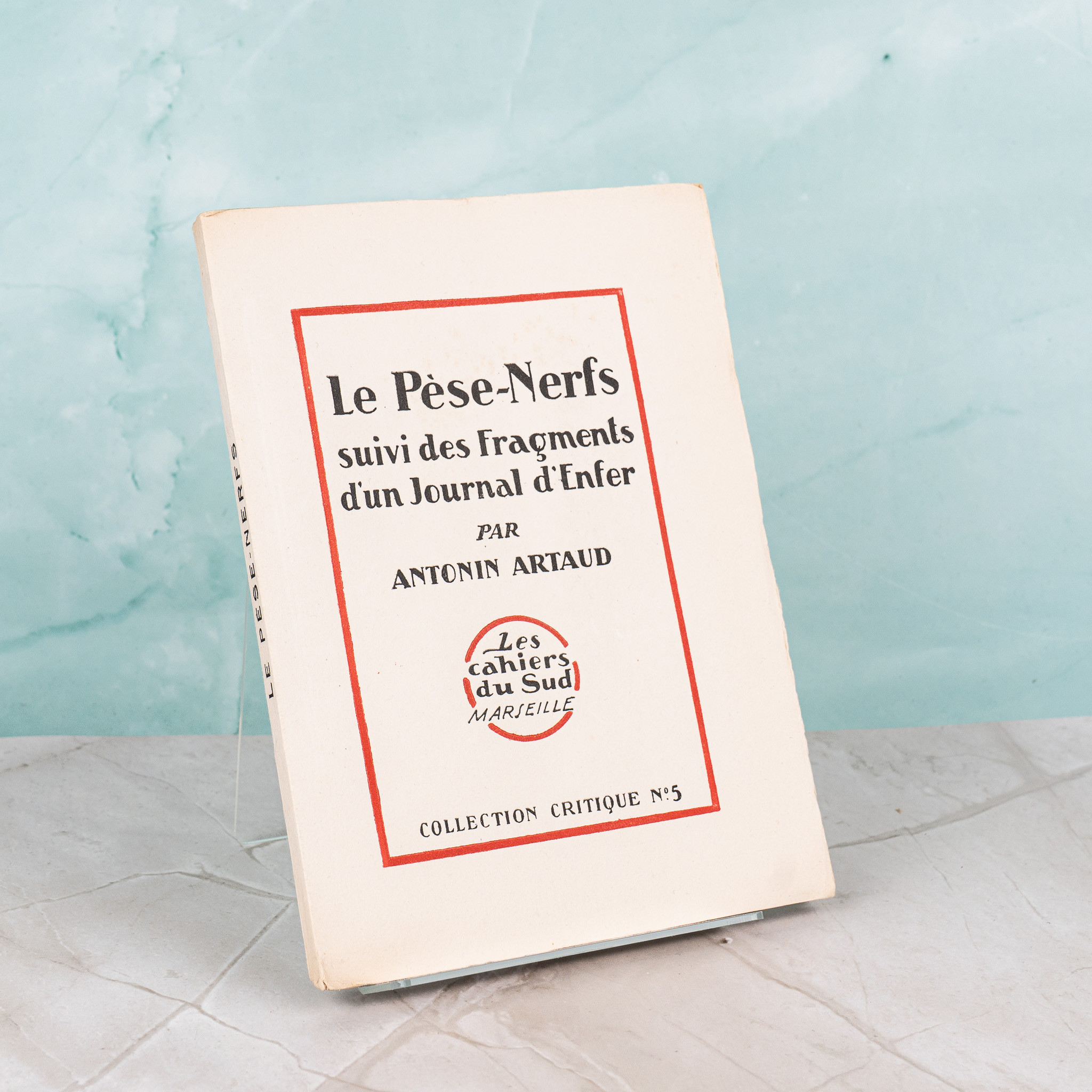
Artaud, Antonin · Masson, André
Le Pèse-Nerfs suivi des Fragments d’un Journal d’Enfer
With Le Pèse-Nerfs followed by Fragments d’un Journal d’Enfer, Antonin Artaud emerges in 1927 as a writer of inner derangement. This early edition was published in Marseille by Les Cahiers du Sud as the fifth title in the Critique series. It belongs among the first books in which Artaud’s broken, nervous and visionary voice appears in full force. The text moves between prose, note, incantation and self-investigation. André Masson’s frontispiece places the work in direct proximity to the Surrealist milieu. As a Lafuma copy, numbered 14 of 321, this edition carries both literary and bibliographical importance.
Ill Book
€2,100
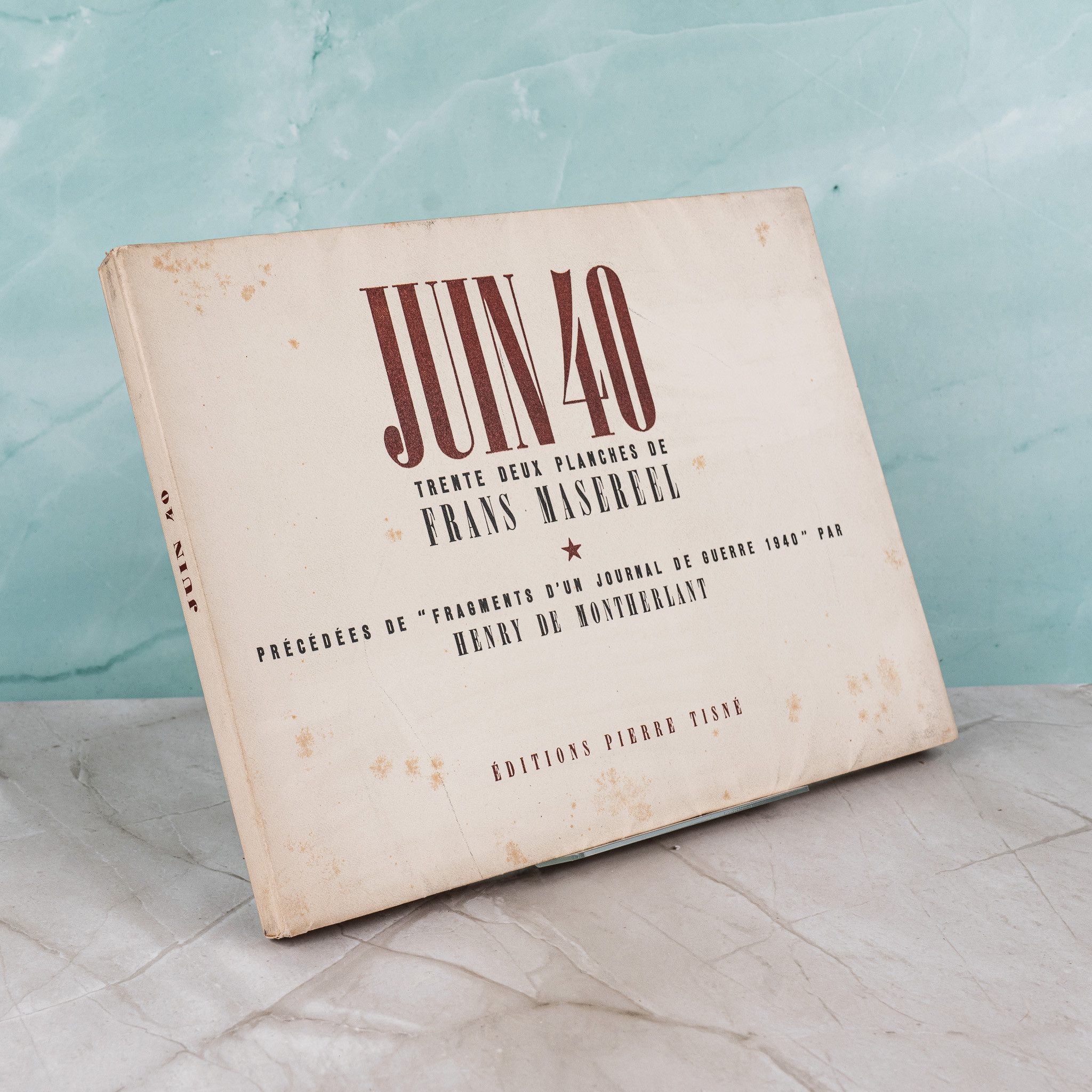
Montherlant, Henry de · Masereel, Frans
Juin 40
Juin 40 is a powerful illustrated war book in which Frans Masereel gives visual form, through 32 plates, to the French defeat and disarray of June 1940. The plates are preceded by Henry de Montherlant’s Fragments d’un journal de guerre 1940, so that text and image together create a double testimony: literary, historical and moral. Masereel, renowned for his woodcuts and wordless novels, here brings his expressive black-and-white drama to bear on an immediate historical trauma. The oblong format gives the plates a horizontal, almost cinematic space in which flight, soldiers, civilians and destruction can unfold. The book appeared in Paris with Pierre Tisné in 1942, in the midst of the war, giving it a special tension between memory, censorship, mourning and visual urgency. This copy, n°16, belongs to the first 350 copies on vélin Lana Bélier within a total edition of 1,550. It is an early and materially attractive copy of a book in which Masereel’s humanist graphic art retains its historical edge.
Ill Book
€420
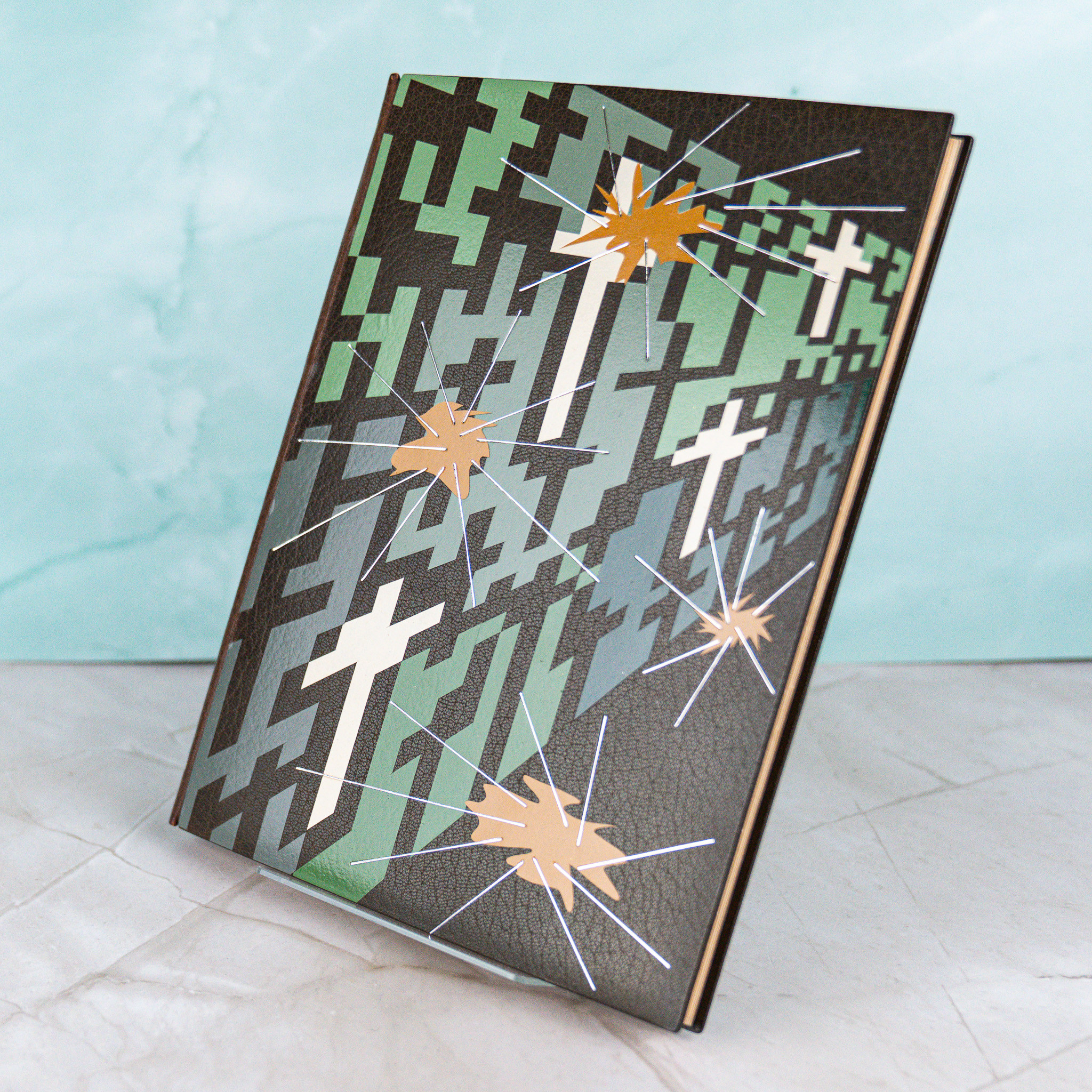
Dorgelès, Roland · Dunoyer de Segonzac
La Boule de gui
This first edition brings together three war episodes omitted from Les Croix de bois: La Boule de gui, Permissionnaires, and Le Prisonnier bénévole, formerly titled L’Ennemi des vieux. Published in 1922, it is also the first illustrated issue of these texts. André Dunoyer de Segonzac accompanies Dorgelès’s front-line prose with 42 reproduced drawings and five original drypoints hors texte, including the frontispiece. His nervous, direct line closely matches the stories’ hard observation and comradeship. This copy, number 401 on tinted Lafuma paper, belongs to the regular yet still limited issue of 519 copies on this stock. Devauchelle’s exceptional artist’s binding translates trenches, crosses, and explosions into a forceful modern design, turning the volume into a distinctive bibliophile object.
