


Écrits de James Ensor — Cahiers de La Flandre Littéraire
A scarce publication in which Ensor’s writerly voice stands alongside his pictorial imagination. Brief texts and polemics reveal a mind at once sharp and playful. The book captures the 1926 moment, when Ensor consciously inserts himself into Flanders’ cultural debate. The modest format and restrained typography suit the programmatic *Cahiers de La Flandre Littéraire*. This copy is further distinguished by Ensor’s personal inscription. The blend of literary tone and artist’s charisma makes it a desirable bibliophile piece.
Quantity


Ensor, James
ILLUSTRATORS
ILLUSTRATORS
ILLUSTRATORS
Écrits de James Ensor — Cahiers de La Flandre Littéraire
1926
A key piece for understanding Ensor the writer, here in an exceptional limitation and with a personal dedication. Content and context reinforce each other into a compact document of artistic independence.
A scarce publication in which Ensor’s writerly voice stands alongside his pictorial imagination. Brief texts and polemics reveal a mind at once sharp and playful. The book captures the 1926 moment, when Ensor consciously inserts himself into Flanders’ cultural debate. The modest format and restrained typography suit the programmatic *Cahiers de La Flandre Littéraire*. This copy is further distinguished by Ensor’s personal inscription. The blend of literary tone and artist’s charisma makes it a desirable bibliophile piece.
€1,200
Condition Report:
In-Depth Study
References & Bibliography
Format
In-8 (Octavo) approx. 20 × 26 cm
Edition Particulars
Copy no. 36 on Featherweight; with autograph dedication by James Ensor.
Print Run
50
Copy Number
no. 36
Paper
Featherweight
1
Edition Particulars:
We welcome private inquiries, collaborations with institutions, and acquisition requests. Each message is treated with discretion and respect. We welcome private inquiries, collaborations with institutions, and acquisition requests.
1
Print Run:
Condition Report:
1
Copy Number:
Condition Report:
1
Paper:
Condition Report:
1
Signed:
Condition Report:
Product DETAIL
The volume gathers short essays, chronicles and barbed notes in which Ensor muses on art, music, audiences and fame. Baroque irony and mask imagery permeate the prose. The tone oscillates from pamphleteering to lyricism, with a taste for paradox and exaggeration. The texts mirror motifs from his painting—masks, processions, satire of officialdom—coalescing into a verbal self-portrait.
Dorgelès, Roland · Dunoyer de Segonzac
La Boule de gui
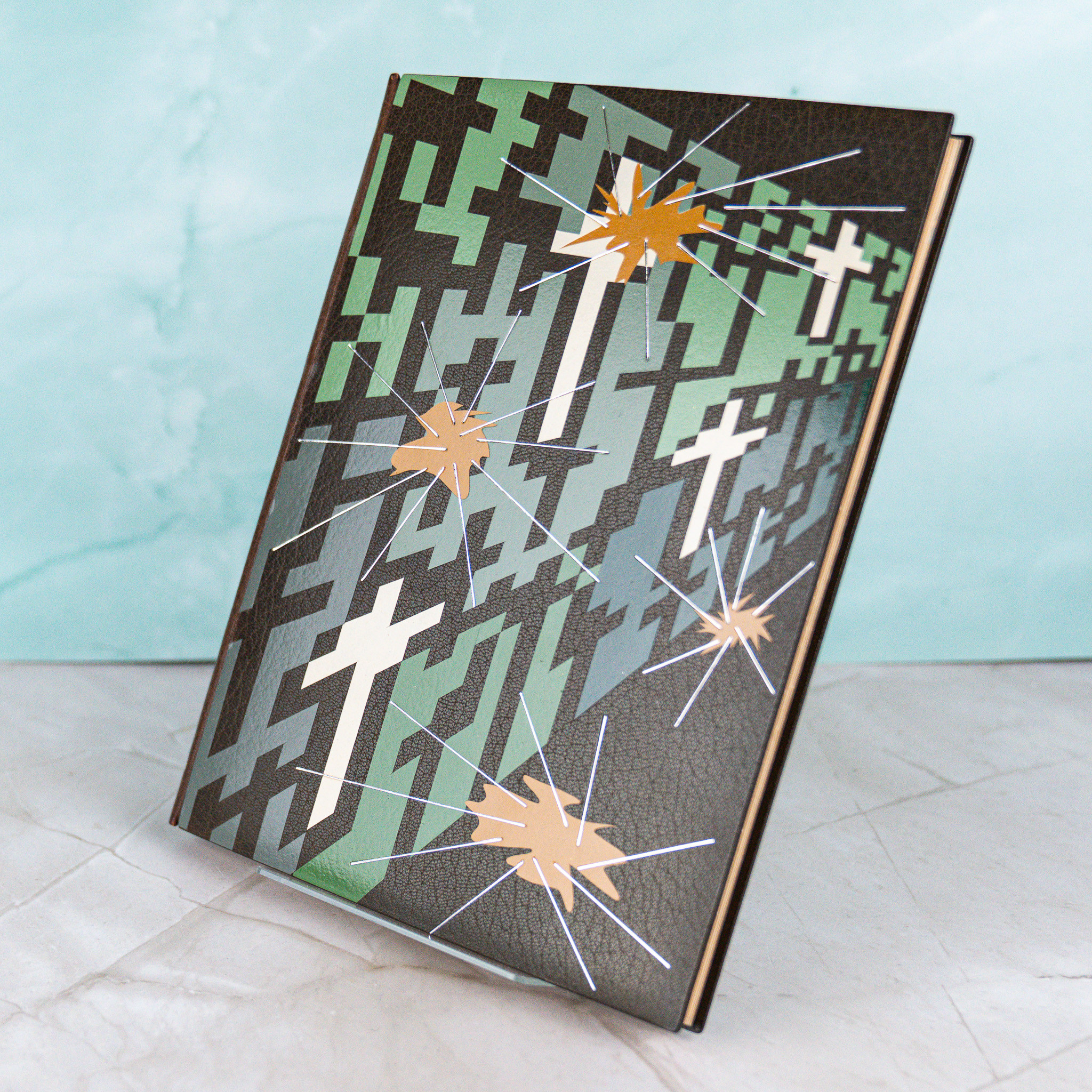
This first edition brings together three war episodes omitted from Les Croix de bois: La Boule de gui, Permissionnaires, and Le Prisonnier bénévole, formerly titled L’Ennemi des vieux. Published in 1922, it is also the first illustrated issue of these texts. André Dunoyer de Segonzac accompanies Dorgelès’s front-line prose with 42 reproduced drawings and five original drypoints hors texte, including the frontispiece. His nervous, direct line closely matches the stories’ hard observation and comradeship. This copy, number 401 on tinted Lafuma paper, belongs to the regular yet still limited issue of 519 copies on this stock. Devauchelle’s exceptional artist’s binding translates trenches, crosses, and explosions into a forceful modern design, turning the volume into a distinctive bibliophile object.
Ill Book
€1,150
Crevel, René · Tchelitchew, Pavel
L’esprit contre la raison
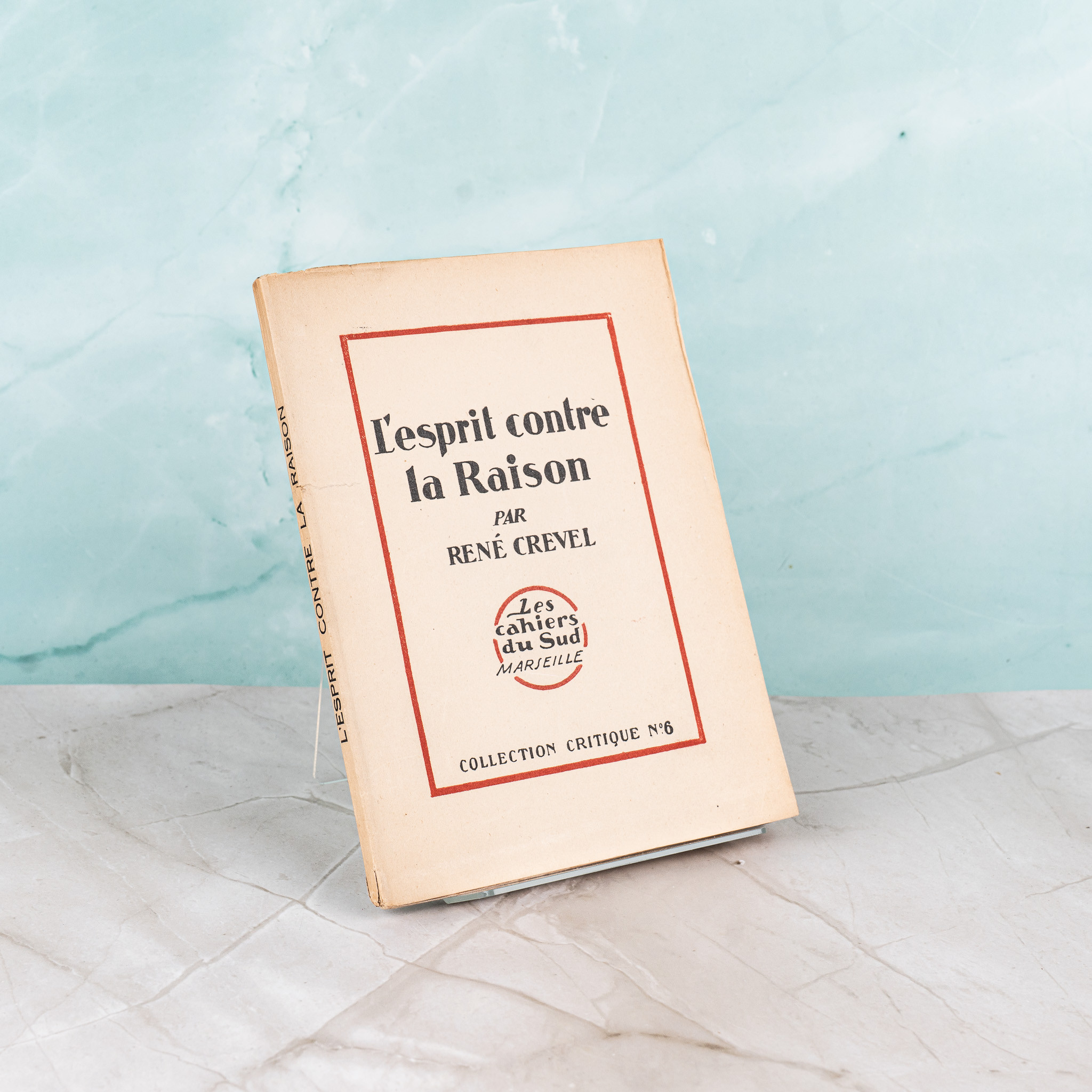
L’esprit contre la raison is a brief, vehement text from the heart of French Surrealism. René Crevel writes here not as a systematic philosopher, but as a polemicist intent on disturbing the order of reason, morality and bourgeois clarity. The book was published in 1927 by Les Cahiers du Sud, a review and publishing circle receptive to literary experiment beyond the Parisian centre. Pavel Tchelitchew’s frontispiece portrait gives the volume a strong visual presence and links Crevel’s voice to the cosmopolitan artistic world of the 1920s. In its original wrappers, the copy preserves the sober, nervous materiality of a text that reads more like an assault than a treatise. Its status as a review copy also marks it as a book meant to move through the literary networks of its moment.
Ill Book
€280
Cendrars, Blaise · Modigliani, Amedeo
Dix-neuf poèmes élastiques
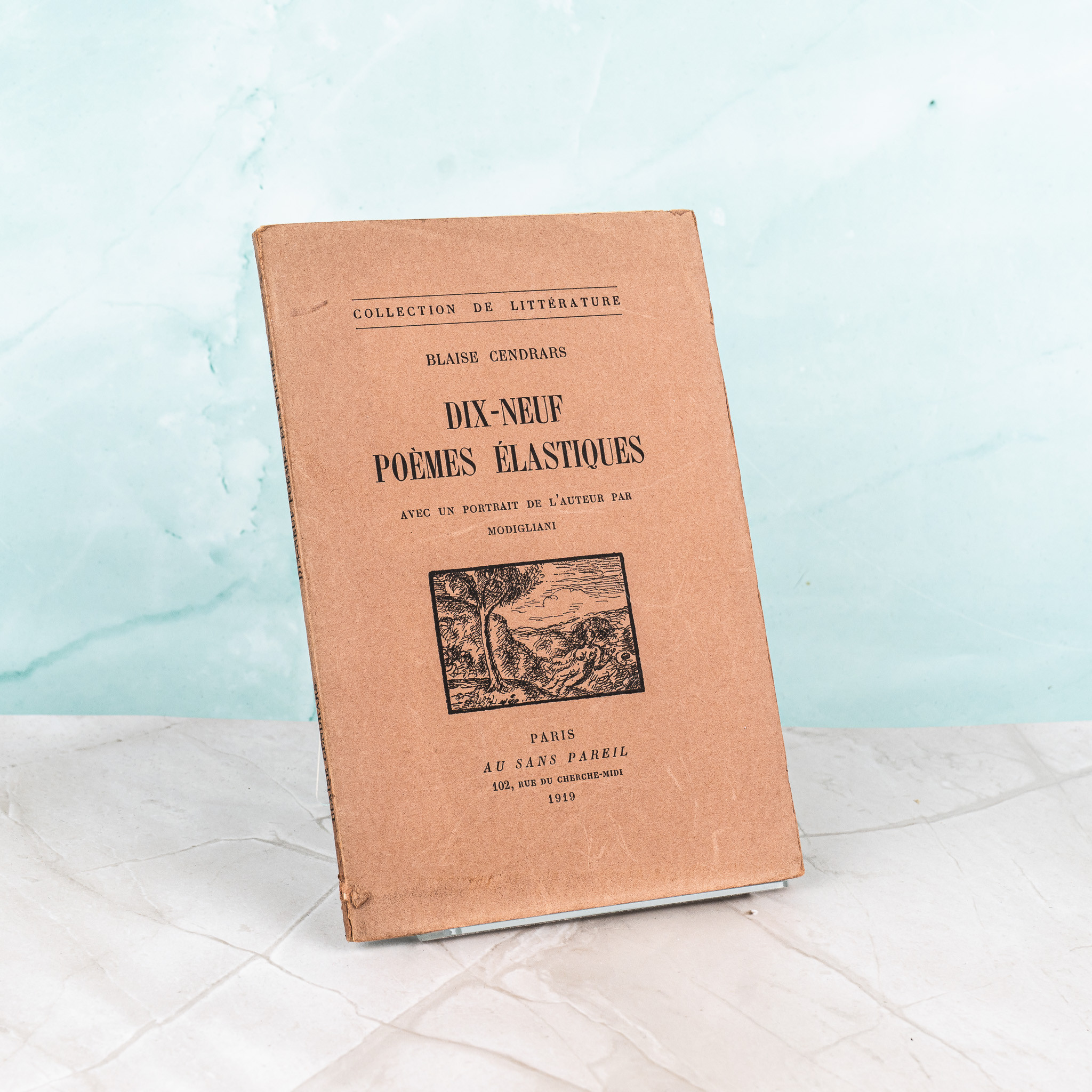
Dix-neuf poèmes élastiques is one of Blaise Cendrars’ striking early publications, bringing together poetry, modernity and typographic boldness. The collection appeared in 1919 with Au Sans Pareil, a publisher closely associated with the literary avant-garde of post-war Paris. Its frontispiece, a portrait of Cendrars by Amedeo Modigliani, gives the book exceptional artistic resonance. The encounter between Cendrars’ mobile, cosmopolitan poetry and Modigliani’s restrained line makes this more than a book of poems: it is a document of friendship, milieu and moment. This copy is an unnumbered exemplaire de passe on vélin d’Alfa, outside the numbered justification. Its partly unopened condition further enhances its character as a preserved bibliophile object.
Ill Book
€750
Artaud, Antonin · Masson, André
Le Pèse-Nerfs suivi des Fragments d’un Journal d’Enfer
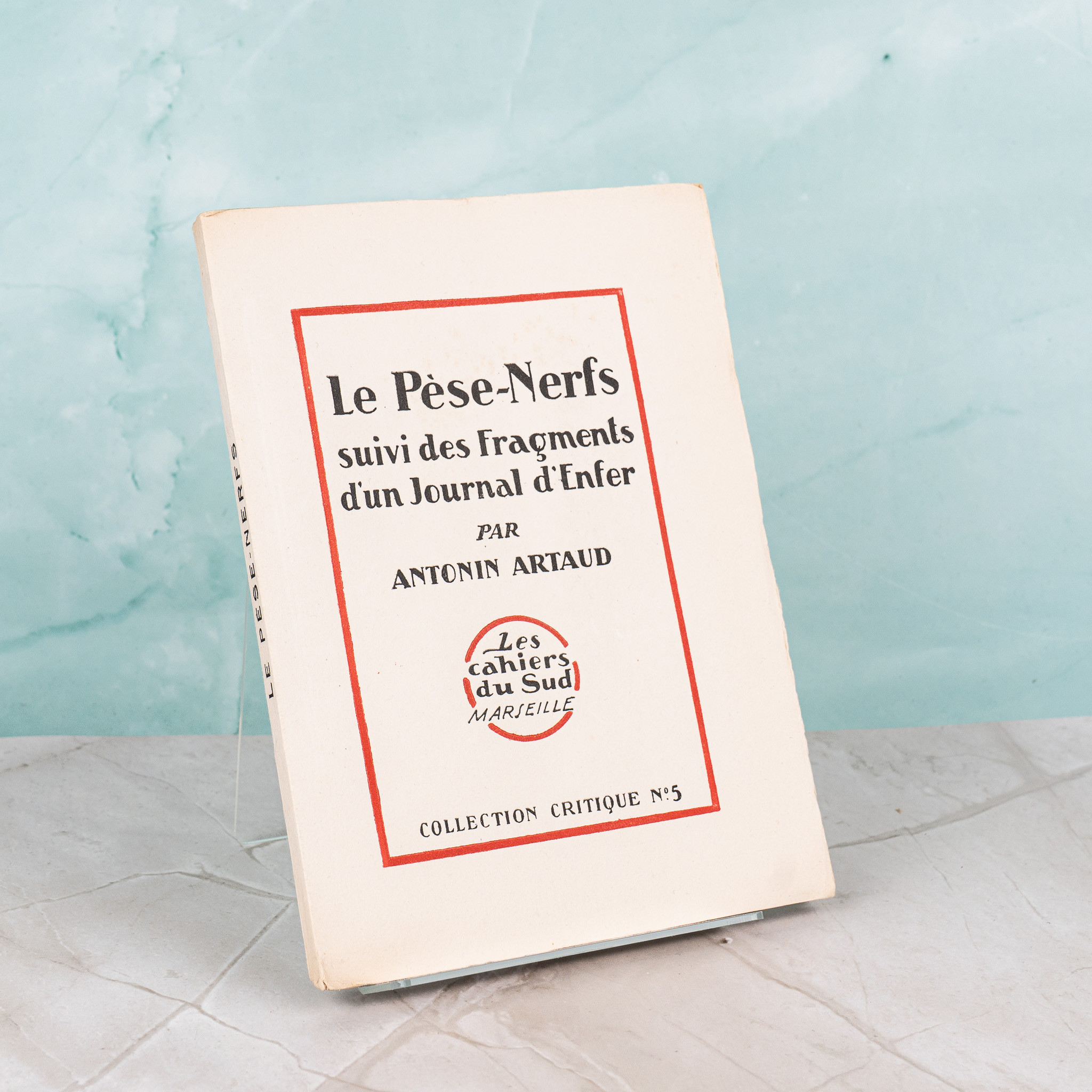
With Le Pèse-Nerfs followed by Fragments d’un Journal d’Enfer, Antonin Artaud emerges in 1927 as a writer of inner derangement. This early edition was published in Marseille by Les Cahiers du Sud as the fifth title in the Critique series. It belongs among the first books in which Artaud’s broken, nervous and visionary voice appears in full force. The text moves between prose, note, incantation and self-investigation. André Masson’s frontispiece places the work in direct proximity to the Surrealist milieu. As a Lafuma copy, numbered 14 of 321, this edition carries both literary and bibliographical importance.

